
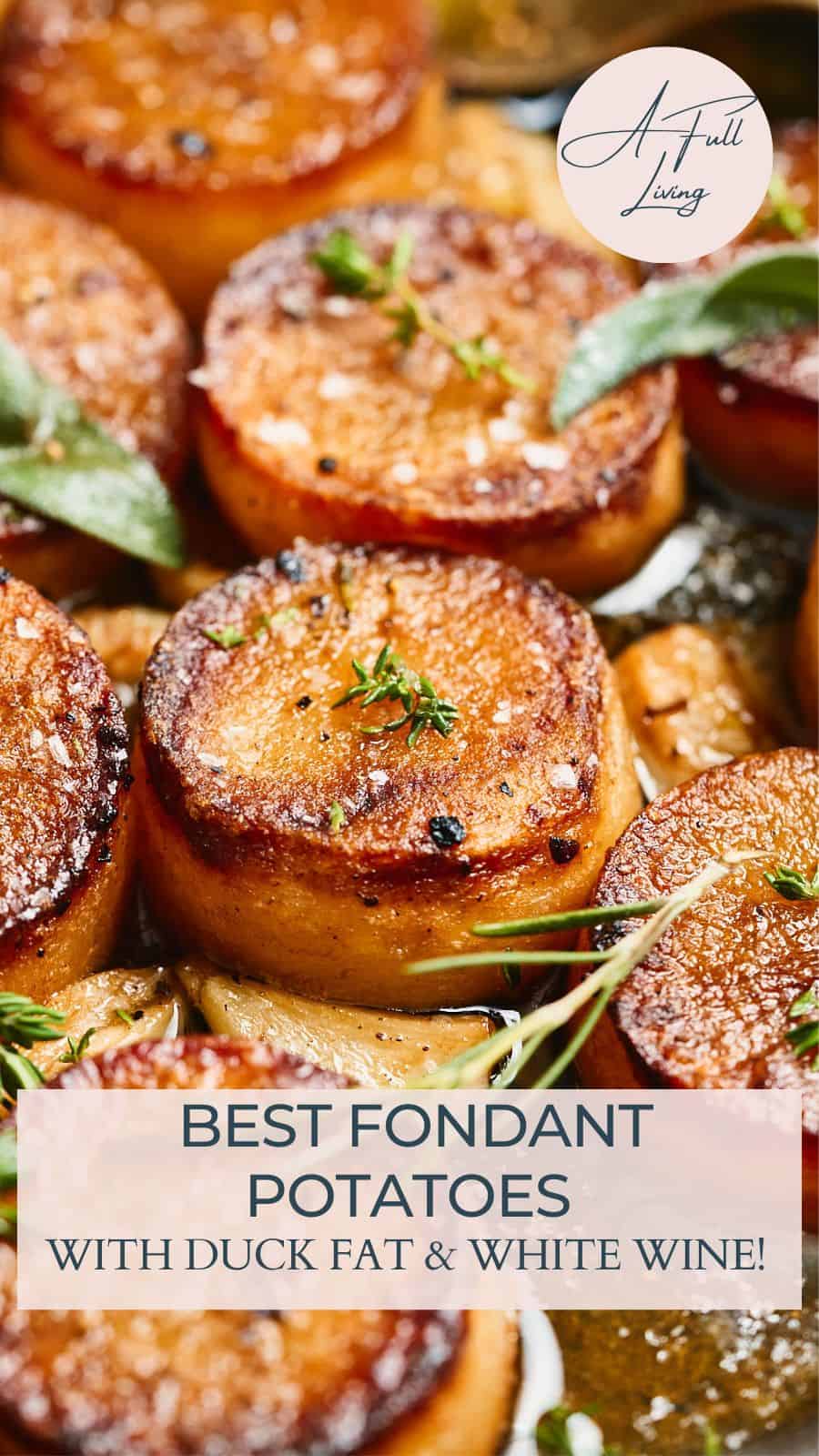
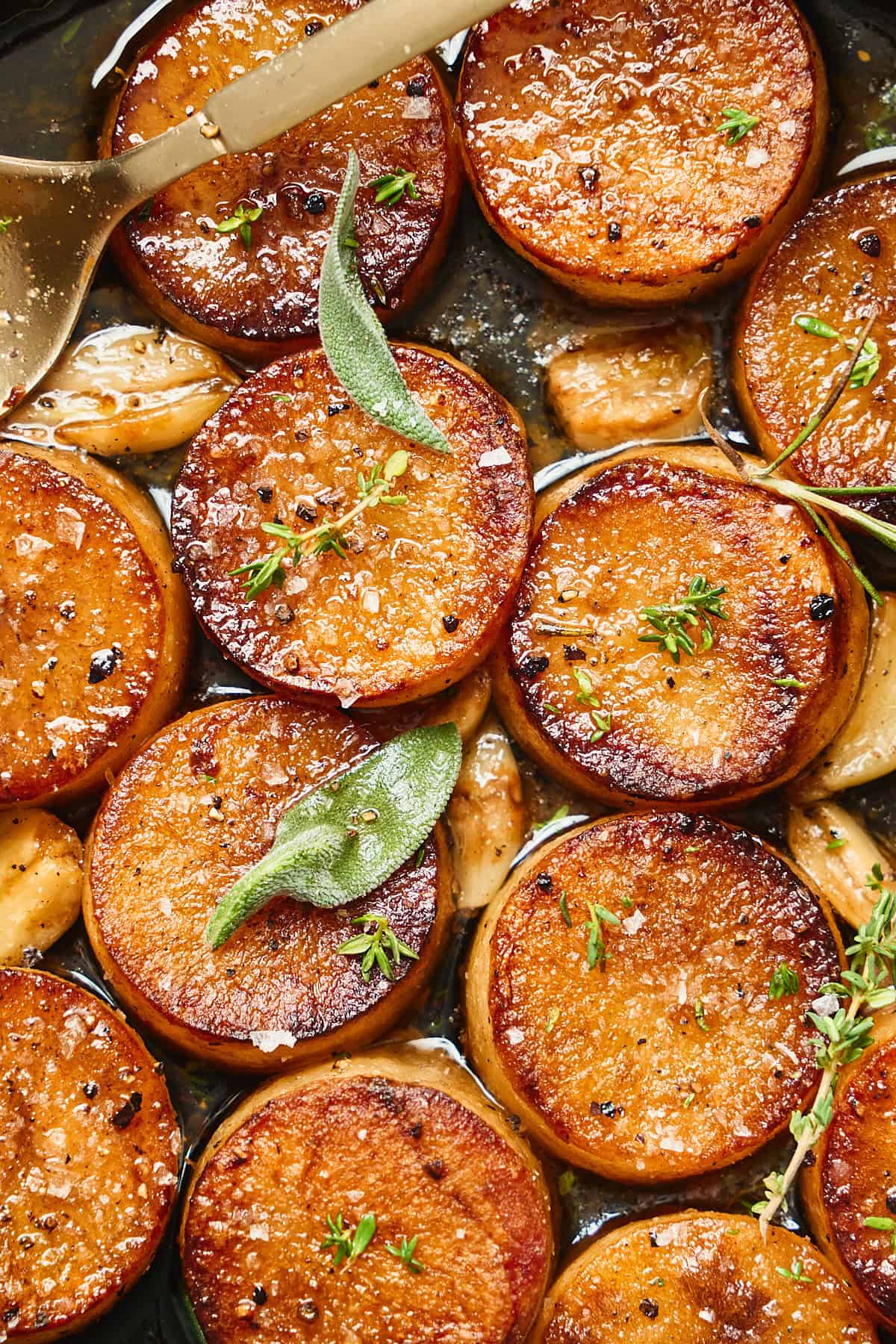
Created for potato lovers who crave restaurant-quality sides at home, these Buttery Duck Fat Fondant Potatoes are the kind of side dish that steals the show at dinner. They're easier to make than you'd think! The secret? Rich duck fat for searing, plenty of butter for basting, white wine-infused chicken stock, plenty of garlic, and fresh herbs that soak right into the potatoes for maximum flavor. Crispy on the outside, melt-in-your-mouth tender inside - the perfect special occasion side for Thanksgiving, Christmas, or date night!
Save This Recipe! 💌
We love potatoes in ALL of their forms. Baked, fried, mashed, roasted, in soups and stews, you just really can't go wrong! 🤤🥔The humble potato is deeply comforting and extremely versatile.
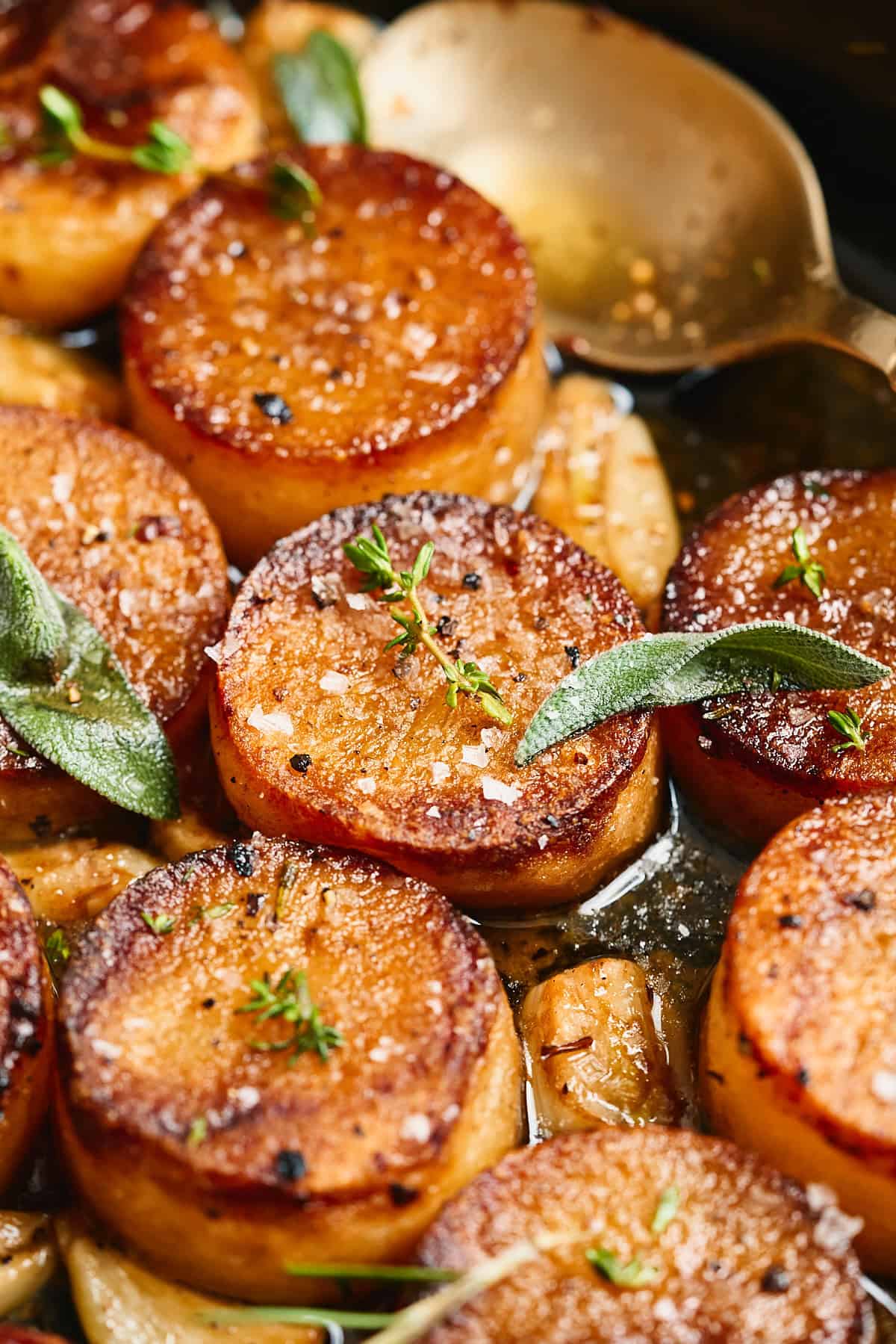
They're elegant, too, especially when you're talking about these fondant potatoes. They taste as fancy as they sound and look, but they're shockingly easy to make at home!
They do require a bit more effort than your average potato side, they sort of get a cast iron ribeye steak treatment, but all of the steps are SIMPLE, we promise!
All you have to do is slice your potatoes into thick rounds and then shape them with a cookie cutter if you want for that extra special (and classic) touch.
Next, sear them in hot duck fat until gorgeously golden, baste with lots of butter and aromatics, then let the oven work its magic with wine and stock until the potatoes are crispy on the outside, and perfectly soft and tender on the inside.
You'll get why they're called melting potatoes, since they definitely melt in your mouth! They are just... *chef's kiss*! 😙🤌
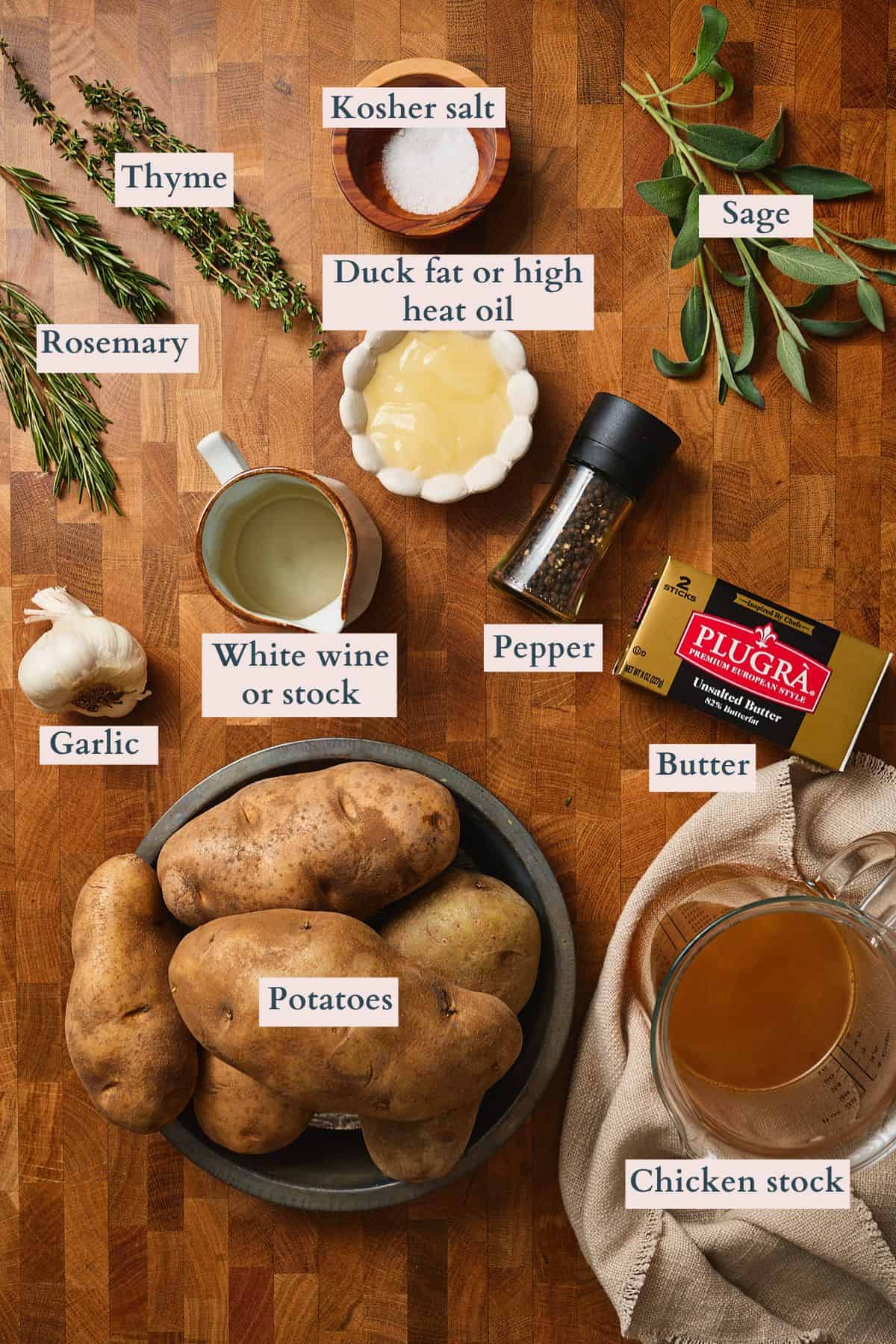
🥔Ingredients
These potatoes are supremely delicious, but they rely on just a few ingredients to create amazing flavor!
🥔Ingredient Notes
- Potatoes. For the best melting potatoes, we prefer Russet potatoes! Yukon golds work well, too, but Russets are our top choice for a few reasons.
- Perfect shape. Their elongated, cylindrical shape makes them easy to cut into evenly thick pieces.
- Starchy texture. Russets have a high starch content and become light and fluffy when cooked, making them great for soaking up butter and stock, which is perfect for creating a soft, melt-in-your-mouth texture on the inside. They can also get a really nice, even sear on the exterior due to their starchiness!
- Duck fat. This is the secret ingredient that makes these fondant potatoes taste truly restaurant-quality. Duck fat has a higher smoke point than butter and adds an incredible savory richness that you just can't achieve with regular oil.
- You can find it at most grocery stores (look near the oils or in the specialty section) or online. We love to store it in the freezer so that it will keep for extended periods of time. Once opened and frozen, it will last a year!
- Can't find duck fat? Don't worry! Bacon grease or schmaltz (rendered chicken fat) are excellent substitutes. Alternatively, any high-heat neutral flavored oil works fine; they'll still be delicious!
How to Make the Best Fondant Potatoes:
These fondant potatoes get the full restaurant treatment with multiple steps that build incredible flavor. Don't worry - each step is simple, and the results are absolutely worth it!
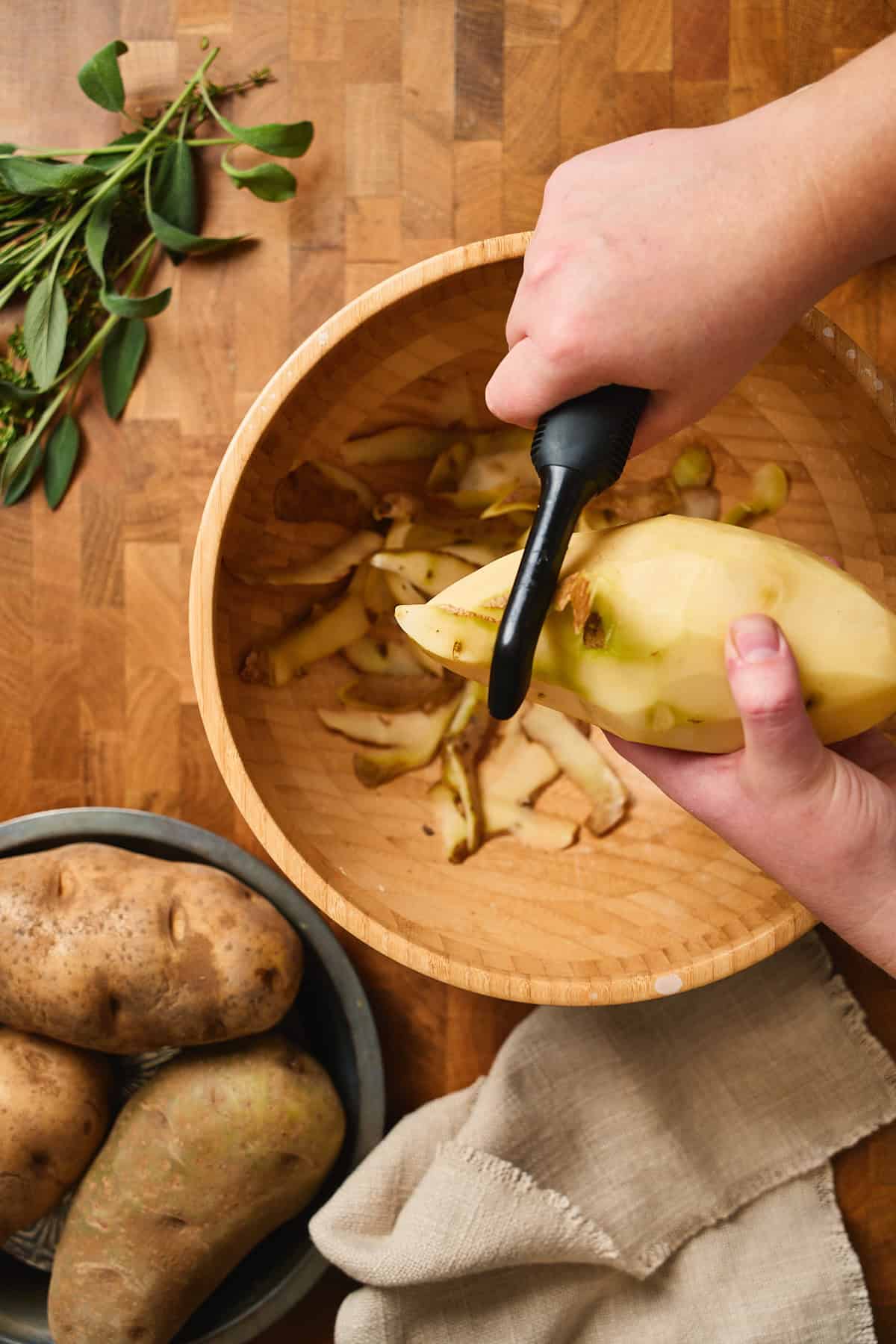
- Step 1: Start by peeling the potatoes.
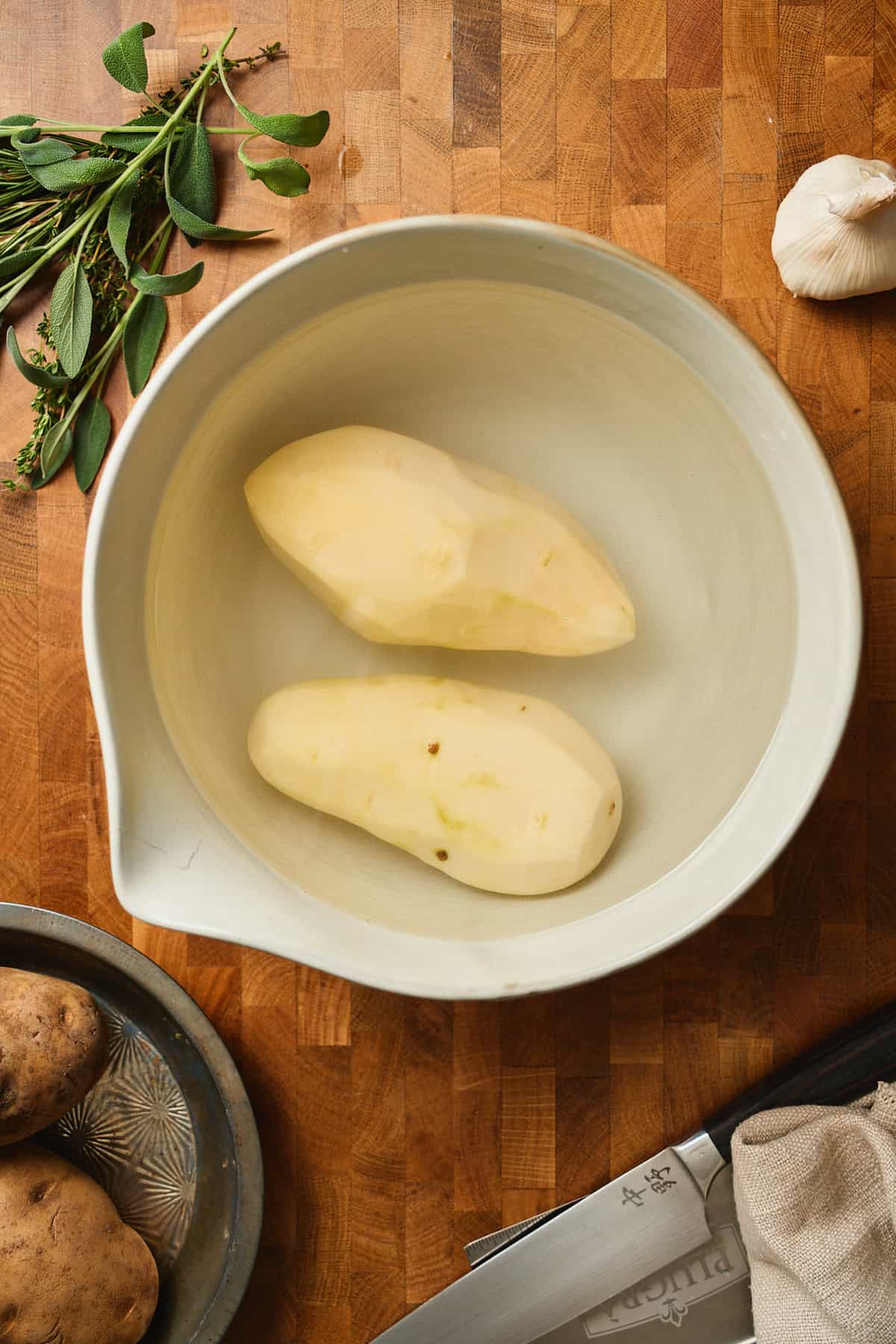
- Step 2 (optional)*: Place the potatoes in a bowl of cold water while you work if desired. This helps prevent them from oxidizing or becoming discolored.
We find it's easier to peel the potatoes right away so that we don't have to peel any tiny bits of skin off of them later on when we cut them into rounds. It's much easier at this stage with more surface area to work with!
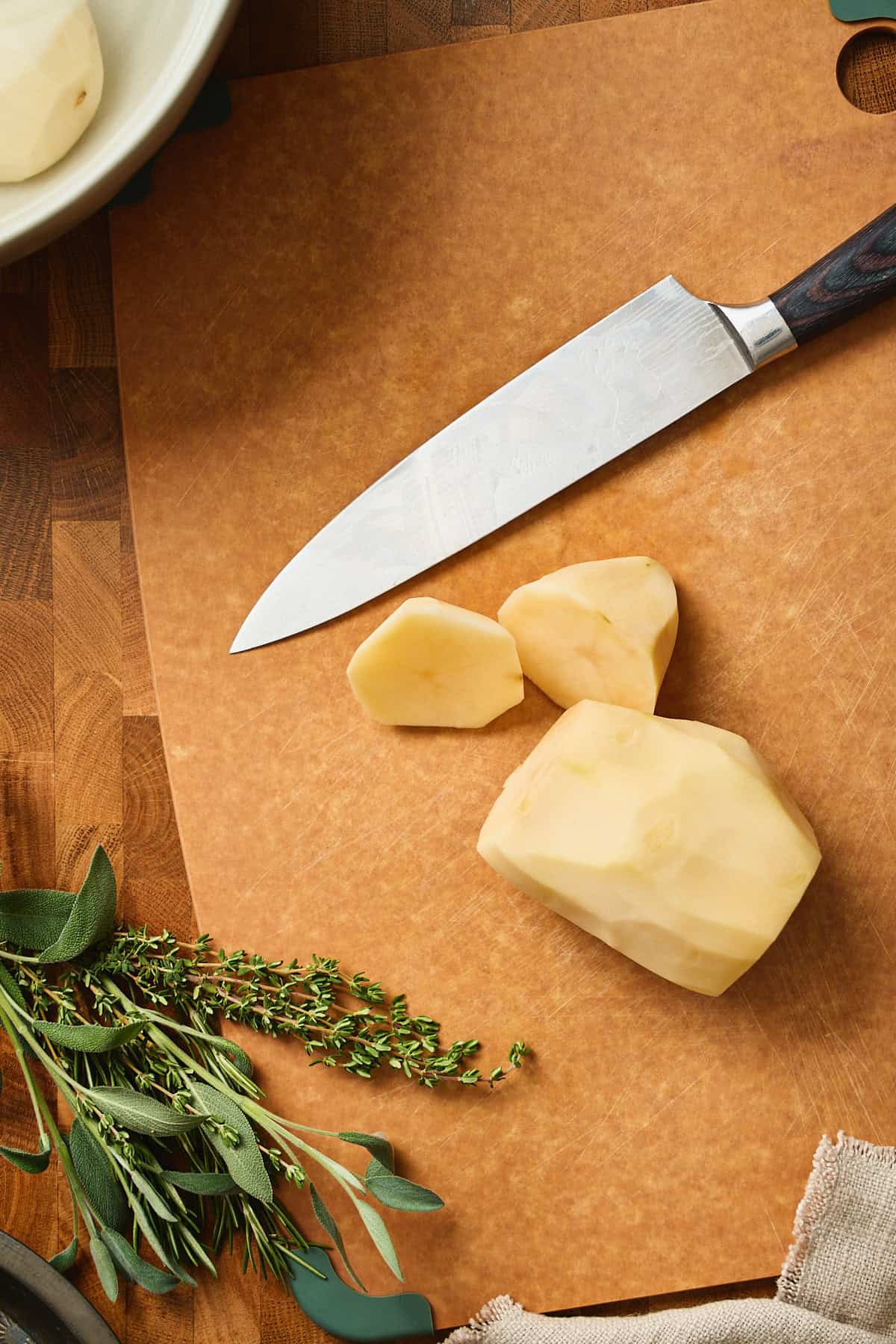
- Step 3: Cut the ends off the potatoes. This just makes it easier to cut even slabs.
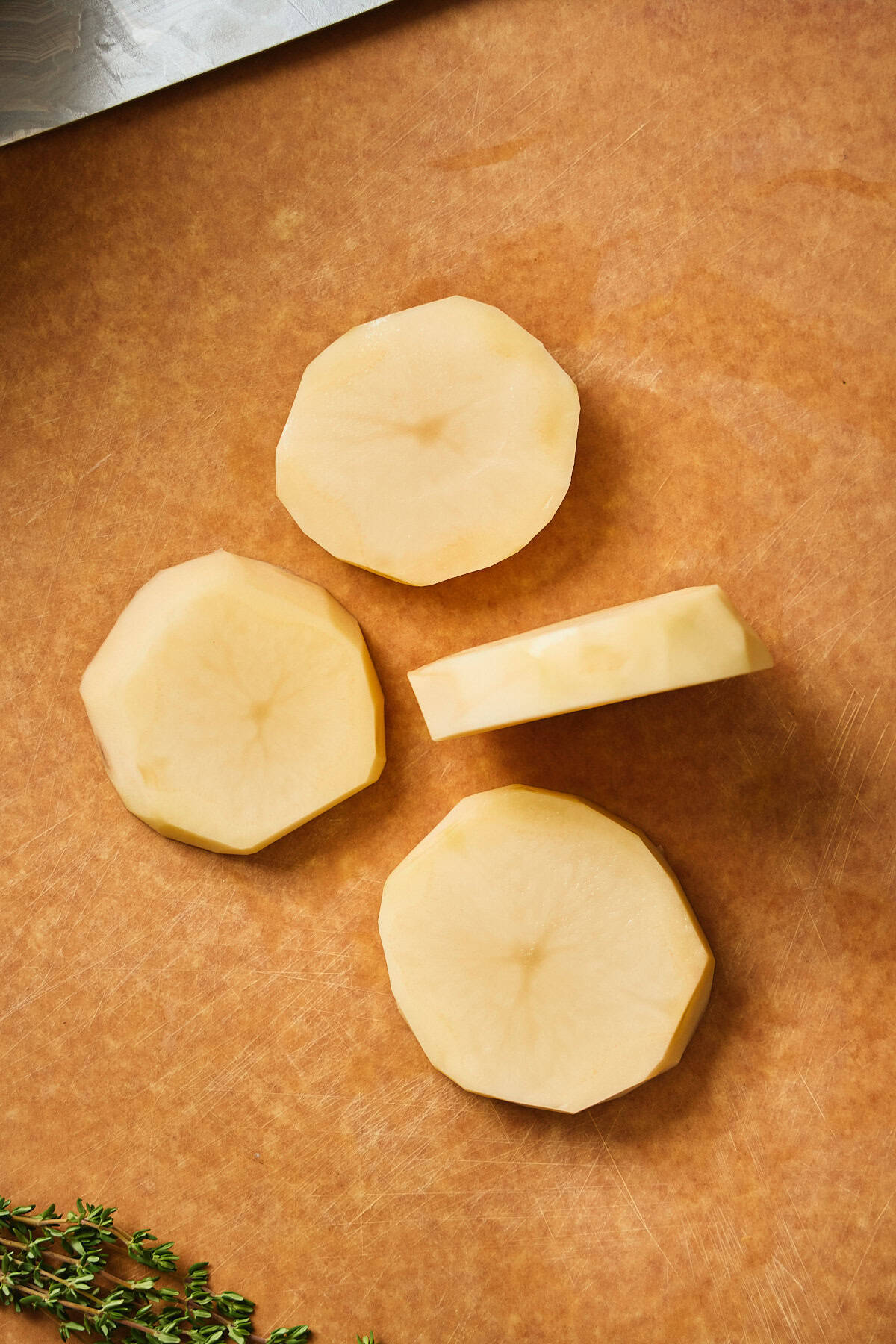
- Step 4: Slice the potatoes into 1-inch thick rounds. We like using a bench scraper with a ruler to help us cut the slices evenly.
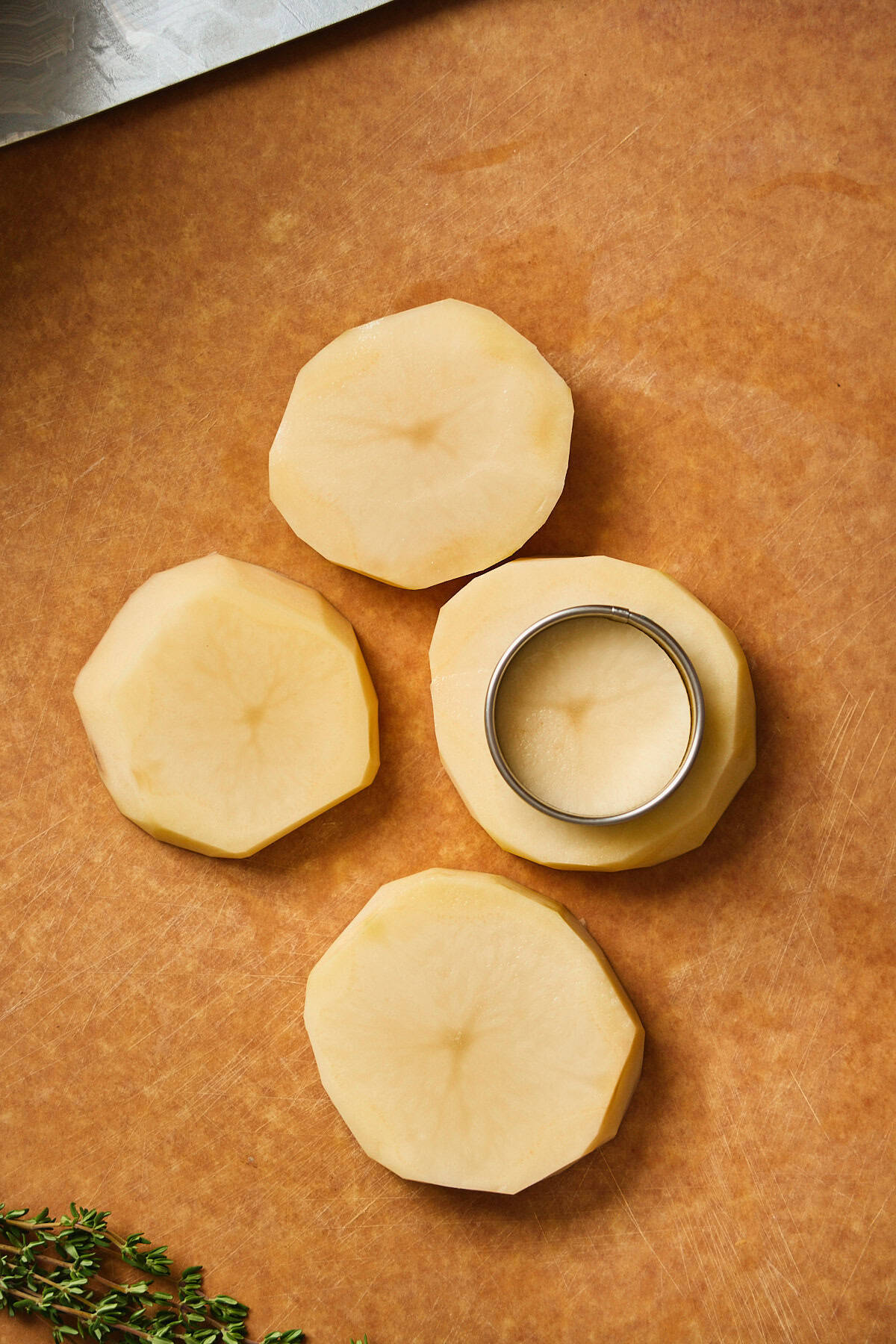
- Step 5 (optional)*: For that classic fondant potato look and even cooking, stamp out uniform cylinder shapes.
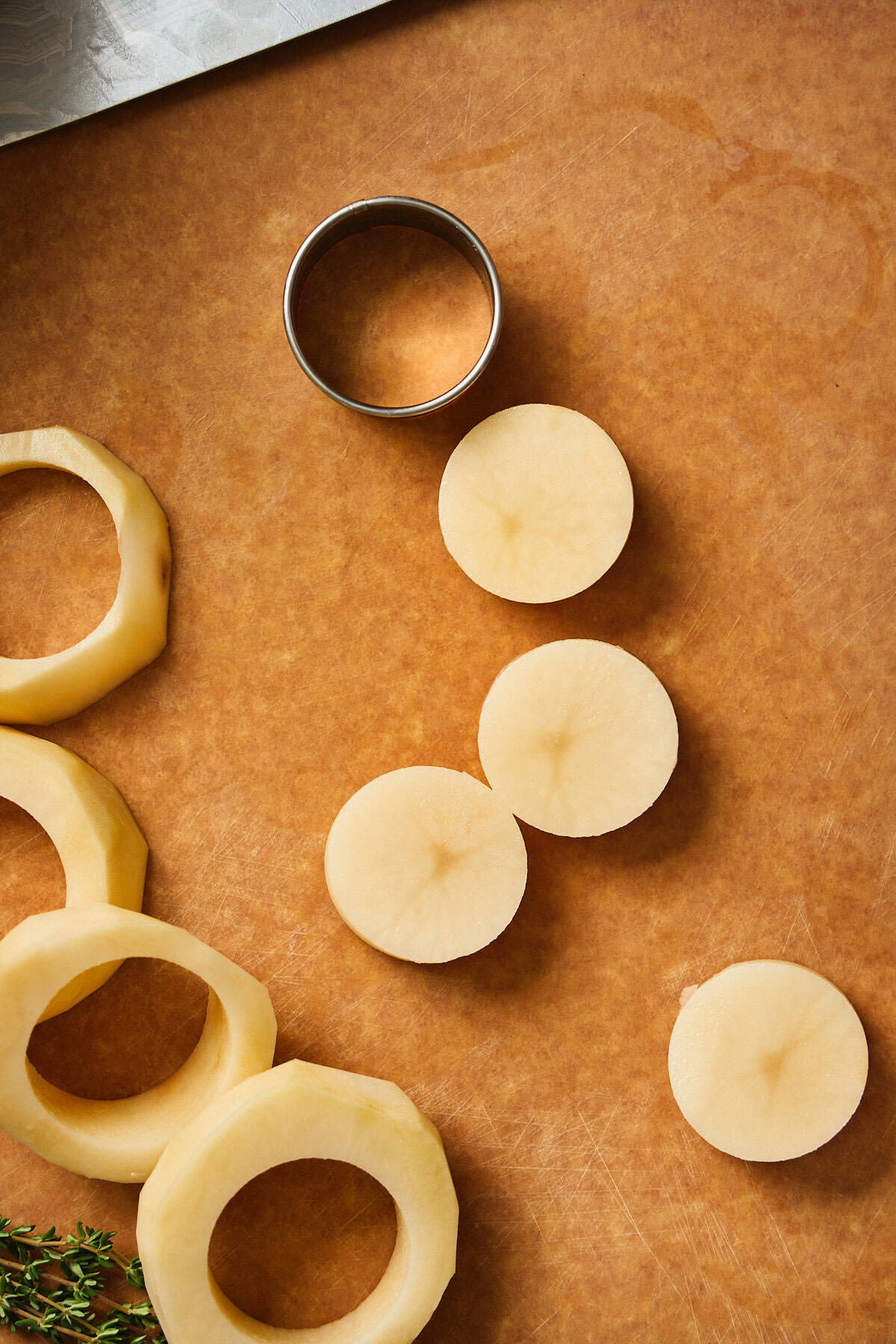
- We love to use a 2-inch diameter round cookie cutter.
Keep in mind, the shaping is totally optional, and you can absolutely just cook the potato slabs as they were in step 4!
Don't toss those potato scraps! Save them for hash browns, mashed potatoes, or add them to soup later!
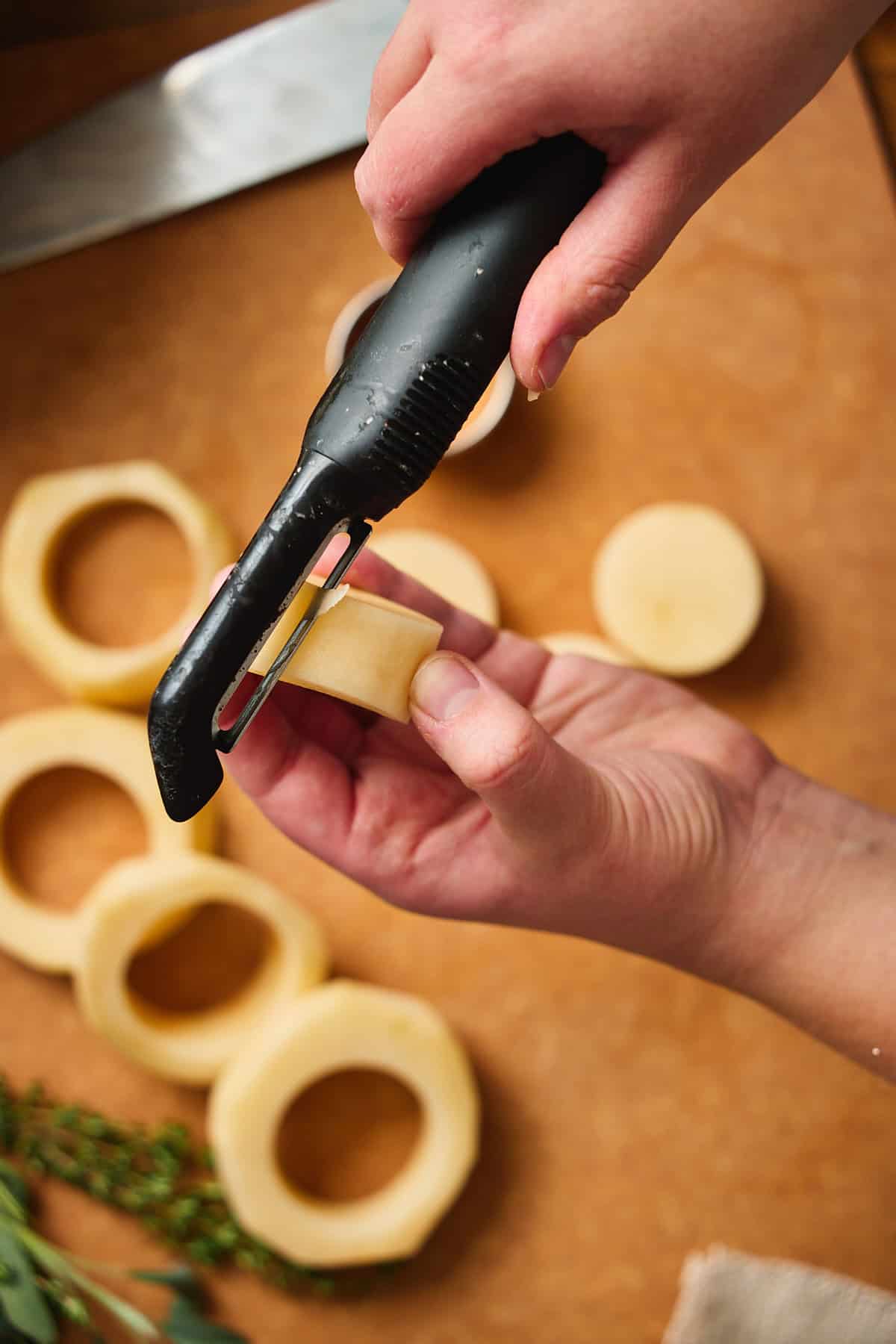
- Step 6 (optional)*: If desired, you can shave any scraggly bits off the edges of your potato rounds with a potato peeler for a very uniform look.
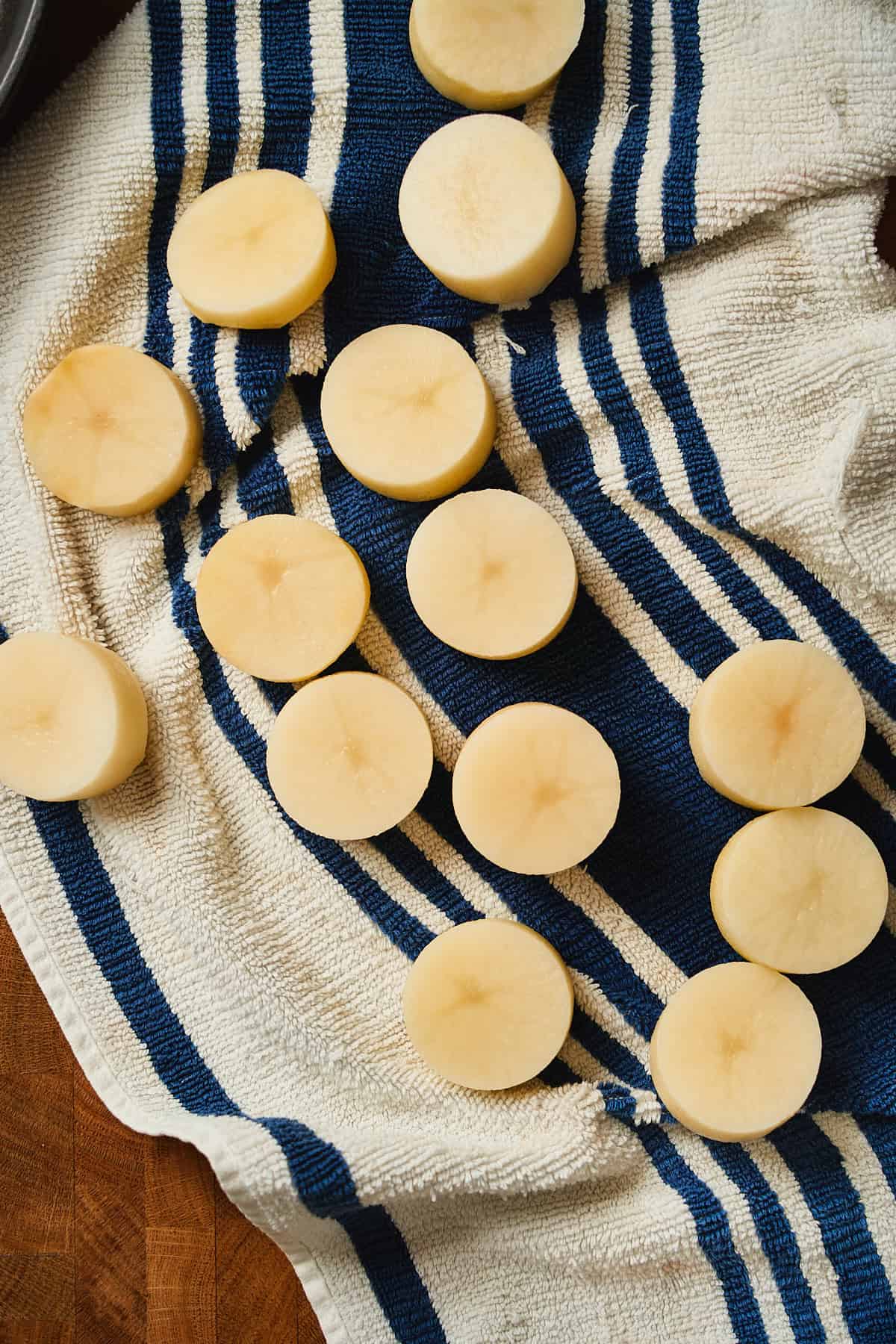
- Step 7: Place the shaped potatoes in a bowl of cold water and let them soak for 15-20 minutes to remove excess starch from the surface and prevent oxidation.
After soaking, pat them completely dry with paper towels or a clean kitchen towel.
Make sure they're really dry! Any excess moisture will prevent that gorgeous golden crust from forming.
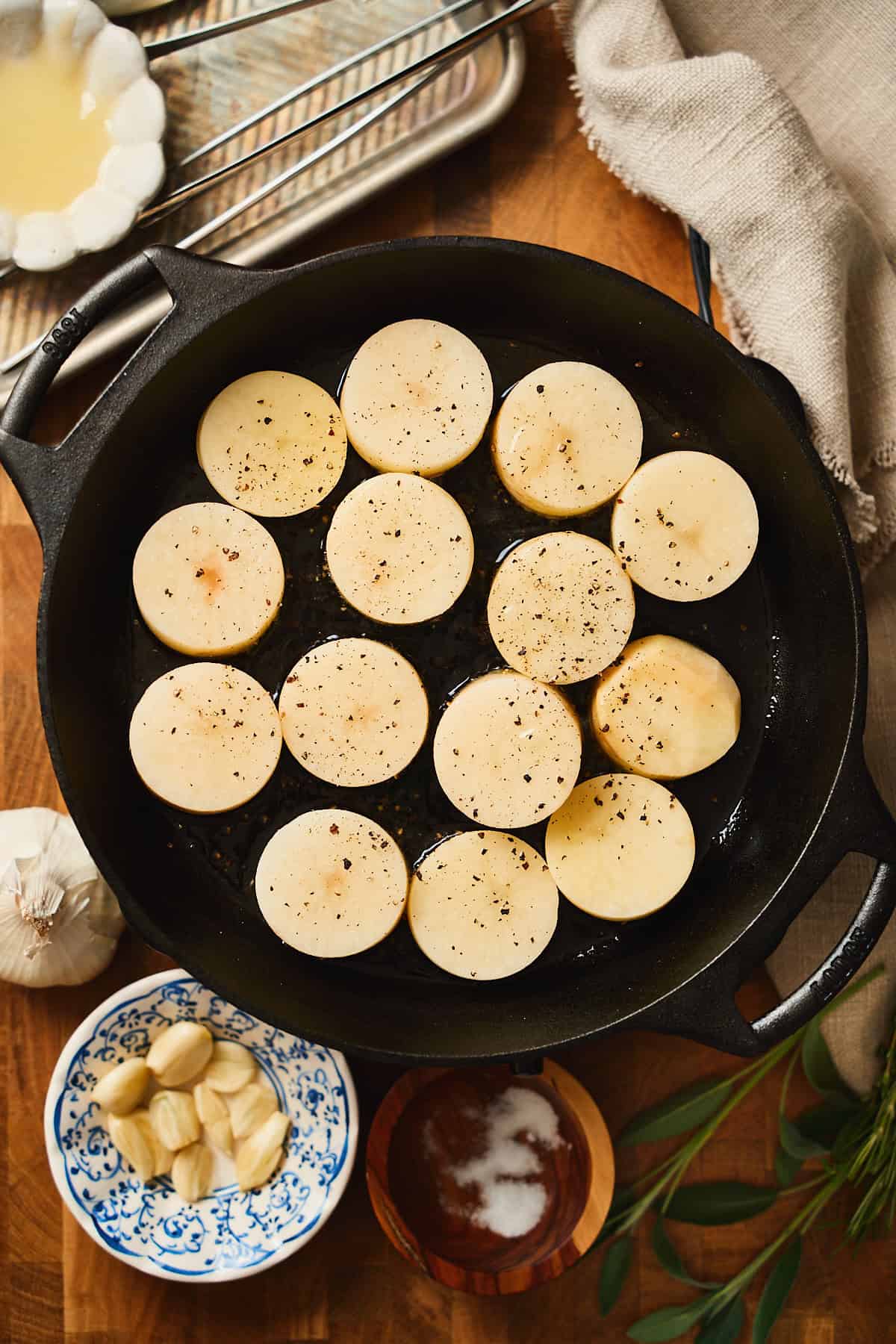
- Step 8: Heat a 10-inch (or larger) oven-safe skillet over medium-high heat. Add the duck fat and let it melt until shimmering hot.
Place the dried potato rounds in the pan in a single layer (don't crowd them!).
Leftover duck fat? Make this decadent, earthy, and delicious duck and mushroom pasta! 🤤
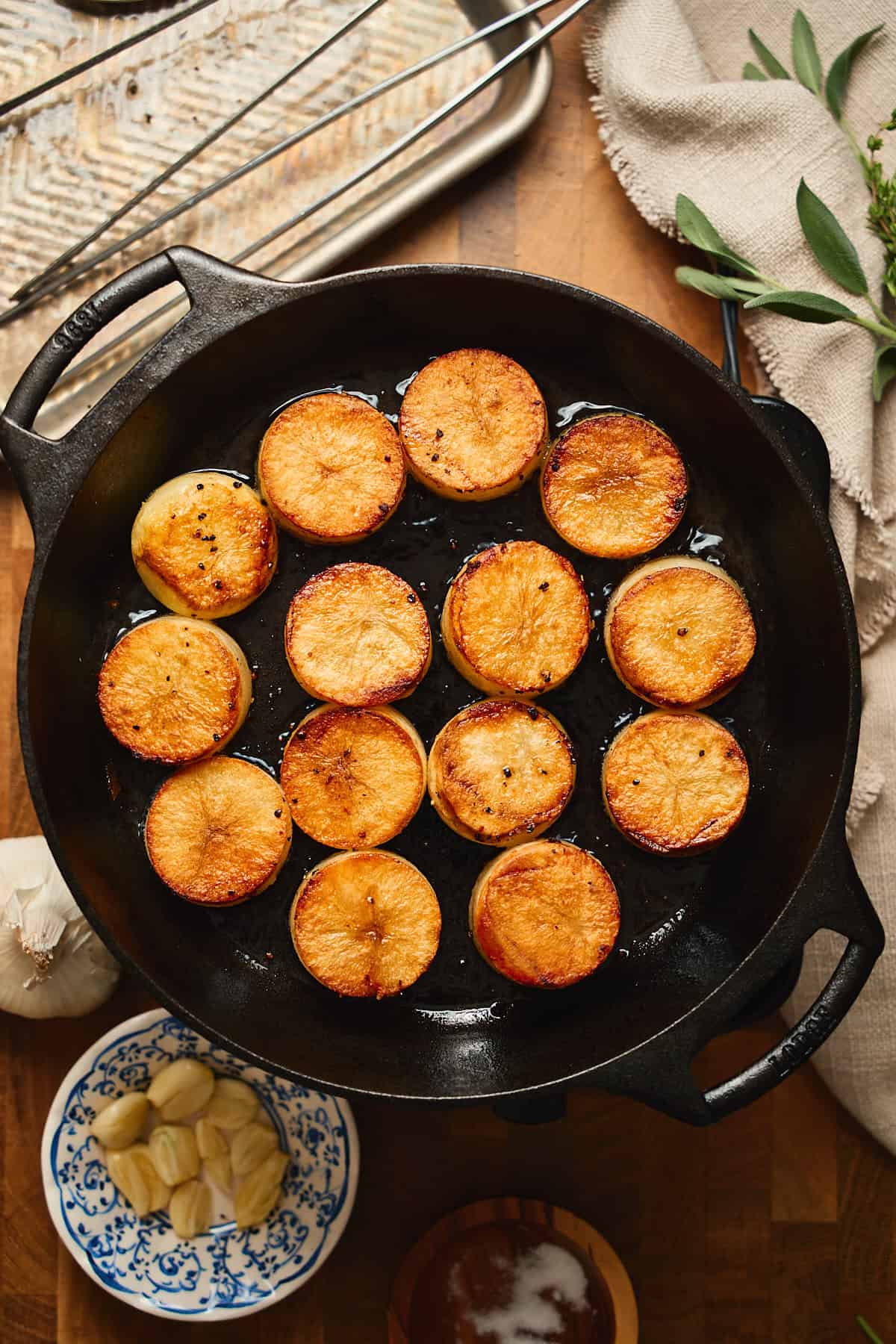
- Step 9: Cook undisturbed for 5-7 minutes per side until deeply golden brown. You want a really good sear here - don't rush it!
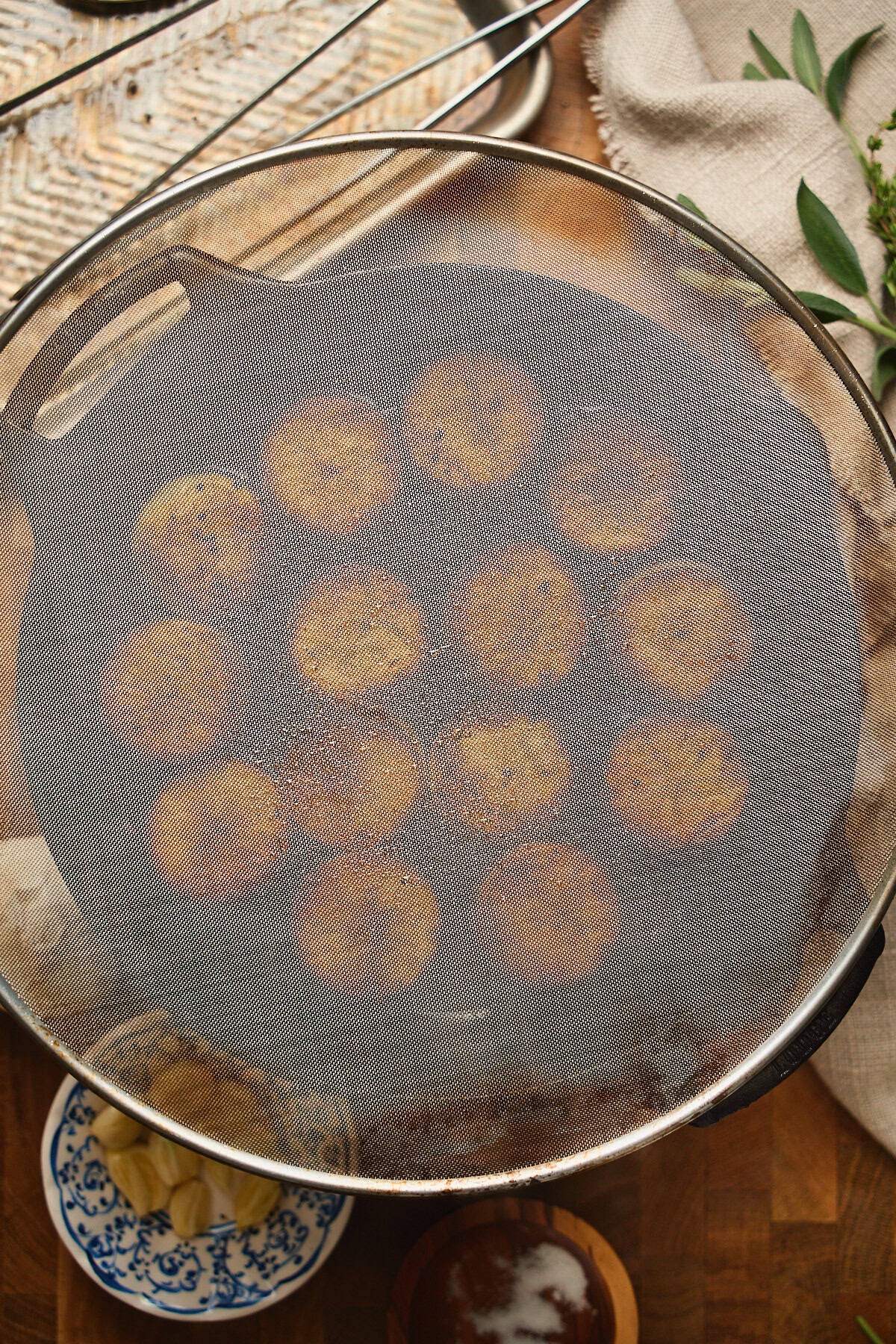
- Pro tip: Use a splatter screen to help minimize the hot grease getting all over your stovetop (and your clothes!)
While the second side of the potatoes are getting nice and golden brown, preheat the oven to 400°F!
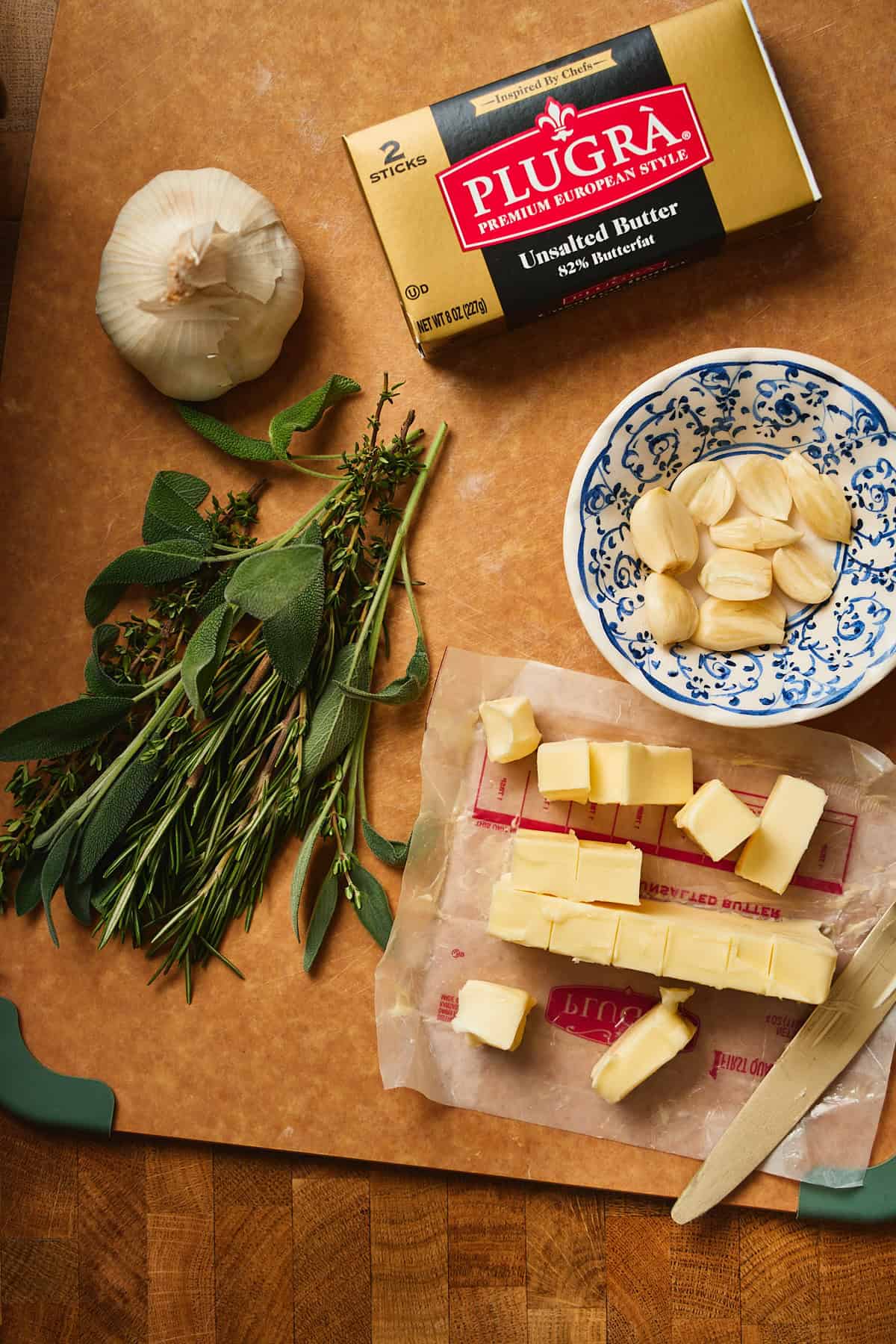
- Step 10: Meanwhile, while the potatoes are getting nice and golden on the other side, prep the ingredients for basting! Cut the butter into chunks, get the herbs together, and smash the garlic cloves.
🧈Cube the butter! Cubing the butter helps it melt quickly and at a consistent rate, which prevents hot spots or burning.
Speaking of butter! 🧈We use Plugrà European-Style Butter, the official butter partner for our blog! That 82% butterfat (vs standard 80%) means richer flavor and the most luxurious basting butter.
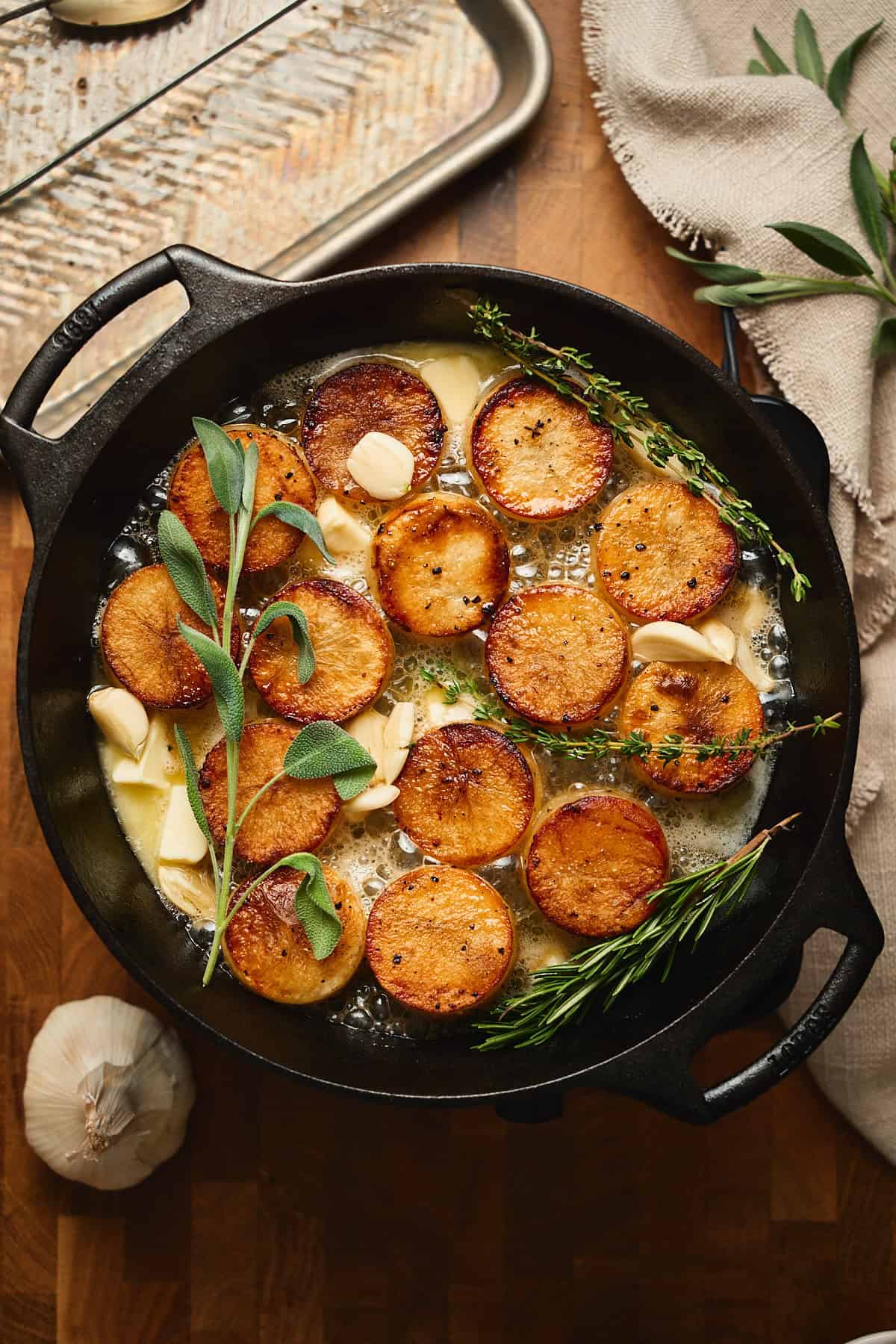
- Step 11: Reduce the heat to low. Add the cubed butter, smashed garlic cloves, and fresh herbs to the pan.
As the butter melts, use a spoon to baste the potatoes, spooning the melted butter mixture over the tops repeatedly for about 2-3 minutes.
🧈 Butter matters: Use high-quality unsalted butter here - it makes a difference, especially with so few ingredients. European-style butter with higher butterfat content is ideal! We use unsalted so we can control the salt level more easily.
🌿 Fresh herbs: We love a combination of fresh thyme, rosemary, and sage for these potatoes. Use whatever you have on hand, or stick with just thyme for a classic French preparation!
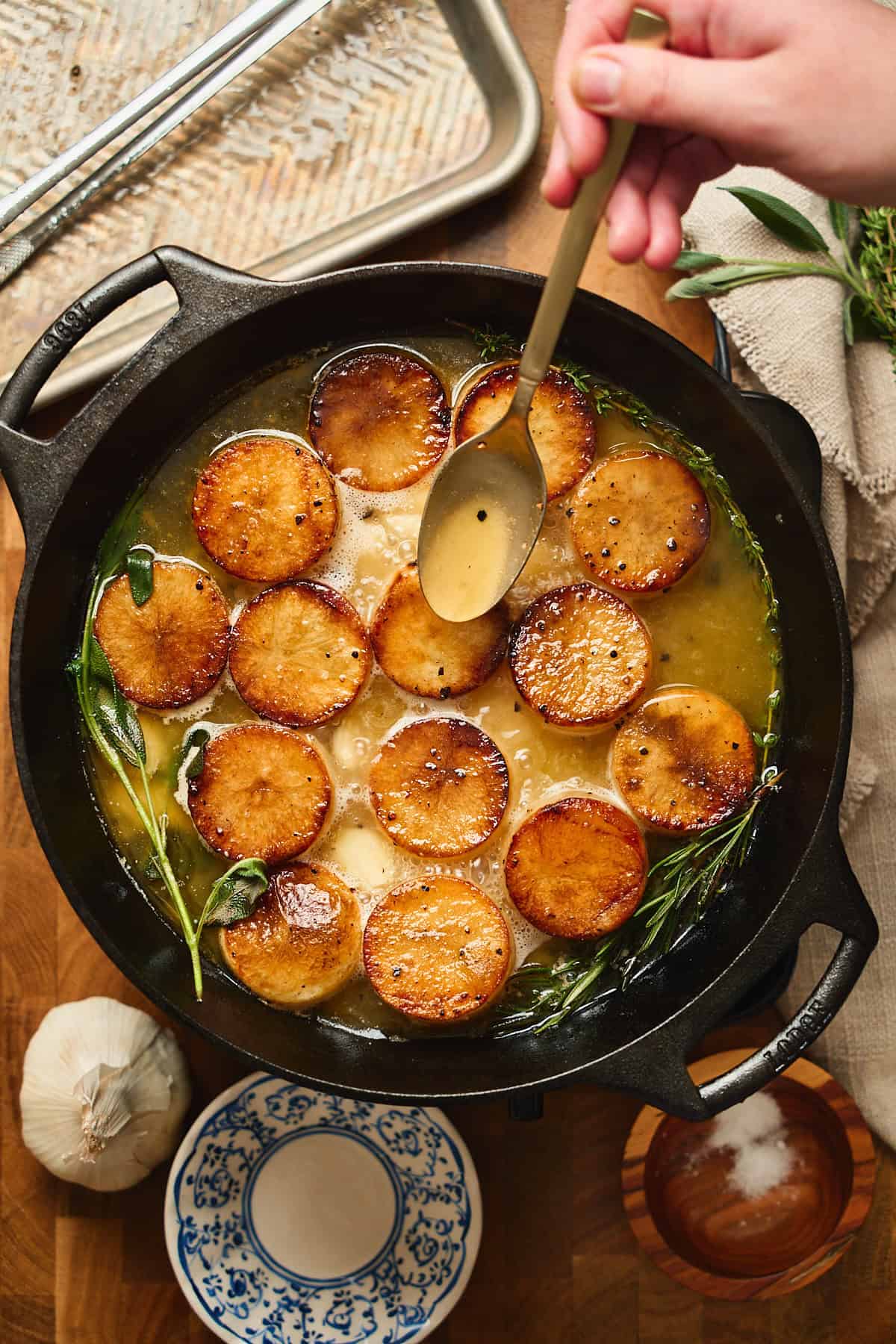
- Step 12: Return the heat to medium. Pour in the white wine and chicken stock, and bring to a boil. The liquid should come about halfway up the sides of the potatoes. Baste the potatoes in the liquid for another minute or so.
🧂Salt. We use Diamond Crystal kosher salt in all of our recipes because it's less salty than other types of salt and dissolves better because of its shape. If you're using Morton's, table salt, or any other type of salt, dial back on the salt as it's saltier!
🍷 Wine choice: Use a dry white wine that you'd actually enjoy drinking - something like Sauvignon Blanc, Pinot Grigio, or Chardonnay. If you don't want to use wine, just substitute with additional chicken stock and add a splash (about 1 tablespoon) of white wine vinegar or lemon juice to add in some acidic brightness.
🍗 Stock: Homemade chicken stock is ideal, but store-bought works perfectly! Keep in mind that the more flavorful the stock, the more flavorful the potatoes, since the potatoes will absorb lots of liquid!
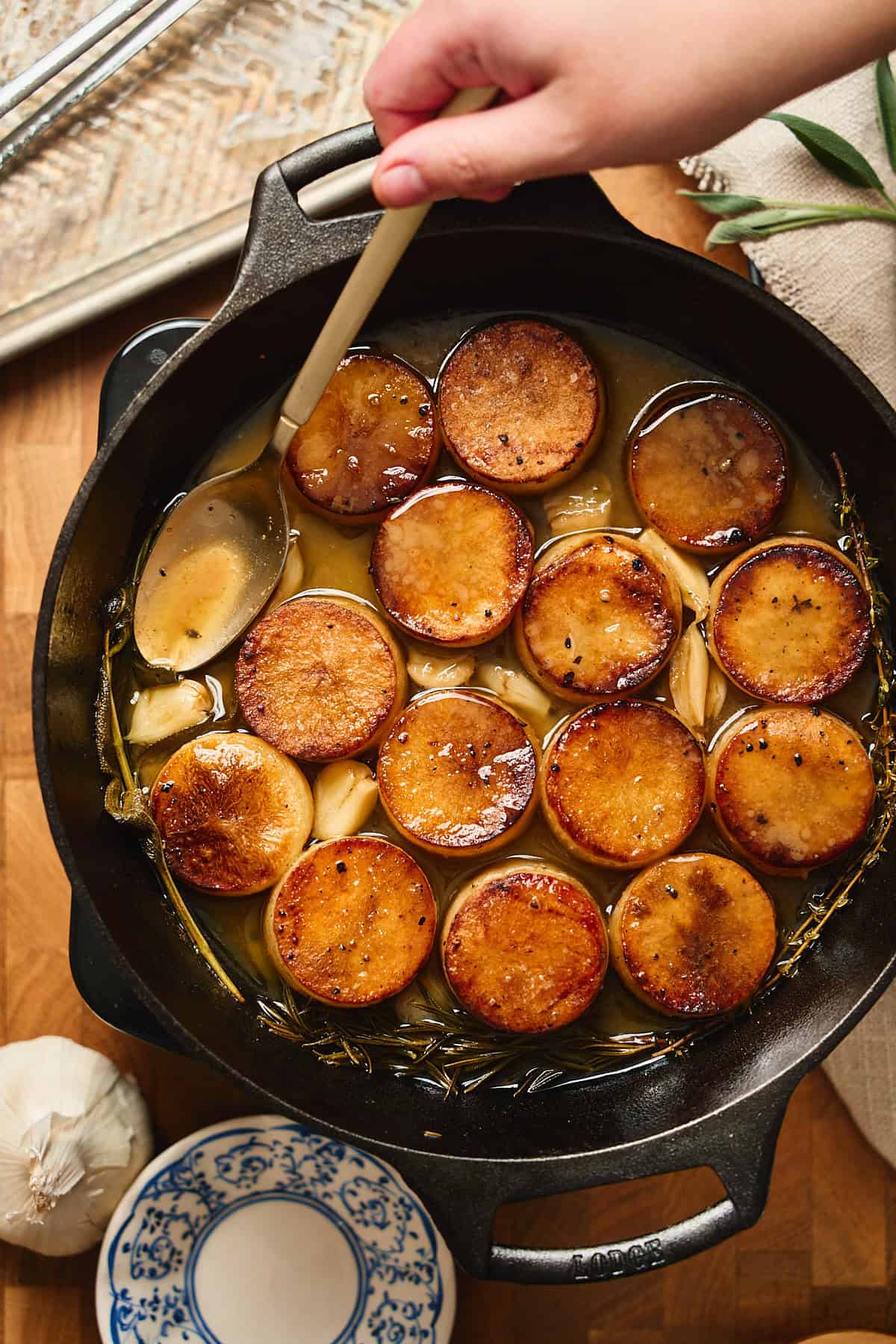
- Step 13: Transfer the skillet to a preheated 400°F oven and roast for 25-30 minutes, basting the potatoes with the pan liquid halfway through.
If the pan starts to look dry before the potatoes are tender, add a splash more stock to prevent burning.
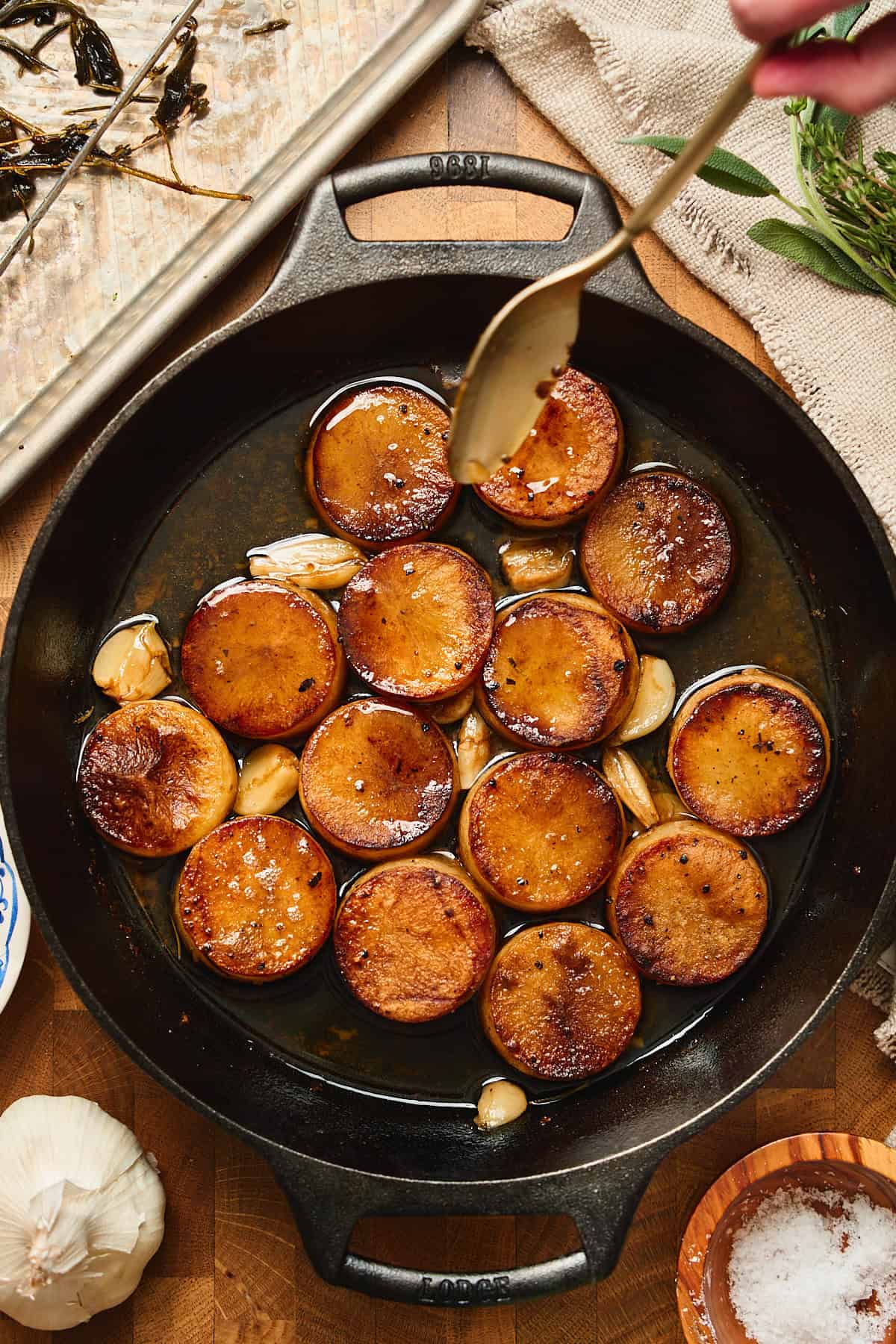
- Step 14: The potatoes are done when they're fork-tender and the liquid has reduced by at least ⅔.
Our recipe is a bit more luscious than some others on the internet, with extra butter, so there will be a bit of liquid left! 😂
🌡️Check them at 25 minutes! Use an instant-read thermometer to check the temperature to see if they are done. You want them to register around 205-210°F internally, or a fork should slide in easily without resistance.
Remove from the oven, season with additional salt and pepper to taste if needed, and garnish with fresh herbs.
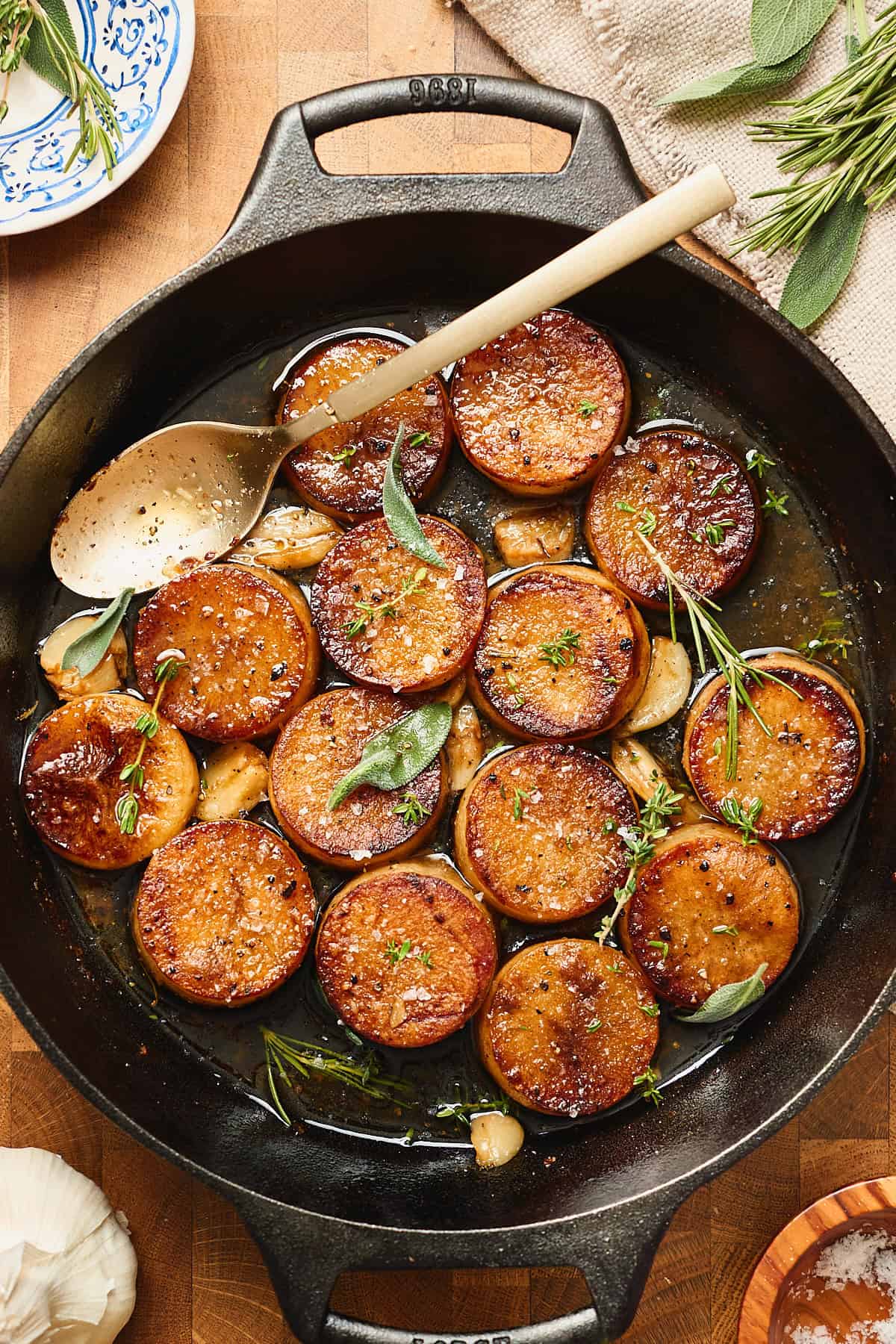
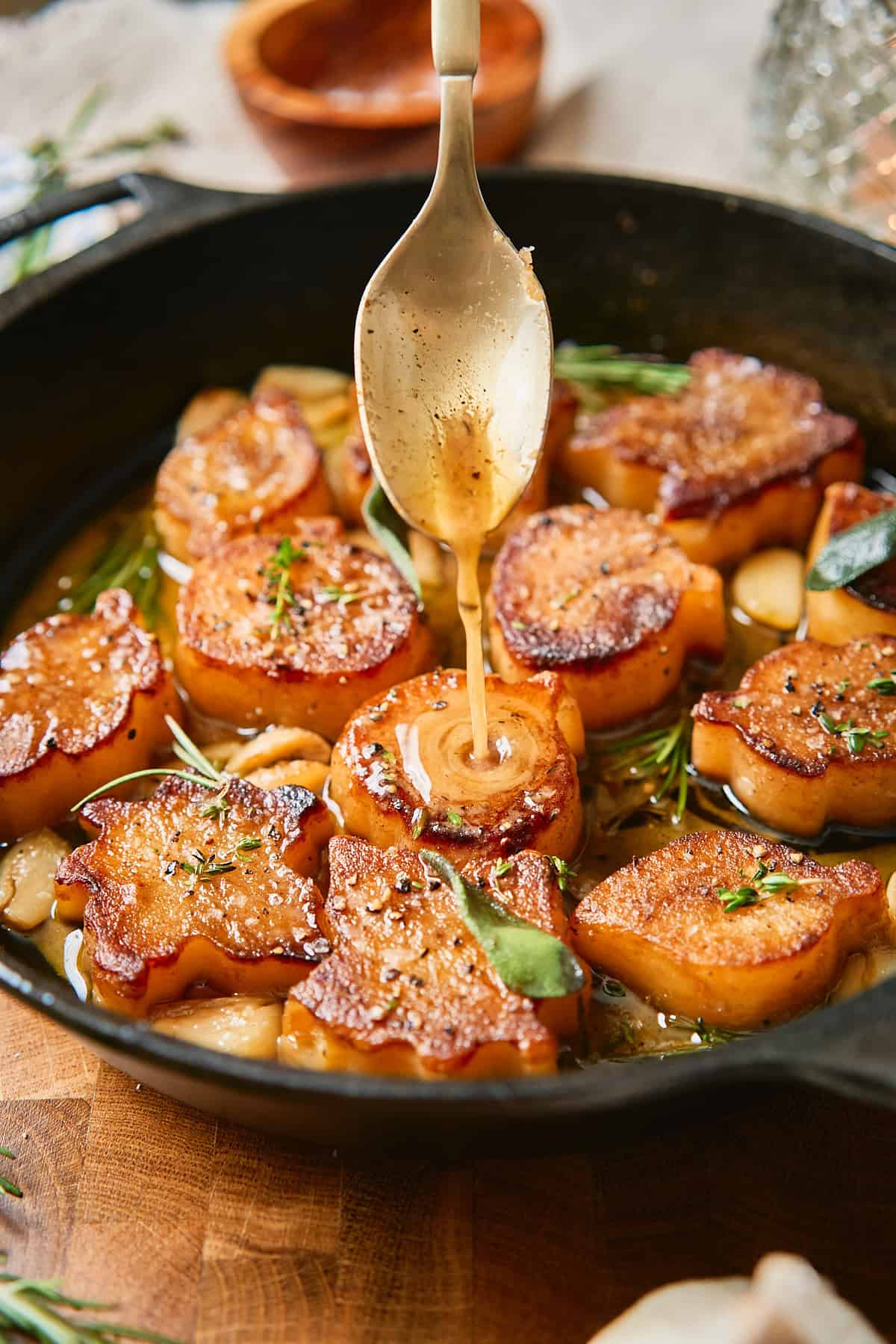
Serve immediately while hot, spooning extra pan sauce over each serving. These are best enjoyed fresh from the oven when they're at their crispiest!
🥄Large batch directions. Serving a crowd? Just use two large skillets. Make sure not to overcrowd the pan when searing - the potatoes need space to develop that golden crust.
🍂Fall Themed Melting Potatoes
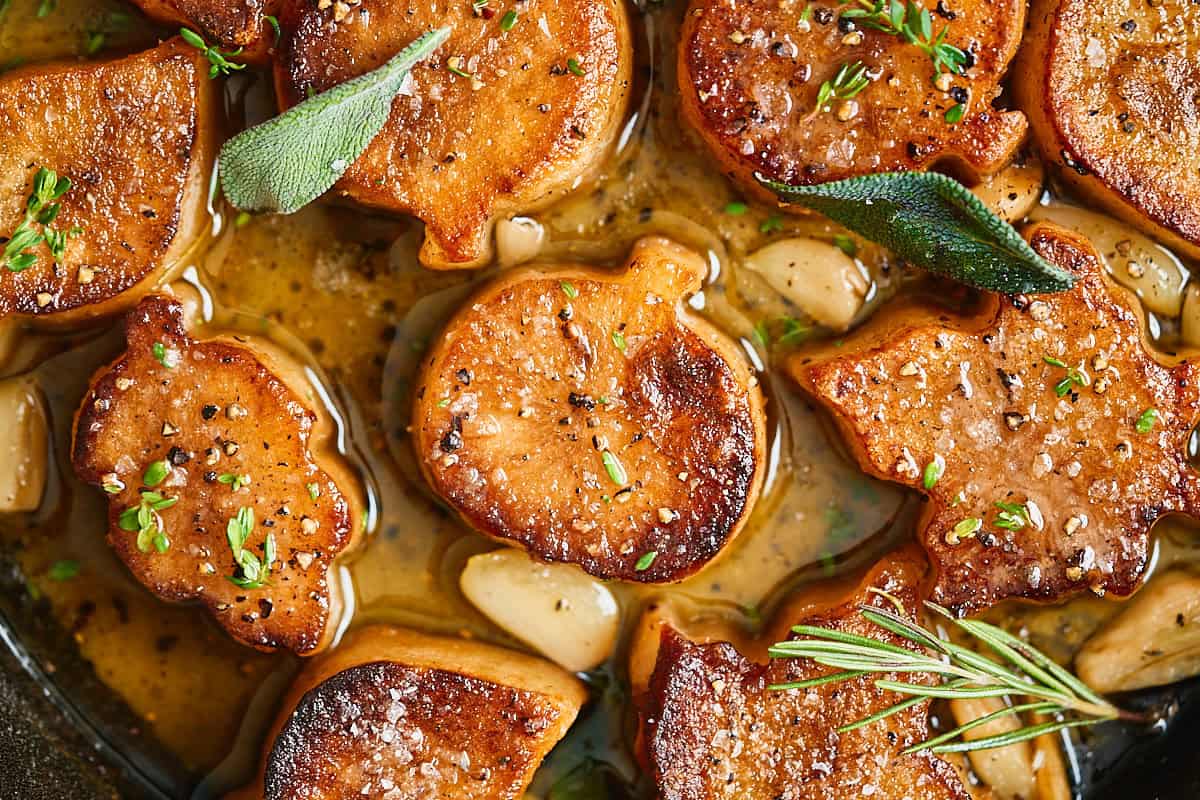
Over on Instagram, we made this recipe with super cute leaf-shaped and pumpkin-shaped cookie cutters! Perfect for Thanksgiving, Halloween, or any fall gathering!
The potatoes can vary in size/shape slightly, as long as they are roughly the same thickness (roughly 1-inch thick)!
What to Serve with These Duck Fat Fondant Potatoes
These potatoes pair perfectly with a steak for a classic date night dinner. Try them with this bavette steak, this delicious surf and turf dinner with lobster, a New York strip, or ribeye!
These buttery poached lobster tails also match the luxuriousness of this dish, 🤤but if that's too rich for you, pair with this oven baked Chilean sea bass!
Make a double batch, then serve them with this garlic and herb slow cooker prime rib roast on Christmas or New Year's Eve!
🌟Leave a Review!
If you make this recipe, we'd love to hear from you! Leave a comment below with your rating for the recipe. Share with us by tagging us on Instagram! We love seeing your creations! 📸
📖 Recipe

Buttery Duck Fat Fondant Potatoes (Melting Potatoes)
Equipment
- 10-inch cast iron skillet (or larger!)
- splatter screen (optional!)
Ingredients
- 3-4 large russet potatoes peeled
- 2-3 tablespoons duck fat as needed for searing
- 8 tablespoons unsalted butter cubed
- 10 cloves garlic smashed
- 2-3 whole thyme sprigs
- 2-3 whole rosemary sprigs
- 4-5 whole sage leaves optional
- ½ teaspoon kosher salt to taste
- freshly cracked black pepper to taste
- ¼ cup dry white wine can substitute chicken stock
- ¾-1 ¼ cups chicken stock as needed, add to the pan if it gets dry!
Instructions
- Prep the potatoes. Peel potatoes and cut into 1-inch thick rounds. Use a 2-inch round cookie cutter to shape into uniform cylinders. Place in a bowl of cold water and soak for 15-20 minutes to remove excess starch. Drain and pat completely dry.3-4 large russet potatoes
- Sear the potatoes. Heat duck fat in a large oven-safe skillet (10-inch or larger) over medium-high heat until shimmering. Add potato rounds in a single layer and cook undisturbed for 5-7 minutes per side until deeply golden brown. Meanwhile, preheat the oven to 400°F.2-3 tablespoons duck fat
- Baste with butter. Reduce the heat to low. Add cubed butter, smashed garlic cloves, and fresh herbs. As butter melts, continuously baste the potatoes by spooning the mixture over them for 2-3 minutes.8 tablespoons unsalted butter, 10 cloves garlic, 2-3 whole thyme sprigs, 2-3 whole rosemary sprigs, ½ teaspoon kosher salt , freshly cracked black pepper, 4-5 whole sage leaves
- Add liquid and roast. Return heat to medium. Pour in white wine and chicken stock (liquid should come halfway up the sides of potatoes) and bring to a boil. Transfer the skillet to the preheated oven.¼ cup dry white wine, ¾-1 ¼ cups chicken stock
- Finish cooking. Roast for 25-30 minutes, basting halfway through, until potatoes are fork-tender and liquid has mostly reduced. The internal temperature should reach 205-210°F with an instant read thermometer.
- Serve. Remove from oven and spoon the buttery pan sauce over potatoes. Season with additional salt and pepper to taste, garnish with fresh herbs, and serve immediately.
Save This Recipe! 💌
Notes
TIPS & TRICKS
- Dry the potatoes thoroughly. After soaking, make sure potatoes are completely dry before searing - any moisture will prevent that beautiful golden crust from forming.
- Don't rush the sear. Let the potatoes cook undisturbed for the full 5-7 minutes per side to develop a deep golden-brown crust. This is where all that crispy texture and caramelized flavor come from!
- Duck fat substitutes. Can't find duck fat? Bacon grease, schmaltz (chicken fat), or ghee are excellent alternatives. In a pinch, use a high-heat neutral oil like avocado oil - they'll still be delicious!
- Wine substitute. If you don't want to use wine, replace with additional chicken stock and add 1 tablespoon white wine vinegar or fresh lemon juice for brightness.
- Fresh herbs work best. We recommend fresh thyme, rosemary, and sage for the best flavor. Dried herbs can be used, but won't infuse the same depth of flavor.
- Check the liquid level. If the pan looks dry before the potatoes are tender, add a splash more stock to prevent burning.
- Salt. This recipe uses Diamond Crystal kosher salt. If using Morton's kosher salt or table salt, reduce the amount by half.
- Skip the cookie cutter step if you're short on time or just don't feel like doing it. Just cut potatoes into thick rounds. They'll taste just as amazing!
- Make-ahead option. You can prep the potatoes up to 24 hours in advance by peeling, cutting, and storing them in water in the fridge. For partial make-ahead, sear the potatoes and complete the butter basting step, then cool completely and refrigerate for up to 24 hours. When ready to serve, bring to room temperature, add wine and stock, and finish roasting. Best made fresh for maximum crispiness!
- Serving size. Plan on 2-3 fondant potatoes per person as a side dish. This recipe makes 12-14 potato rounds, depending on the size of your potatoes and cookie cutter. These are rich and filling!
- Doubling the recipe. Use two large skillets or work in batches. Don't overcrowd the pan when searing - potatoes need space for that golden crust.
STORAGE
- Room temperature: These are best served immediately while hot and crispy. Fondant potatoes don't hold well at room temperature.
- Refrigerator: Store leftover potatoes in an airtight container in the refrigerator for up to 3 days. Note that they will lose their crispy exterior when stored.
- Reheating: Reheat in a 400°F oven for 10-12 minutes to re-crisp the exterior. You can also reheat in a skillet with a little butter or duck fat over medium heat until warmed through and crisped up again.
- Freezing: We don't recommend freezing fondant potatoes as they lose their texture when thawed.


Comments
No Comments