
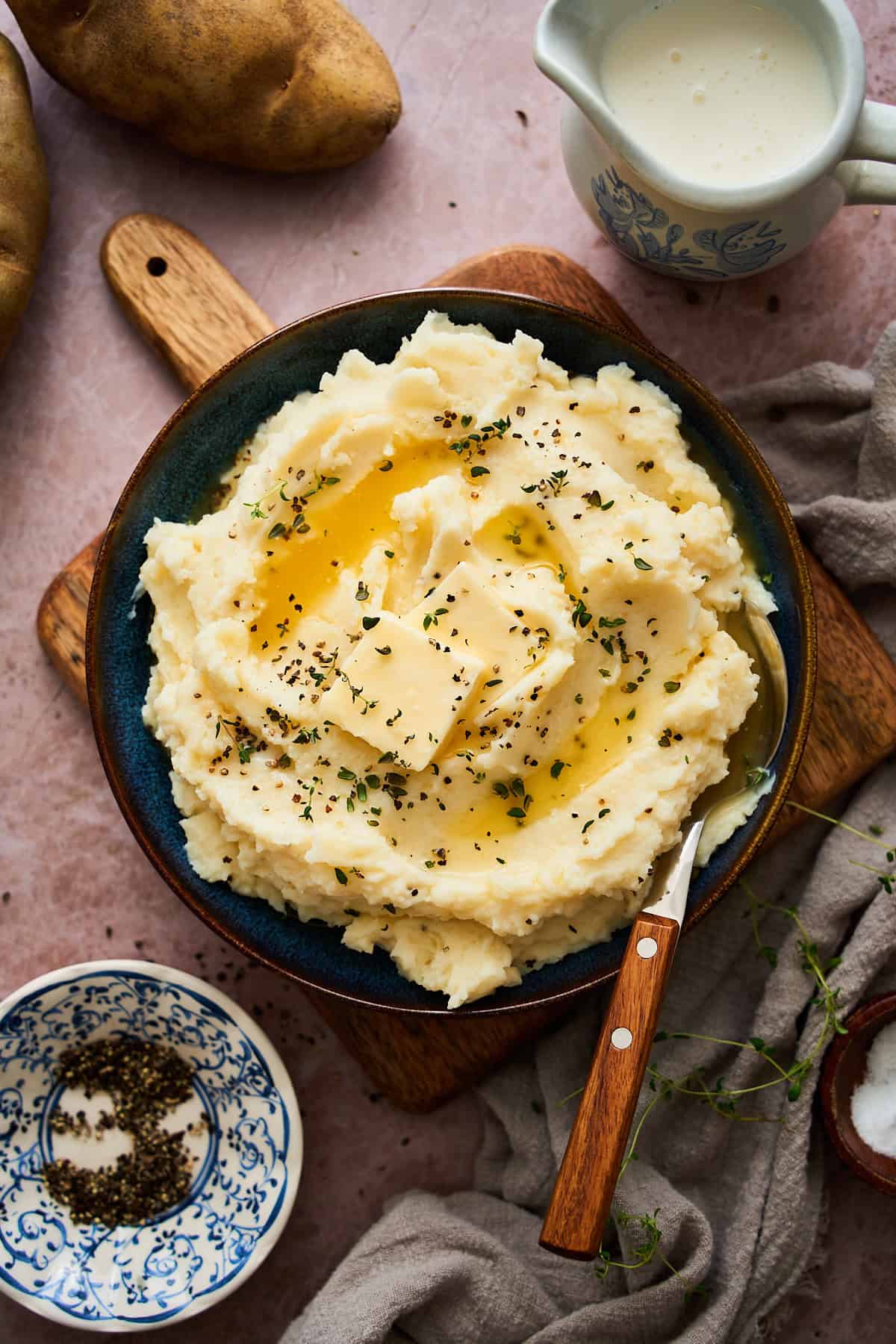
These Creamy Buttermilk Mashed Potatoes are everything you want in a perfect side dish-fluffy, buttery, and silky smooth with just a hint of tang that keeps them from tasting heavy! Buttermilk is the secret ingredient that balances all that richness, giving you mashed potatoes that taste like they came from a really good steakhouse. They pair beautifully with roasts, steaks, fried chicken, or honestly, just a big puddle of gravy. 🤤
Save This Recipe! 💌
The Secret to Perfectly Tangy Mashed Potatoes? Buttermilk! 🥔
Buttermilk does the same thing here that it does in biscuits and pancakes-it adds a subtle tang that balances all that butter and keeps things tasting fresh instead of heavy. It's a small swap that makes a BIG difference! 🤤
The technique isn't complicated either. It comes down to plenty of butter (don't be shy!), room temperature buttermilk, and-if you want that silky smooth texture-a potato ricer. Melted butter folds right in, and room-temperature buttermilk won't cool everything down the way ice-cold dairy does. That's the key to fluffy, silky potatoes that melt in your mouth!
These are perfect alongside our rich French onion pot roast, a less-traditional but totally delicious side for Swedish meatballs, or these luscious smothered turkey wings for the ultimate comfort food dinner!
🥔What You'll Need for Fluffy Buttermilk Mashed Potatoes
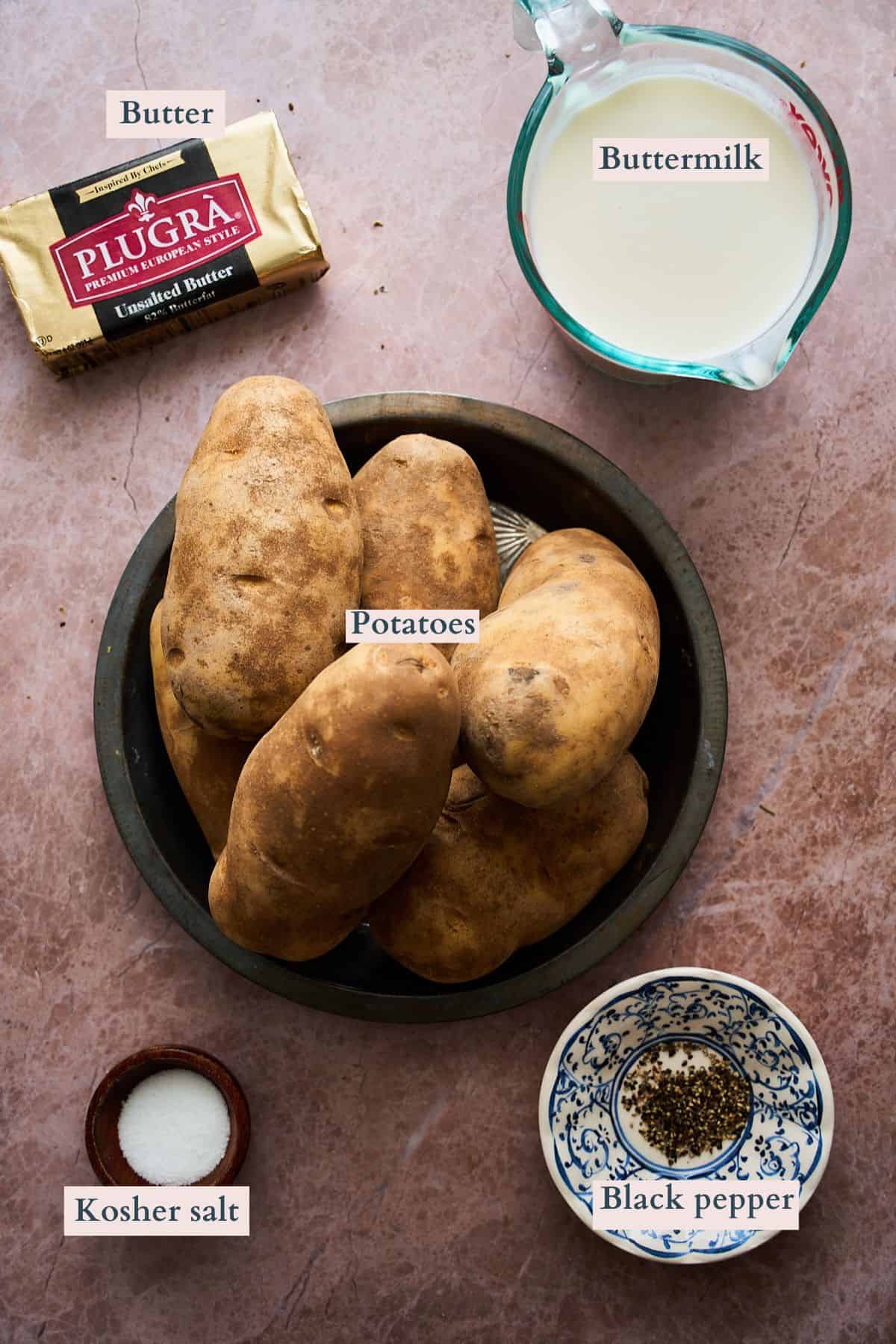
Just a handful of simple ingredients here-russet potatoes, butter, buttermilk, and salt. That's really it! When a recipe is this simple, quality matters, so use the best butter you can get your hands on. 🧈
How to Make Homemade Buttermilk Mashed Potatoes
These come together quickly once your potatoes are cooked! The key is working while everything is still hot. Before you start, take your buttermilk out of the fridge so it can come to room temperature. Let's begin!
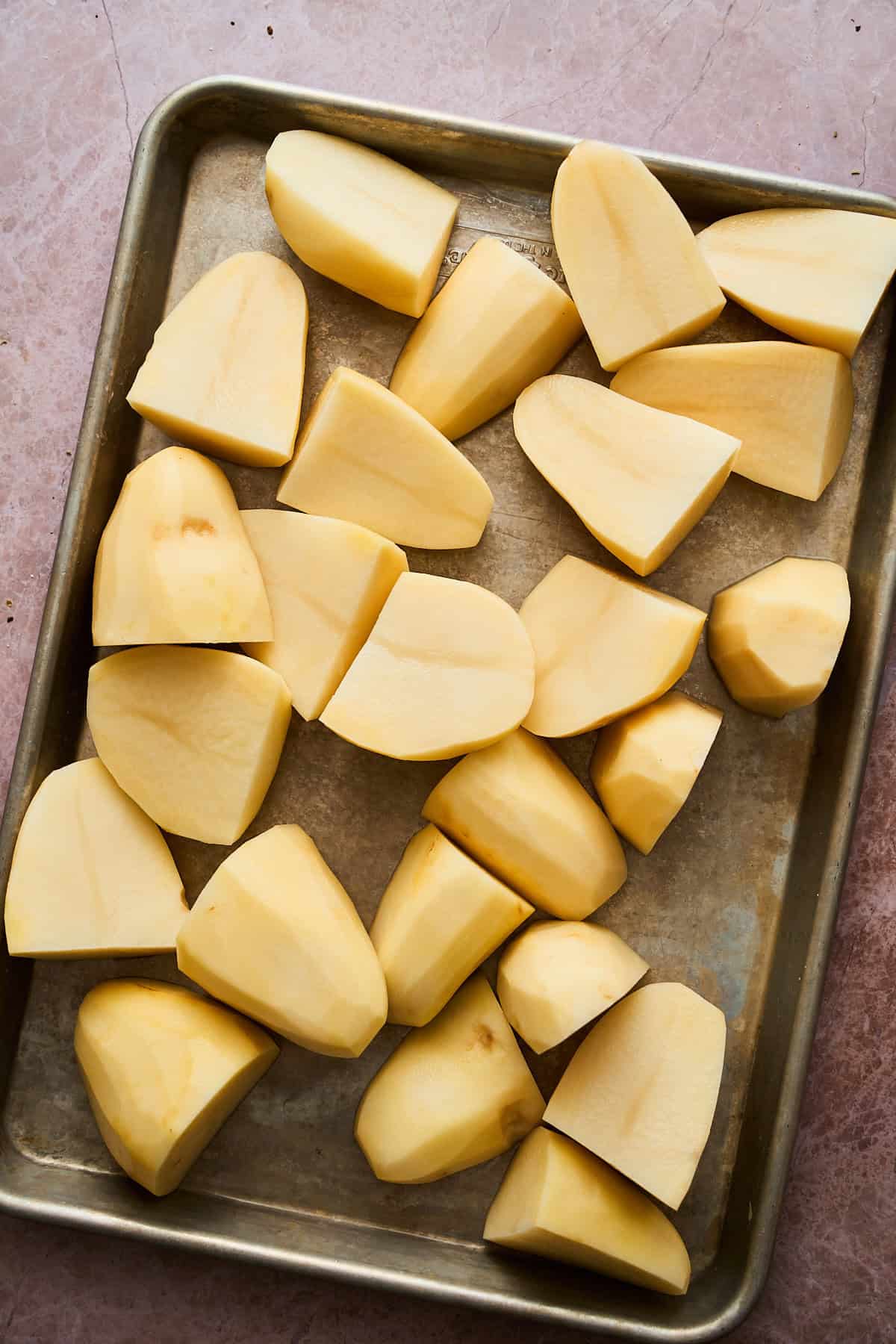
- Step 1: Peel your potatoes and cut them into large chunks-we quarter ours. Larger pieces mean less surface area, so the potatoes absorb less water and stay nice and fluffy instead of waterlogged! Just make sure they're relatively uniform in size so they cook at the same rate.
Place the potatoes in a large pot and cover with cold water by about an inch. Add a generous amount of salt-about 1 tablespoon per pound of potatoes. The water should taste like the sea! This is your first opportunity to season the potatoes, and it makes a huge difference.
Why start with cold water? If you drop potatoes into boiling water, the outside cooks faster than the inside, leaving you with unevenly cooked potatoes. Starting with cold water and bringing everything up to temperature together ensures even cooking all the way through!
Bring to a boil over high heat, then reduce to a simmer. Cook for 15-20 minutes, or until a fork slides through easily with no resistance.
🥔 Russets or Yukon Golds? Both work great here! Russets give you a fluffier, lighter mash (that's what we used), while Yukon Golds are naturally creamier and more buttery. Just avoid waxy potatoes like red potatoes or fingerlings-they'll end up with a denser and lumpier.
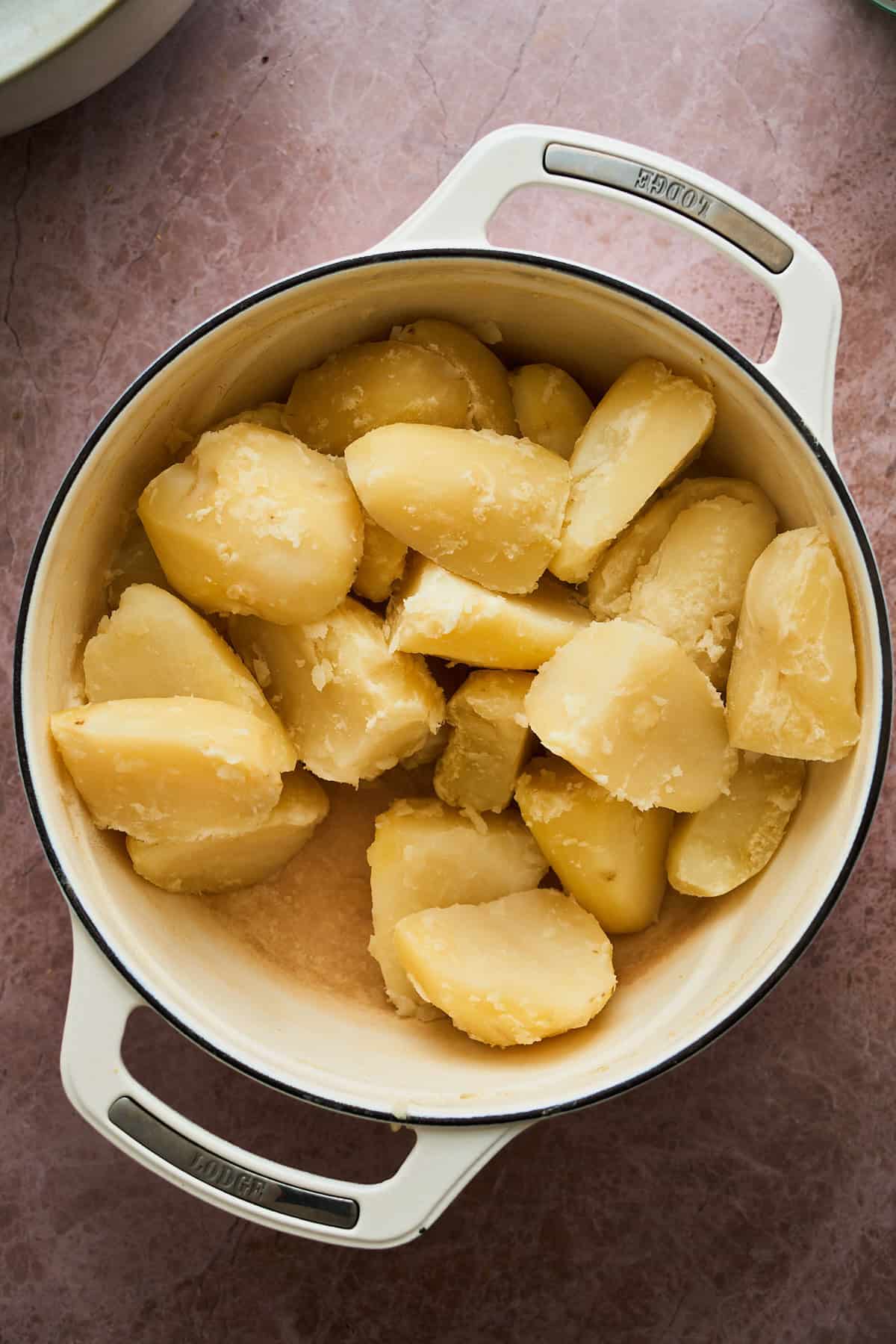
- Step 2: Once the potatoes are fork-tender, drain them well in a colander. Return them to the hot pot (off the heat) and let them sit for a minute or two. You'll see the steam rising off them-this is the excess moisture evaporating, which means creamier, less watery mashed potatoes!
💡 Extra dry = extra creamy! You can even put the pot back on the burner over low heat for 30 seconds or so, shaking the pot gently, to help dry them out even more.
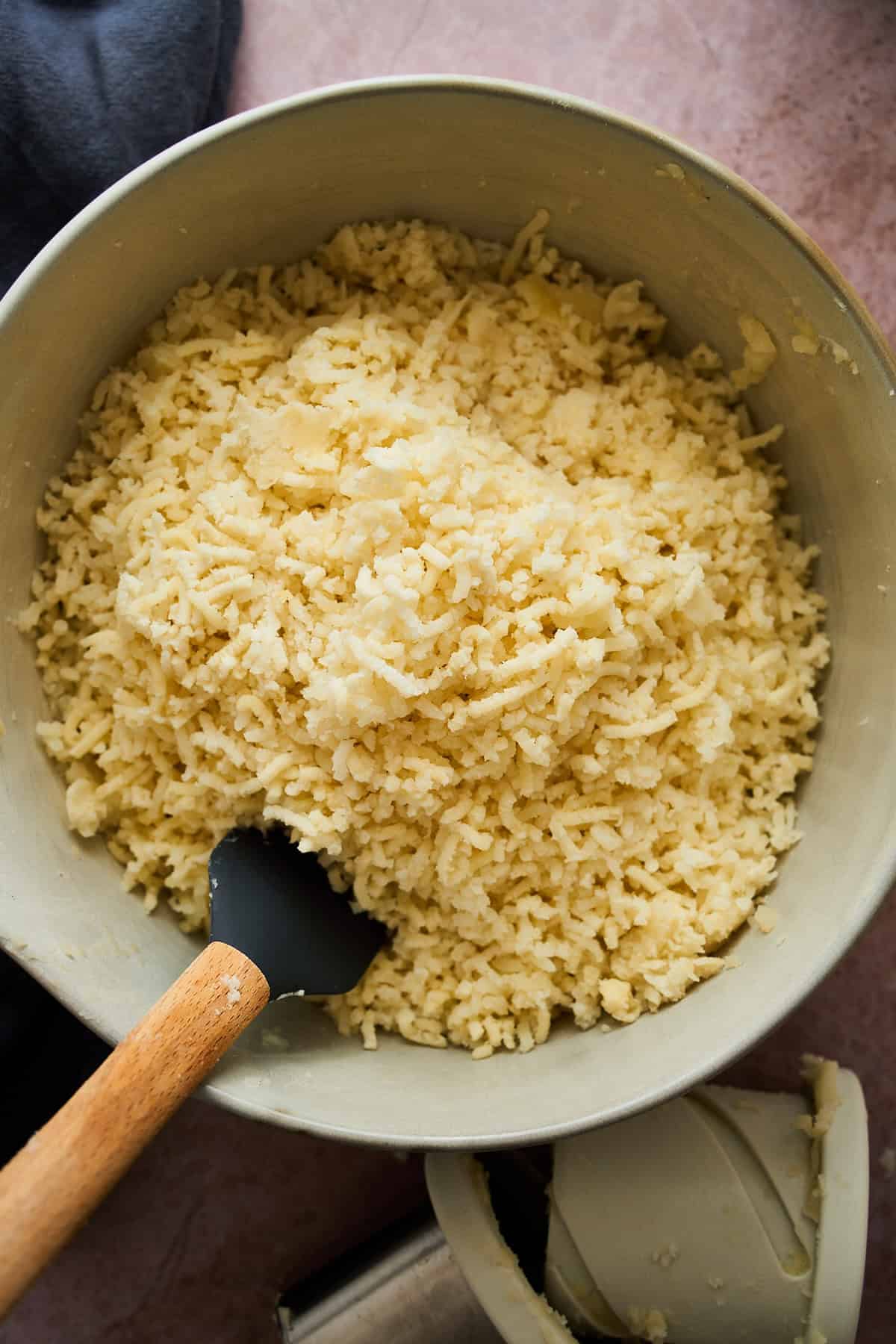
- Step 3: Working while the potatoes are still hot, pass them through a potato ricer into a large bowl or back into the pot. This gives you that ultra-silky, lump-free texture without overworking the potatoes.
🚫 Skip the hand mixer or food processor! Overmixing activates the starches in the potatoes and turns them gluey and pasty.
💡 No ricer? A potato masher works too-you'll just have a slightly more rustic texture, which is totally delicious in its own way!
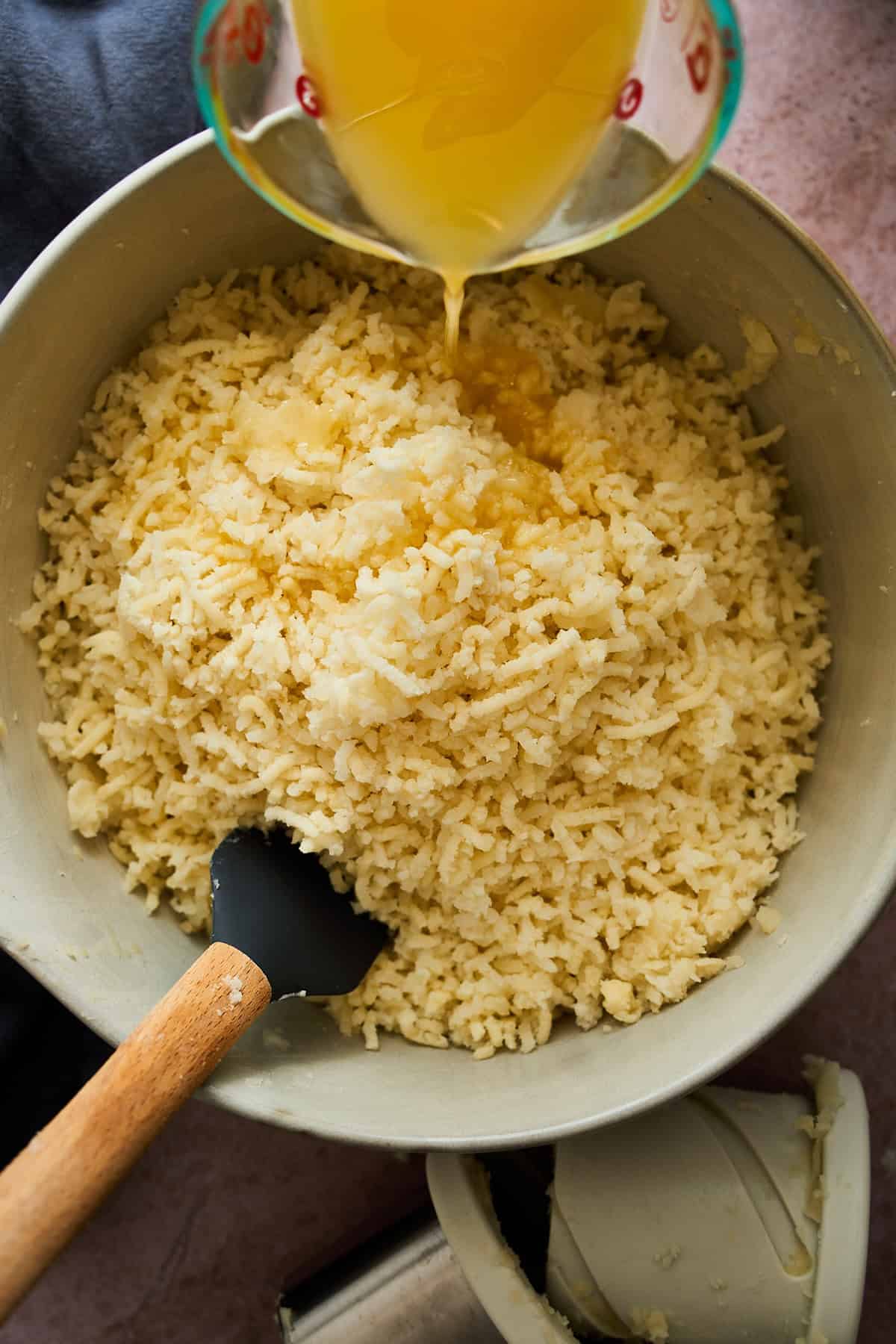
- Step 4: Melt your butter in a small saucepan over low heat (or in the microwave). Pour the hot melted butter over the riced potatoes and stir gently with a spatula until combined.
🧈 Butter matters! When a recipe is this simple, quality counts. We love using Plugrá European-Style Butter-the 82% butterfat (compared to 80% in standard American butter) makes a noticeable difference in richness and flavor!
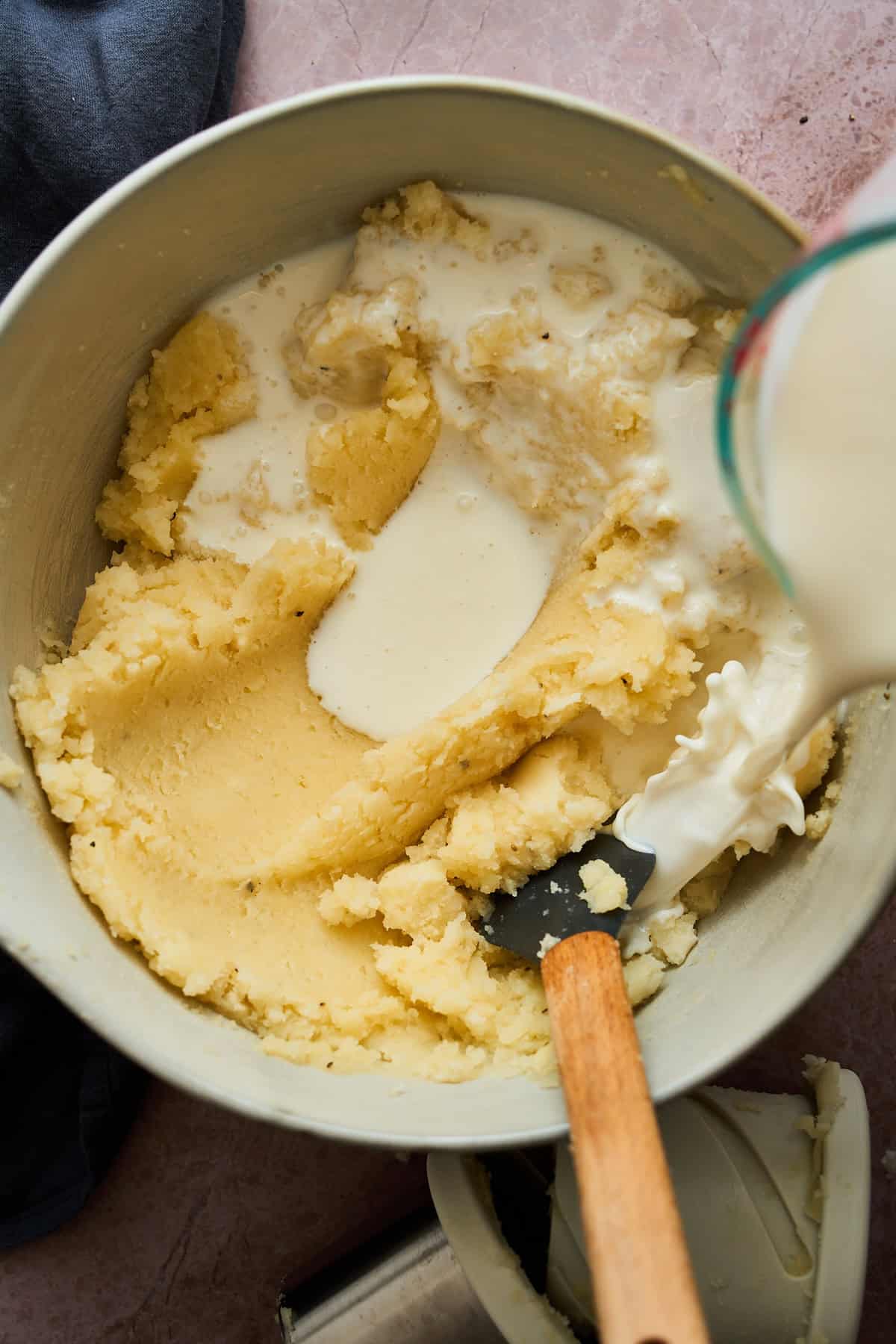
- Step 5: Next, add the room temperature buttermilk. Start with about ¾ of it, stir, then add more as needed to reach your desired consistency. Some people like their mashed potatoes thick and scoopable, others like them looser and creamier-you're in control here. 😉
🥛 No buttermilk? Add 1 tablespoon of lemon juice or white vinegar to 1 cup of whole milk and let it sit for 5-10 minutes until it curdles slightly. It won't be exactly the same, but it works in a pinch!
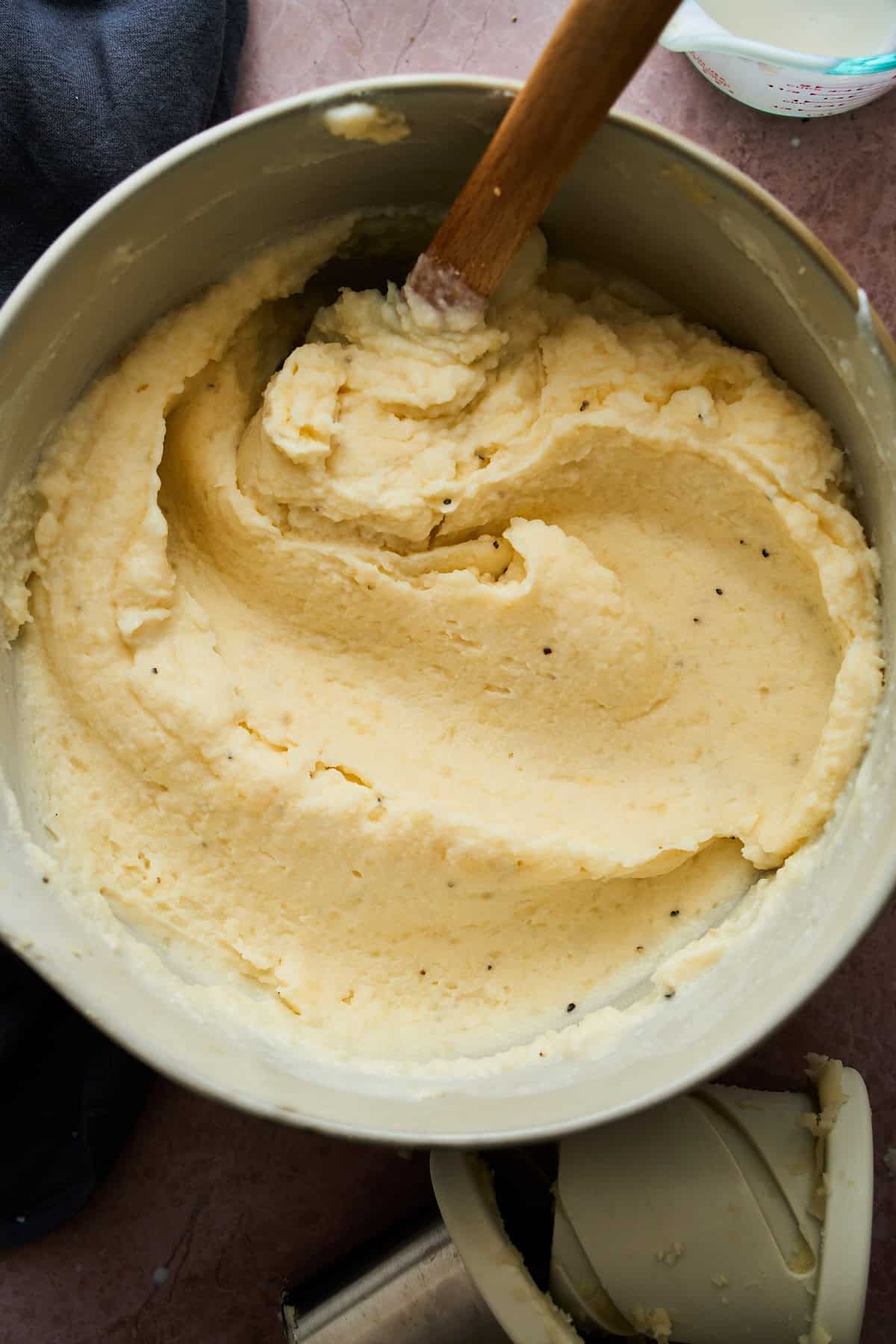
- Step 6: Taste and season generously with salt and pepper. Mix to combine. Mashed potatoes need more salt than you think, so keep tasting and adjusting until they're perfectly seasoned!
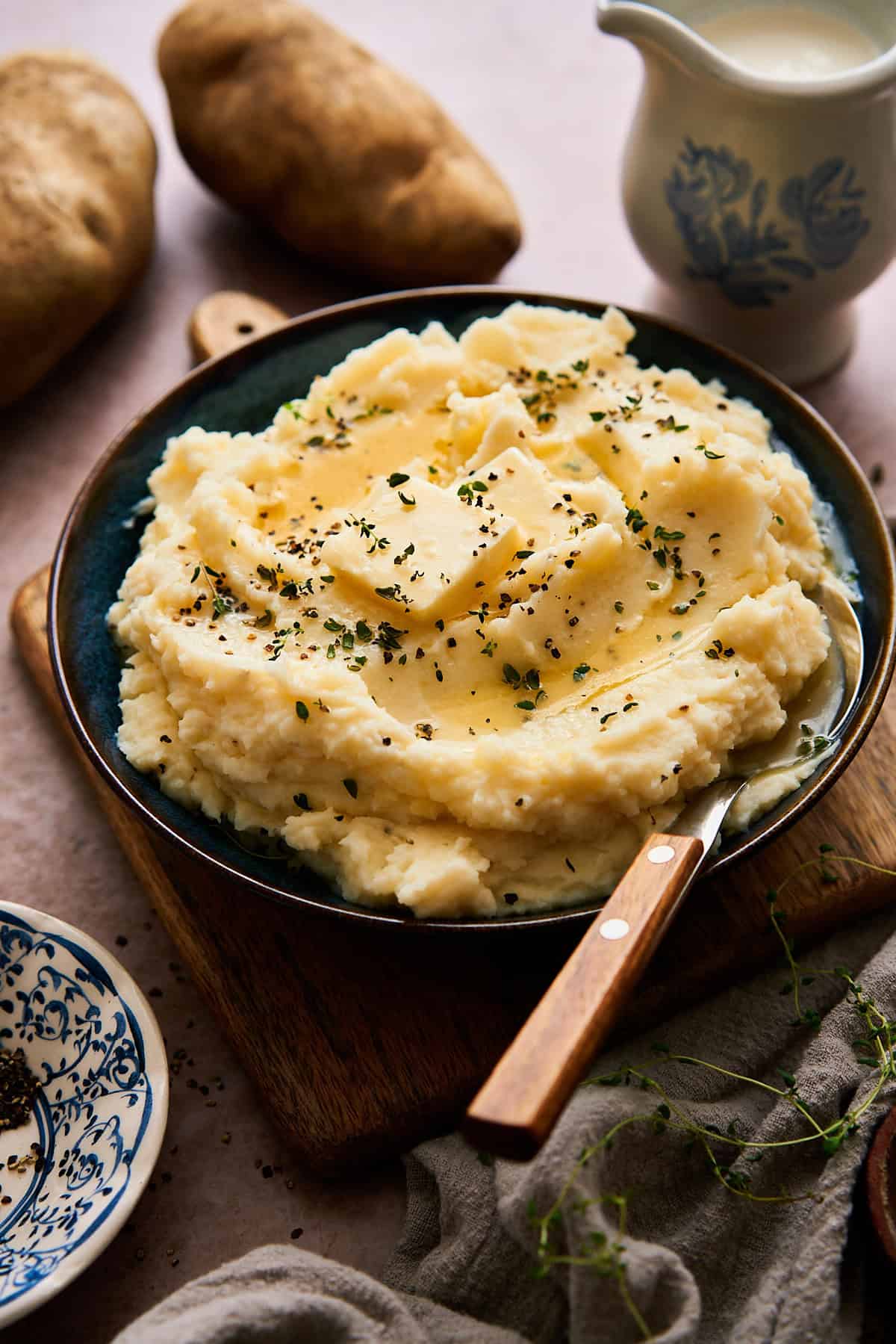
Transfer to a serving bowl, add a pat of butter on top (because why not?), and garnish with fresh chives or parsley if you're feeling fancy.
Serve immediately while hot-these are best enjoyed fresh!🤤
🍽️What to Serve with Tangy Buttermilk Mashed Potatoes
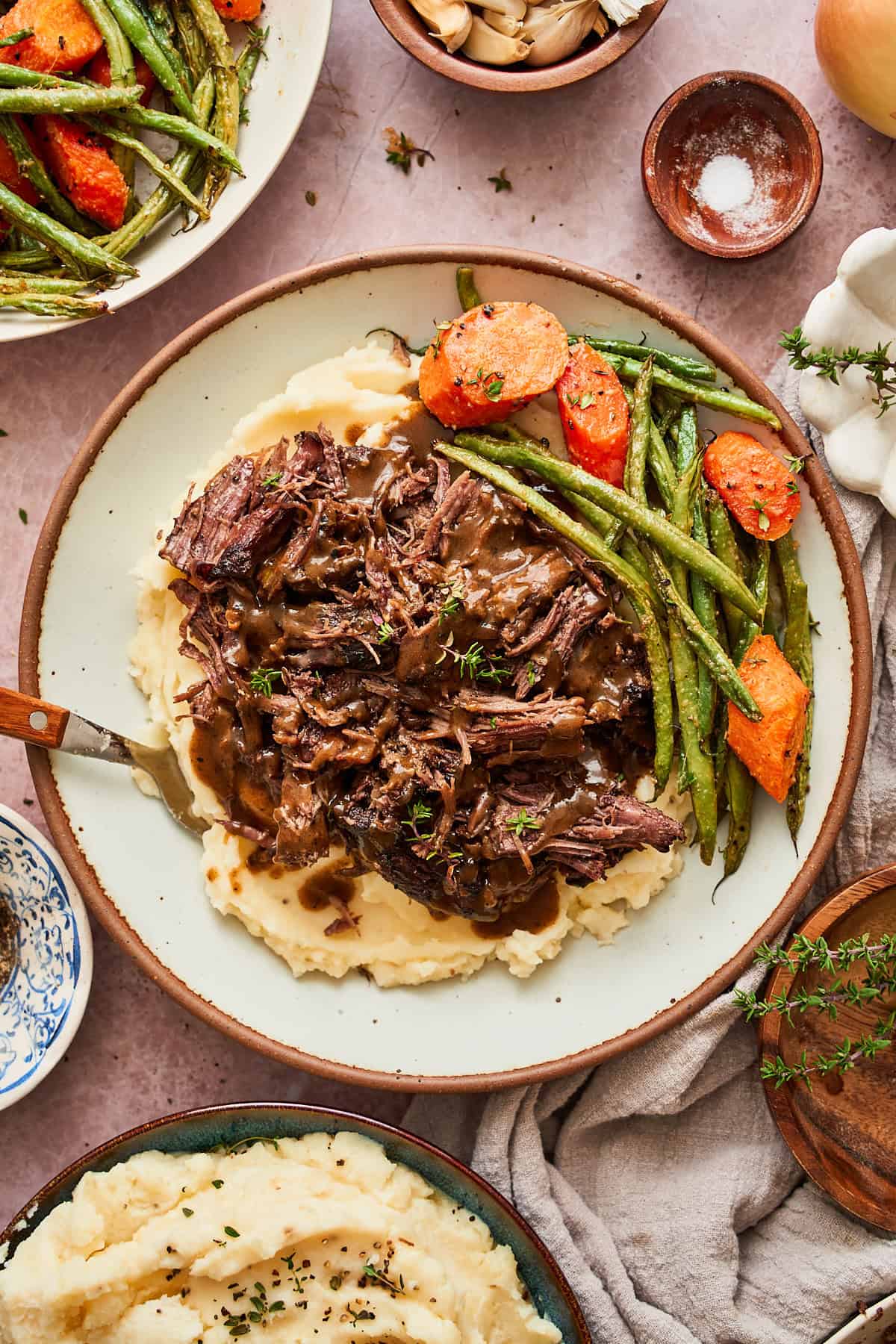
These creamy mashed potatoes are the perfect side for just about any protein, and the extra tang is REALLY delicious! They're especially good for cutting through rich dishes. Here it is served with our oven braised chuck roast and gravy!
Some other favorites:
🌟Leave a Review!
If you make this recipe, we'd love to hear from you! Leave a comment below with your rating for the recipe. Share with us by tagging us on Instagram! We love seeing your creations! 📸
📖 Recipe
Creamy Buttermilk Mashed Potatoes (With the Perfect Tang!)
Equipment
- Potato ricer optional, but recommended for the smoothest mash!
Ingredients
- 1 - 1½ cups buttermilk as needed, and room temperature
- 3 pounds potatoes russets or Yukon gold, peeled (if russets) and quartered
- 3 tablespoons salt for boiling the potatoes or 1 tablespoon per pound
- 1 teaspoon kosher salt to taste
- ¾ cup unsalted butter 1½ sticks
- ¼ - ½ teaspoon freshly cracked black pepper to taste
- herbs, black pepper & more butter for garnish (optional)
Instructions
- Set out the buttermilk. Remove buttermilk from the refrigerator so it can come to room temperature.1 - 1½ cups buttermilk
- Cook the potatoes. Place quartered potatoes in a large pot and cover with cold water by about an inch. Add about 1 tablespoon of kosher salt per pound of potatoes. Bring to a boil over high heat, then reduce to a simmer and cook for 15-20 minutes, until fork-tender.3 pounds potatoes, 3 tablespoons salt for boiling the potatoes
- Melt the butter. While the potatoes cook, melt butter in a small saucepan over low heat or in the microwave. Keep warm.¾ cup unsalted butter
- Drain and dry. Drain the potatoes well and return to the hot pot. Let them sit for 1-2 minutes to allow excess moisture to evaporate.
- Rice or mash the potatoes. Pass the hot potatoes through a potato ricer, or mash by hand into a large bowl or back into the pot.
- Add butter and buttermilk. Pour the hot melted butter over the riced potatoes and stir gently to combine. Add the room temperature buttermilk, starting with about 1 cup and adding more as needed to reach your desired consistency.
- Season and serve. Taste and season generously with salt and pepper. Transfer to a serving bowl, top with a pat of butter, and garnish with fresh chives or parsley if desired. Serve immediately.1 teaspoon kosher salt, ¼ - ½ teaspoon freshly cracked black pepper, herbs, black pepper & more butter
Save This Recipe! 💌
Notes
- Salt. This recipe uses Diamond Crystal kosher salt. If using Morton's kosher salt or table salt, reduce the amount by half.
- Hot butter, room temp buttermilk. The butter should be hot and melted so it incorporates smoothly and keeps everything warm. The buttermilk just needs to be room temperature-not ice-cold-so it doesn't cool the potatoes down and make your mash dense instead of fluffy.
- No potato ricer? A potato masher works too-you'll have a slightly more rustic texture. Avoid using a hand mixer or food processor, which can make the potatoes gluey.
- Buttermilk substitute. Add 1 tablespoon of lemon juice or white vinegar to 1 cup of whole milk. Let sit for 5-10 minutes until slightly curdled.
Storage
- Refrigerator: Store leftover mashed potatoes in an airtight container for up to 3-4 days.
- Reheating: Reheat on the stovetop over low heat, stirring frequently and adding a splash of buttermilk or milk to loosen. You can also reheat in the microwave, stirring halfway through.
- Freezing: Mashed potatoes can be frozen for up to 2 months, though the texture may change slightly. Reheat on the stovetop with extra butter and buttermilk to refresh.




Comments
No Comments