
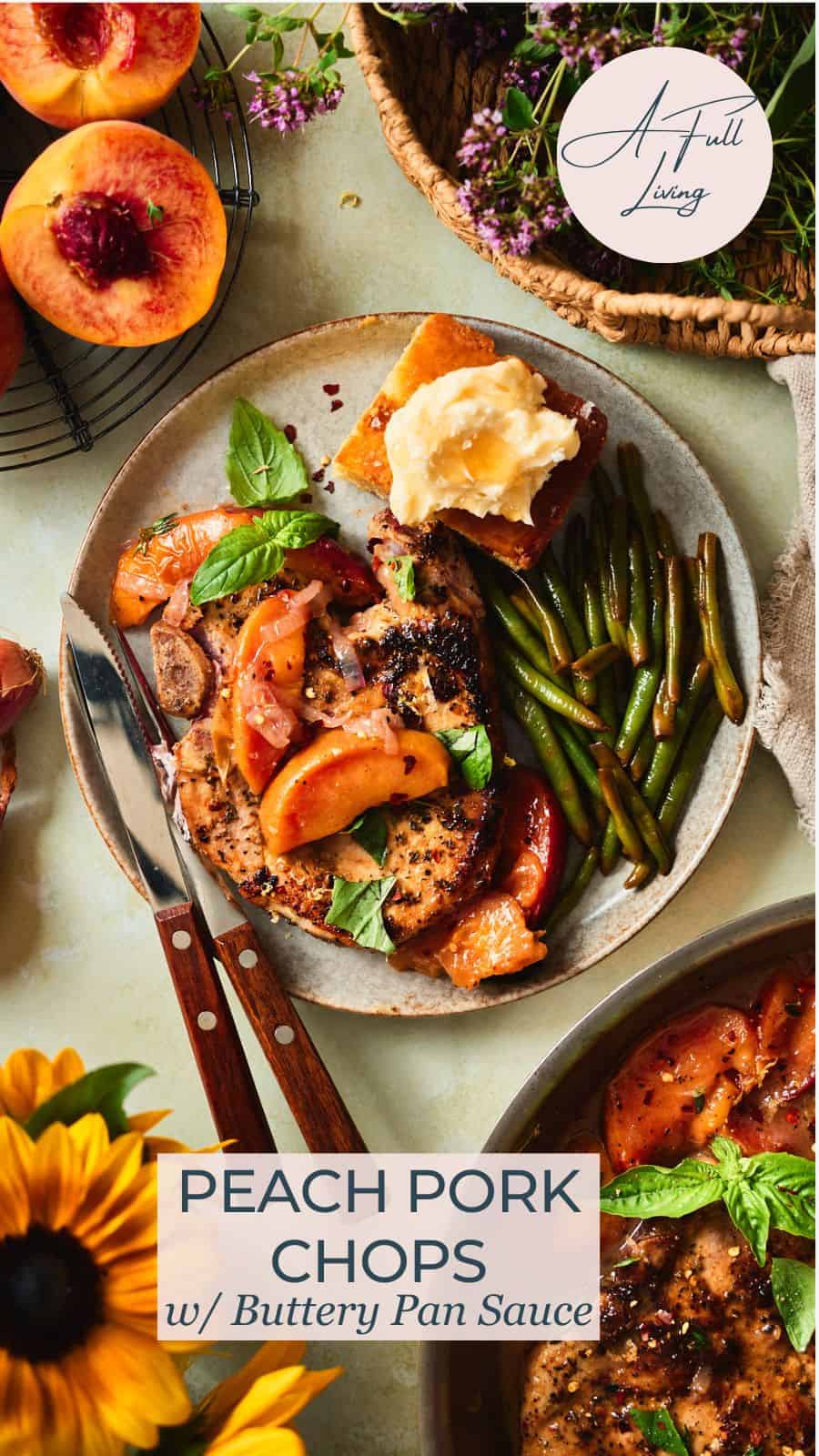
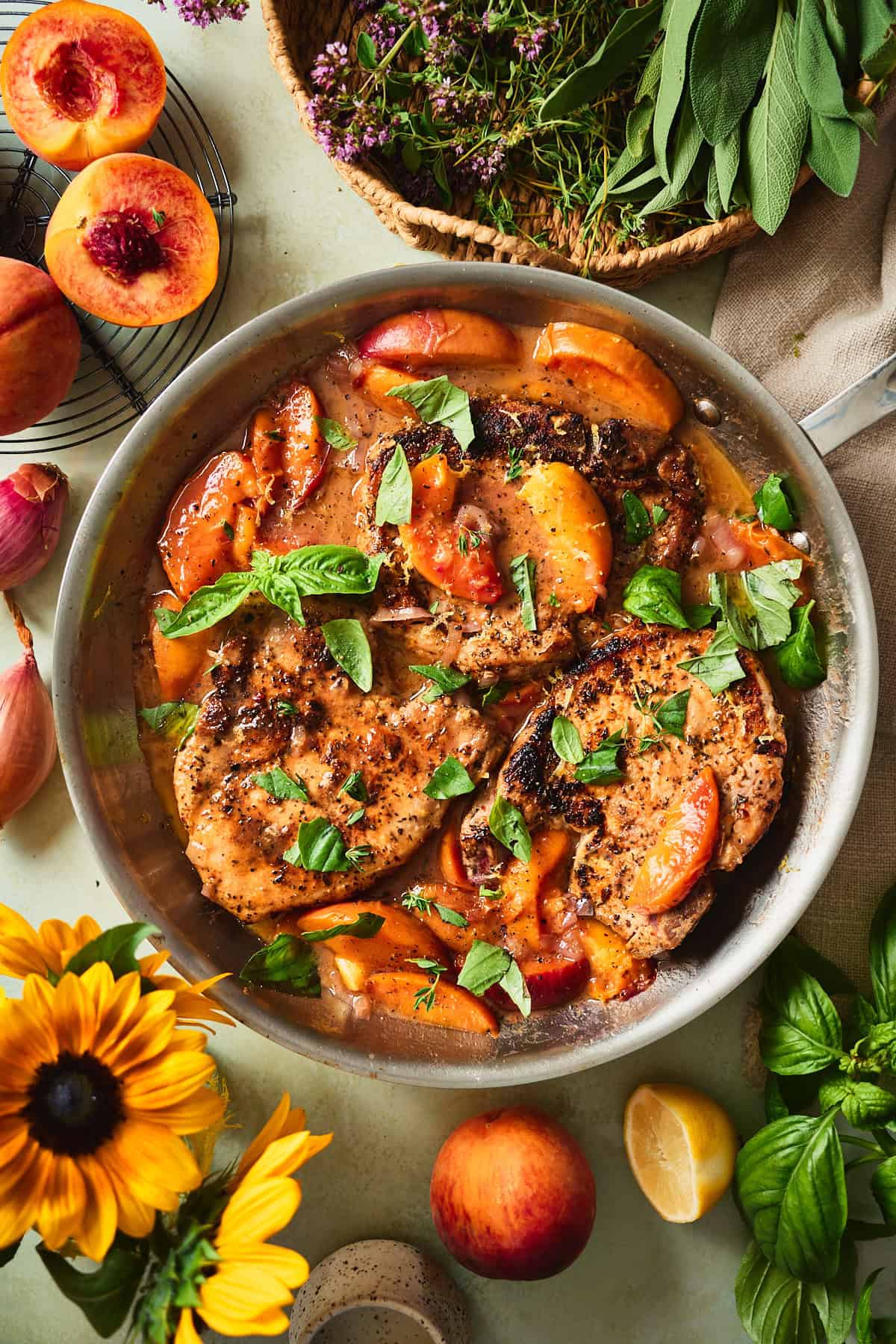
Michigan peach season is short, so we cook like it! These Peach Pork Chops are our answer to a hot August evening when it's too hot to want the oven on. Bone-in chops get browned in a skillet, then come out to rest while lots of butter browns in that same pan with honey, peach wedges, and a bundle of garden herbs. Some of the peaches hold their shape, and some melt into the sauce, and the chops come back in at the end to soak up all of it. 🤤
Save This Recipe! 💌
Disclosure: This post is a paid partnership with Plugrà Premium European Style Butter, the official butter partner for A Full Living for 2026! The brown butter is the backbone of this simple, delicious summer dish. Better butter matters! As always, all opinions are our own.
These Buttery Pork Chops with Peaches Are a Love Letter to Summer🍑
August in Michigan means we are buying peaches faster than we can eat them, and before we know it, the counter is covered in fruit that needs a job. Pork and peaches are the perfect sweet-savory combo, especially when cooked in nutty brown butter, honey, and a bundle of garden herbs that perfume the whole sauce. We let some of the peaches go a little soft, and they break down into the pan sauce, giving it a lovely pinkish color and sweet, fruity flavor. A hint of fresh basil, lemon, and red pepper flakes ties the whole dish together.
The whole thing comes together in about forty minutes, and the ingredient list is short enough to hold in your head. Pork chops, peaches, butter, honey, shallots, lemon, and whatever herbs you can grab on the way in from the garden. Nothing marinates overnight, nothing simmers all afternoon, and there is only one pan to wash at the end of it. Make this on a regular Tuesday, or serve it to company. Everyone will be impressed, and they don't need to know it didn't take you much effort. 😉
🍑 What You Need for Skillet Pork Chops and Peaches
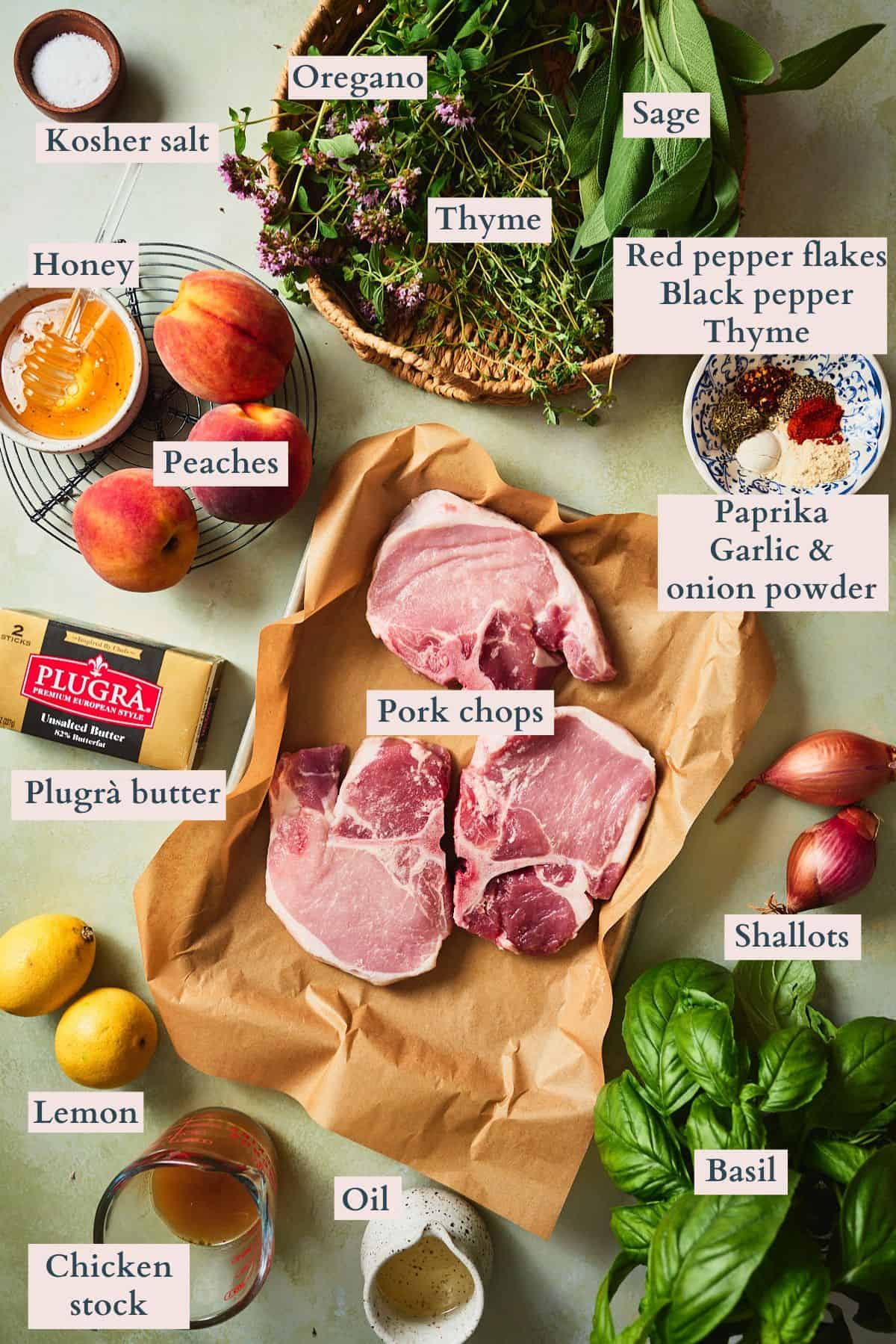
Bone-in chops, ripe peaches, and good butter are the main things you'll want to seek out! If Plugrà is not somewhere obvious in your dairy case, check the specialty butter section or the end cap near the cheese, because it tends to get shelved away from the regular sticks. We prefer working with unsalted butter in our cooking, so that we stay in control of the seasoning.
How to Pan Sear Pork Chops with Brown Butter and Peaches ✨
The chops and the sauce happen in the same pan but never really at the same time, which is what keeps this easy. Sear, set aside, build the sauce, bring them back.
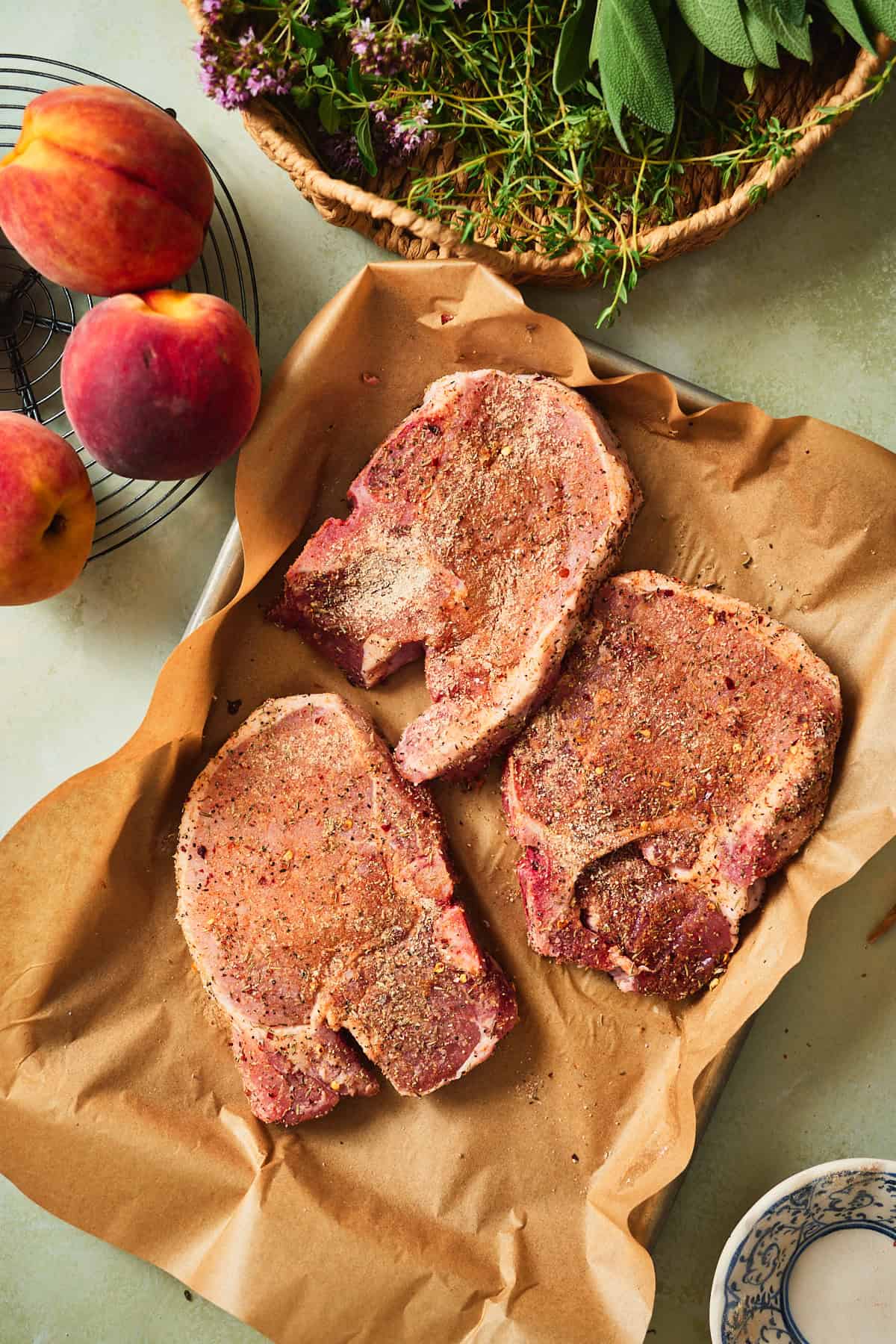
- Step 1: Pat the chops dry and season both sides generously with the seasoning blend and salt. Let them sit at room temperature while you get everything else ready.
🧂 Optional, and worth it if you have the time: Salt the chops ahead and let them sit uncovered in the fridge for 45 minutes or up to 24 hours in advance. It dries the surface for a better crust and seasons a little deeper. We've skipped it plenty of times; they were still great, so don't let it stop you from making these tonight.
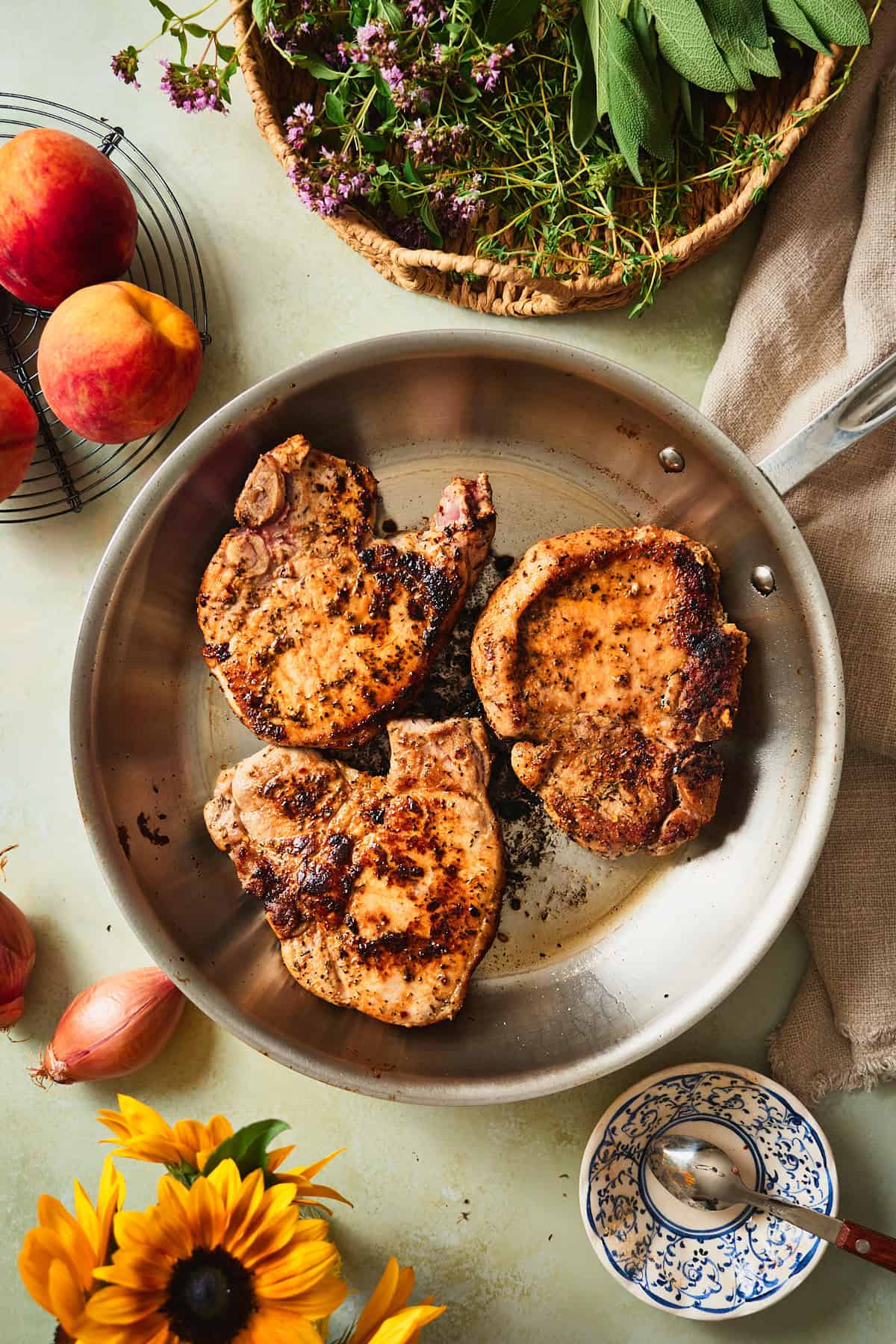
- Step 2: Heat oil in a skillet over medium-high heat until it shimmers. Sear the chops with room between them, working in batches if you need to, until deeply golden on both sides and 140°F in the center. Move them to a board and tent loosely with foil. Oil only here, no butter yet, because butter would scorch at this heat.
🌡️ 140°F, then let them rest: An instant-read thermometer is the difference between juicy and sad. They will climb to a safe (and perfect!) 145°F under the foil while the sauce comes together. Pork at 145°F is still faintly pink in the middle, which is exactly right. They get a long rest here, and that's a good thing, since it allows the pork to reabsorb the juices.
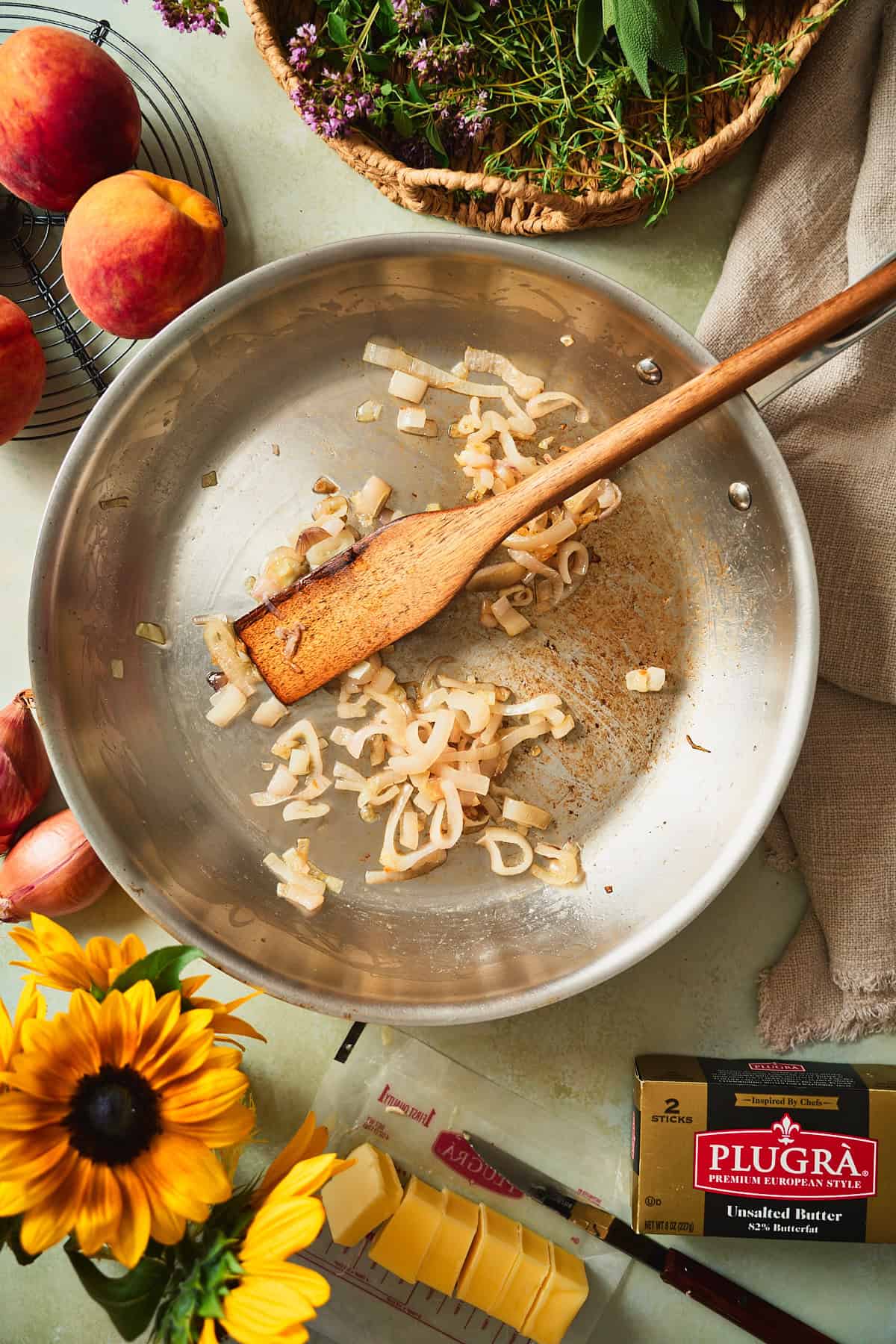
- Step 3: If the seasoning left dark, crusty bits in the pan, give it a quick wipe. Not because fond is bad, but because burnt spices will turn your brown butter murky, and the color is how you judge it. Next, add a pat of butter and cook the shallots over medium heat with salt until tender and translucent. Scoop them out and set them aside.
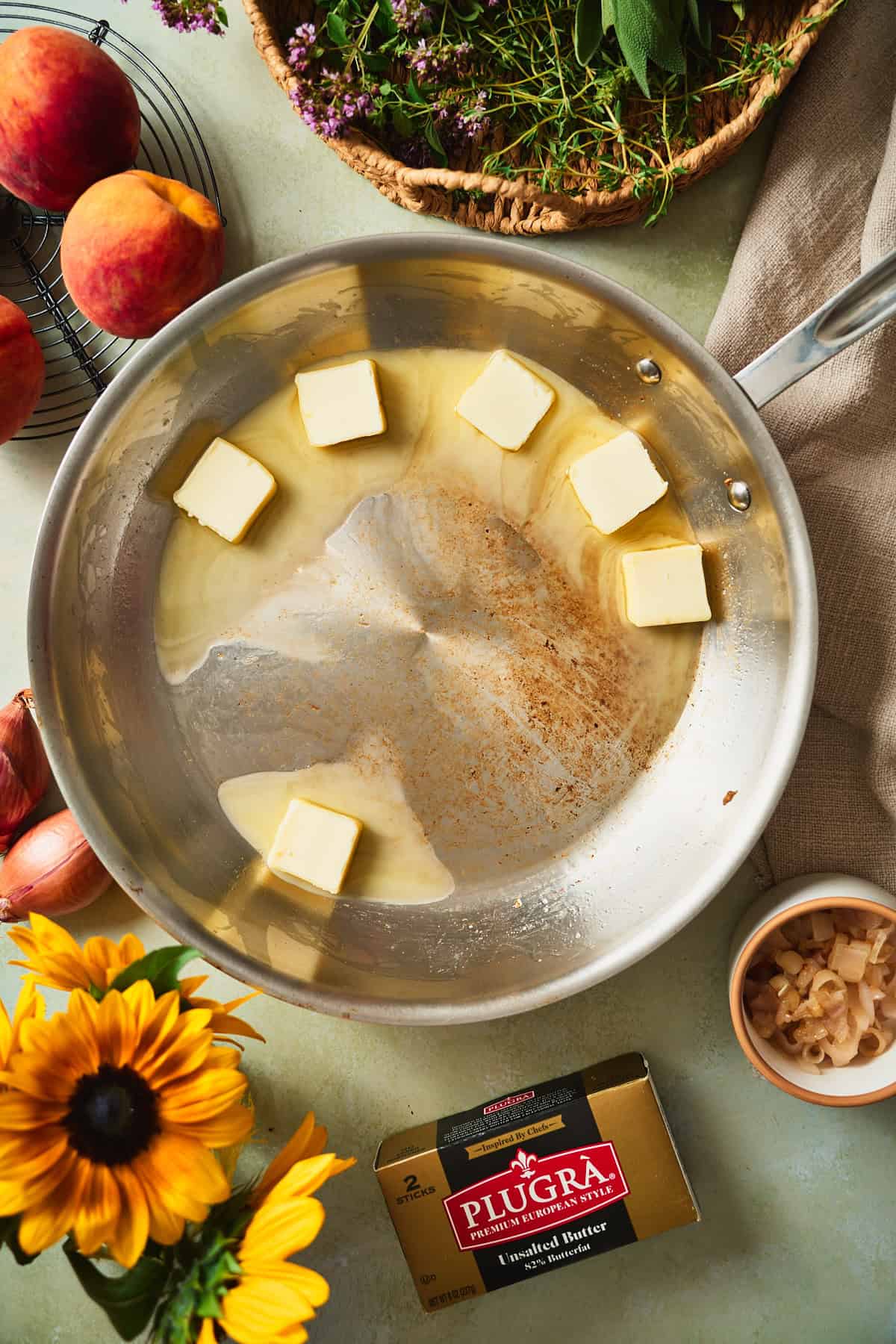
- Step 4: Add the rest of the butter to the skillet.
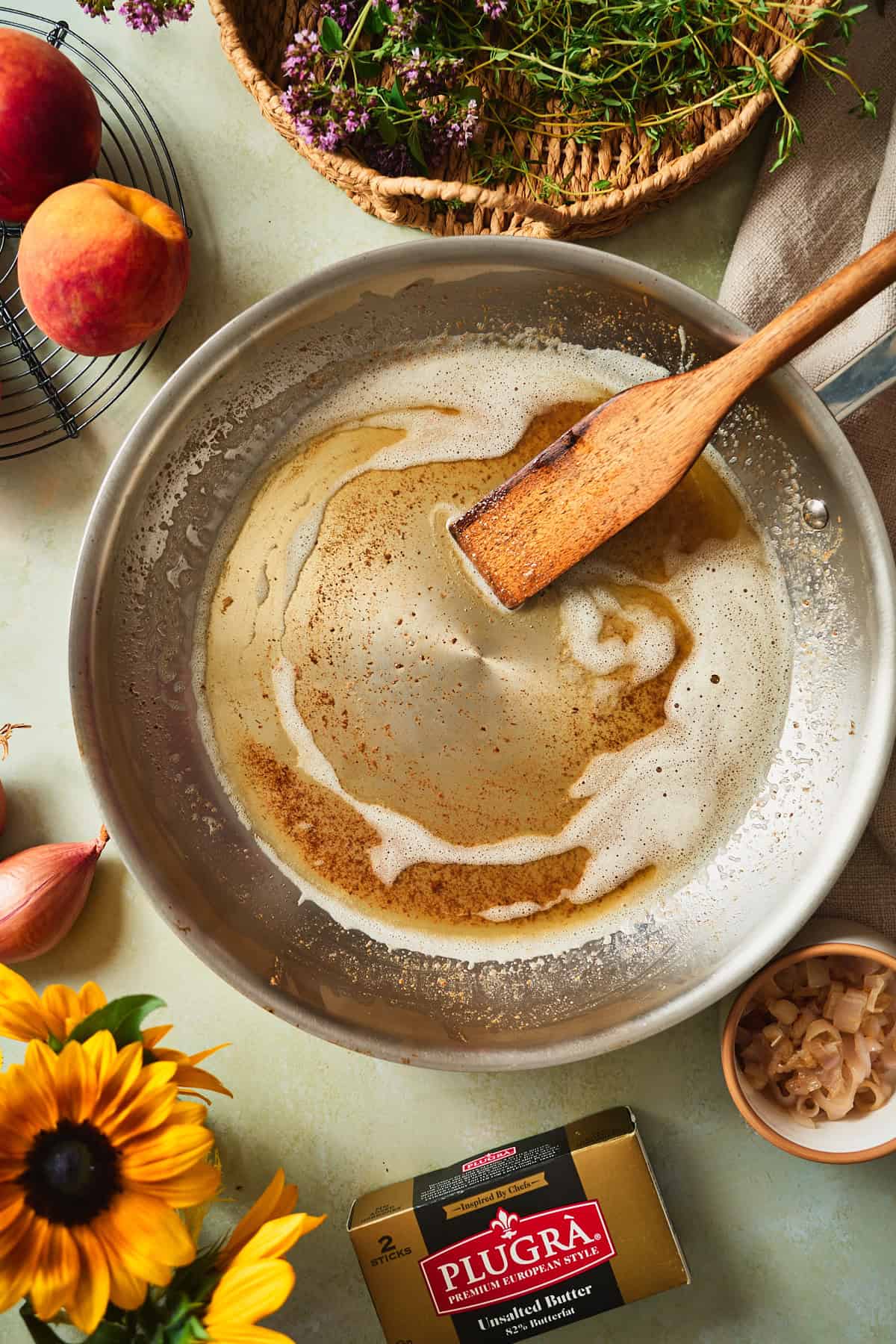
Cook until lightly browned.
🧈 Watch the color, not the clock: Foaming, then golden, then nutty and smelling like toasted hazelnuts. That is your window, and it closes fast. Plugrà gets there quicker and more evenly than standard butter because there is less water in it to cook off first. Keep in mind that the butter will remain in the skillet, so aim for lightly golden brown toasted milk solids.
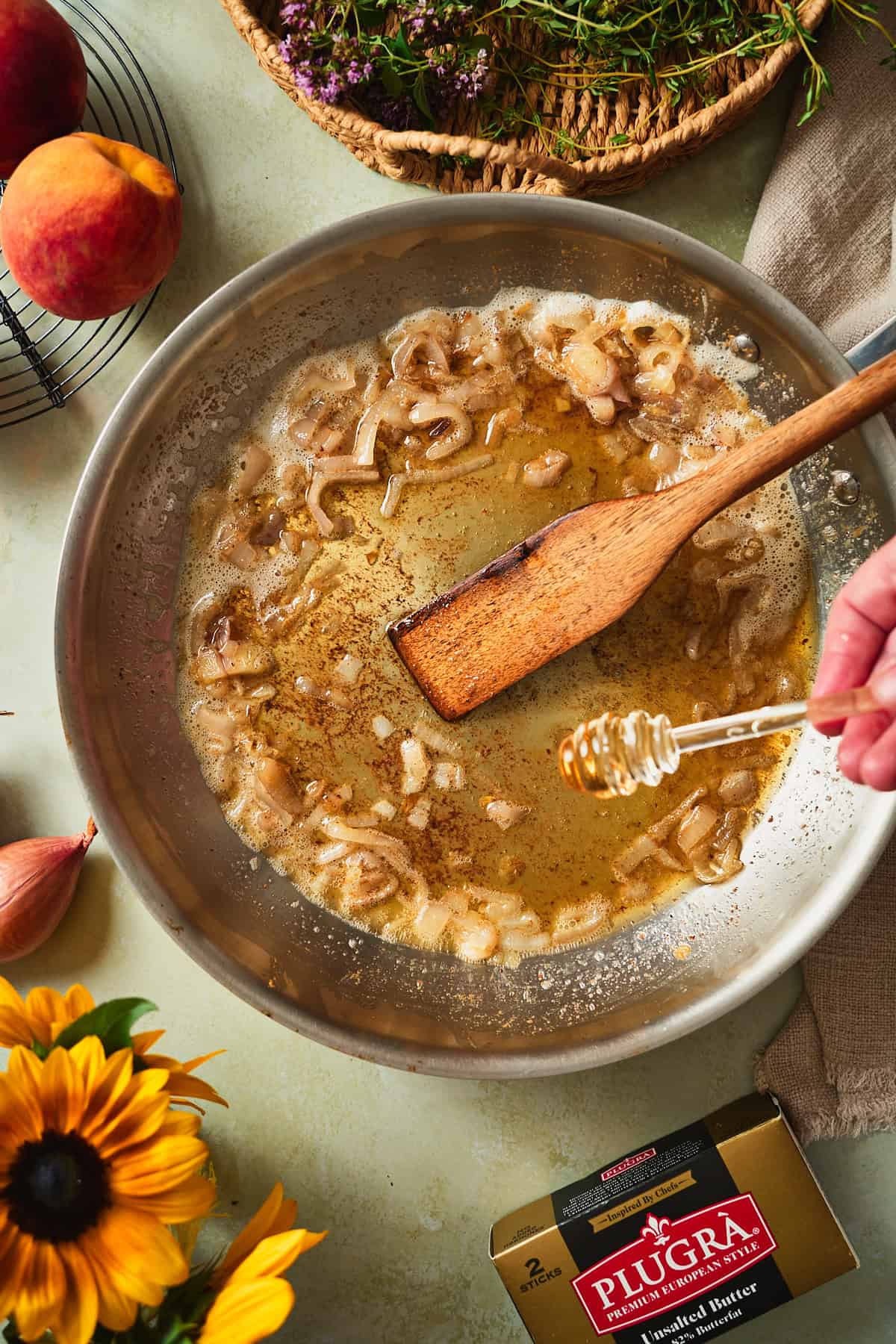
- Step 5: Stir the shallots back in, then add the honey.
🍯Start low on the honey and taste: The honey is doing real work if your peaches are firm and tart, helping them soften and rounding out the sauce. If you have a ripe August peach that is already sweet, start at the low end of the range. You can always add more, and you want a savory pan sauce, not a dessert.
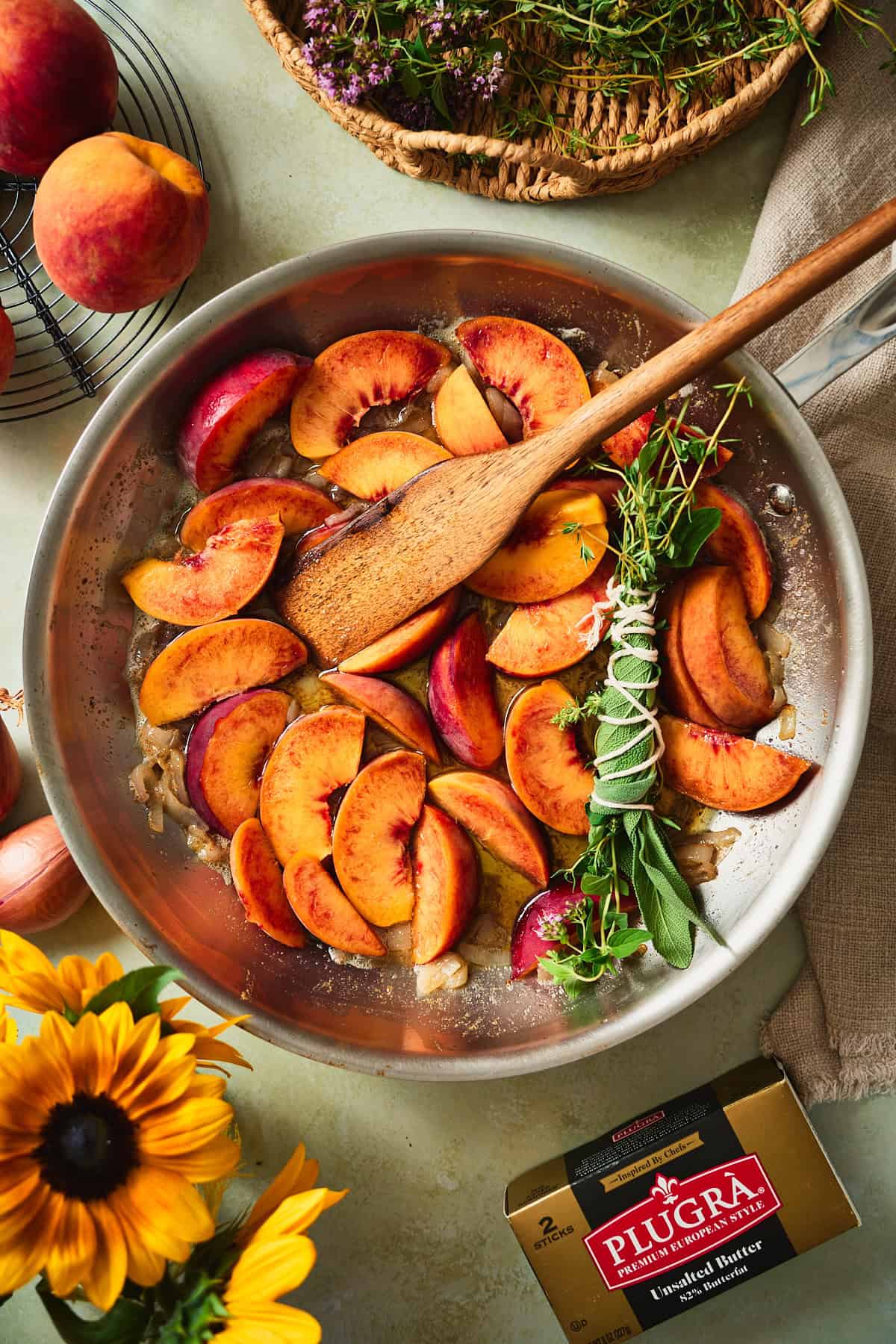
- Step 6: Nestle in the peach wedges and tuck the herb bundle alongside. Ours is thyme-forward with a little sage and oregano tied up with kitchen twine, basically whatever the garden is offering that day, and it perfumes the butter while the peaches soften.
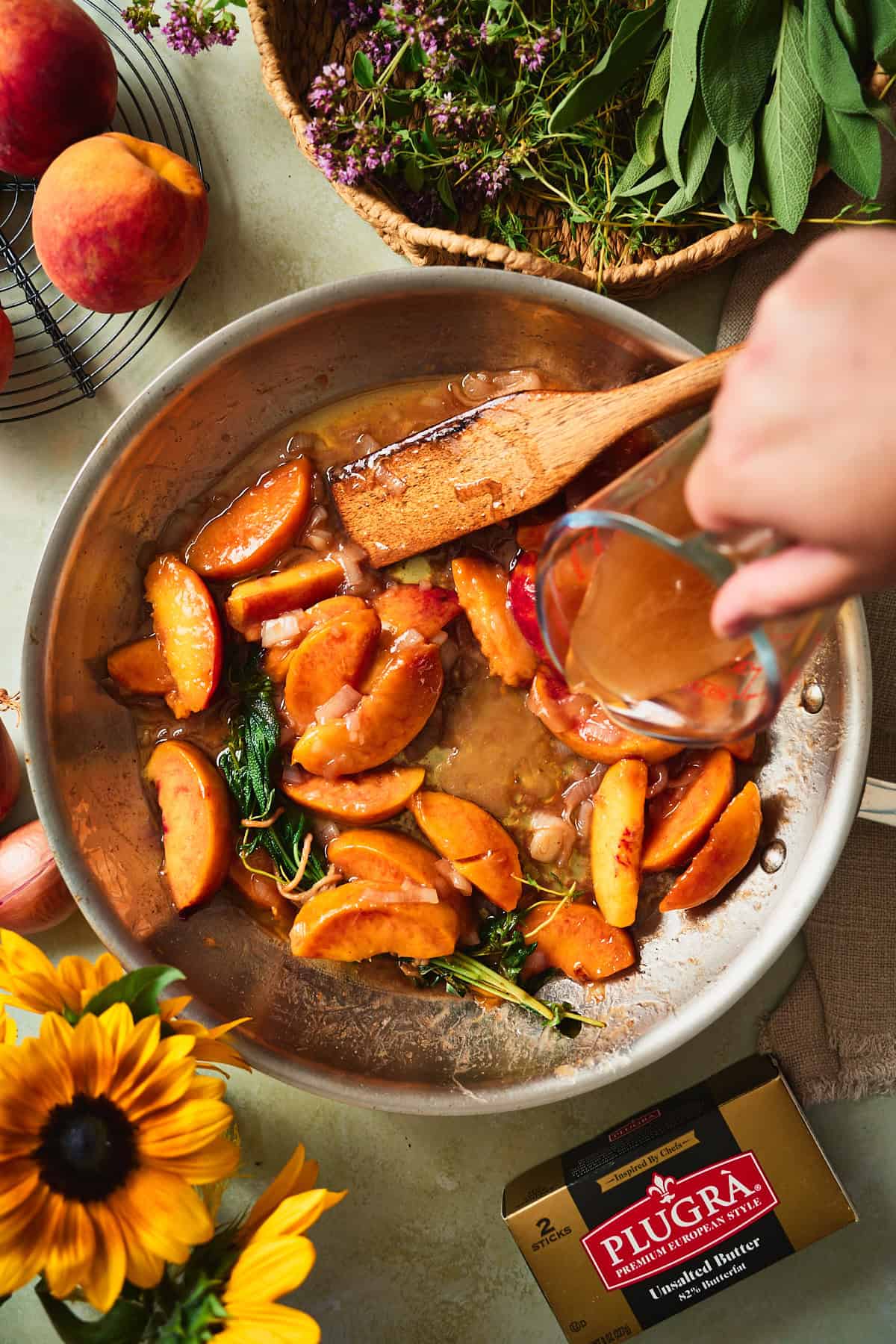
- Step 7: Let everything warm through over medium until the peaches are soft. Some wedges will hold their shape, and some will break down into the sauce, and you want both. The ones that melt are what give the sauce its pink color and all that fruity flavor. Add the stock and let it bubble for a minute to give the sauce some body. You want it spoonable, not syrupy, so splash in a little more if it tightens up.
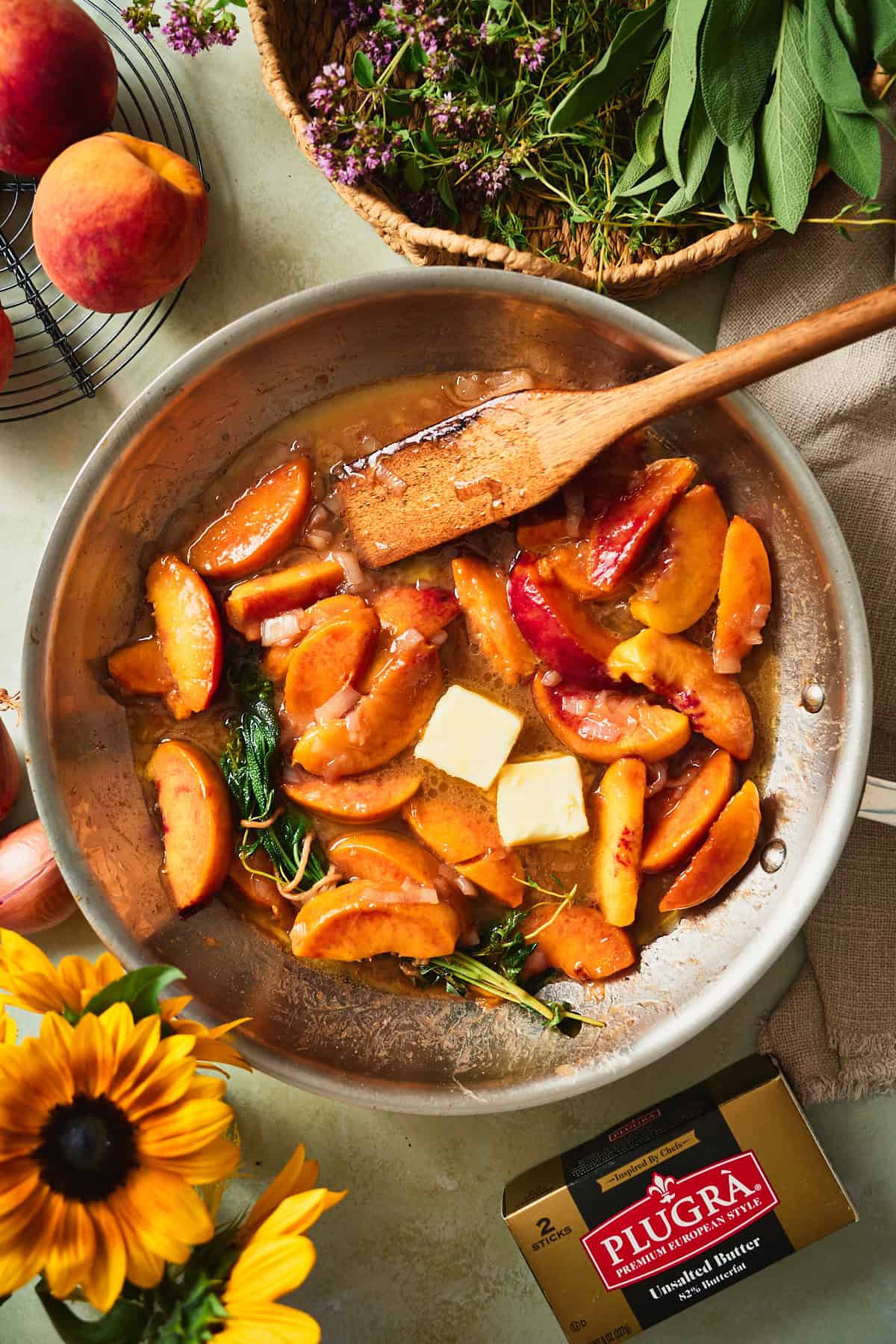
Pull the pan off the heat and swirl in the cold butter until the sauce turns glossy. Keep it off the burner from here on, or the sauce can split. Add the lemon zest, juice, and red pepper flakes and adjust salt and pepper to taste.
🍋 Do not go shy on the lemon: This is what keeps this rich, sweet sauce balanced. Taste it here, and if it still leans dessert-y, more lemon is almost always the answer.
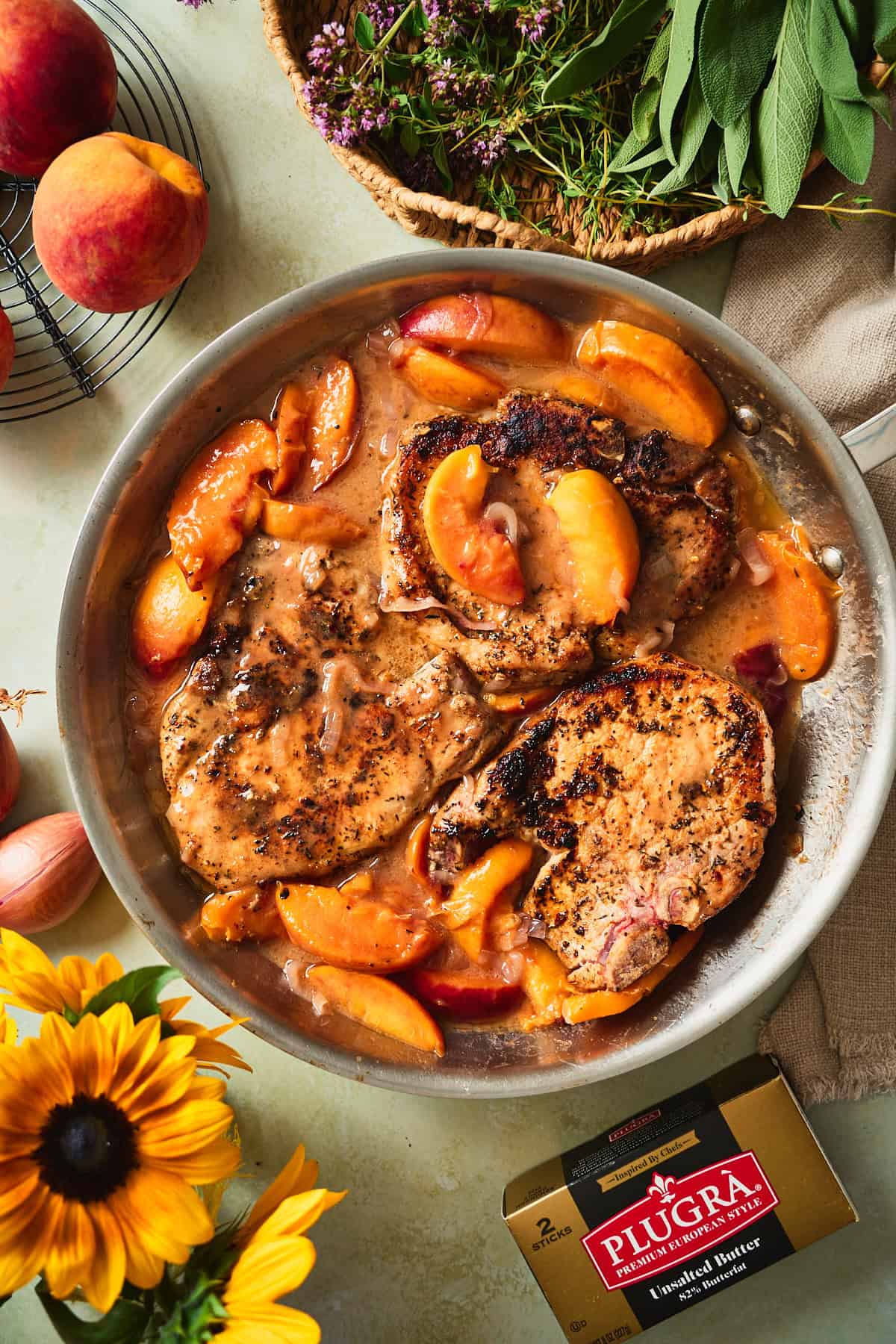
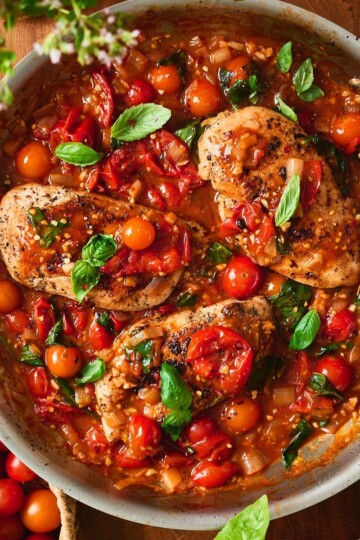
- Step 8: Slide the rested chops back in along with any juices from the board, and spoon the sauce over them until they are coated. They are already cooked through, so this is just about marrying everything together.
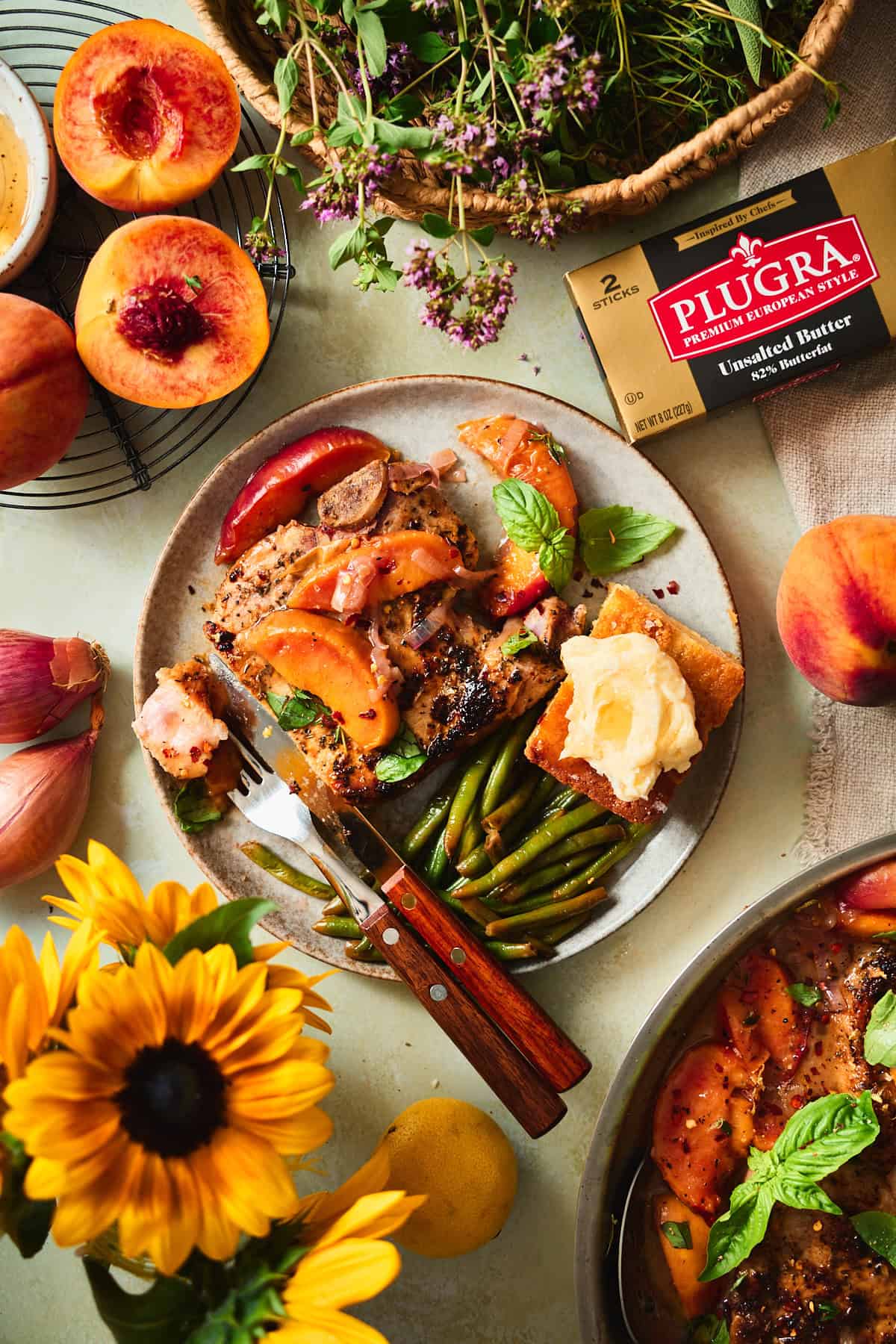
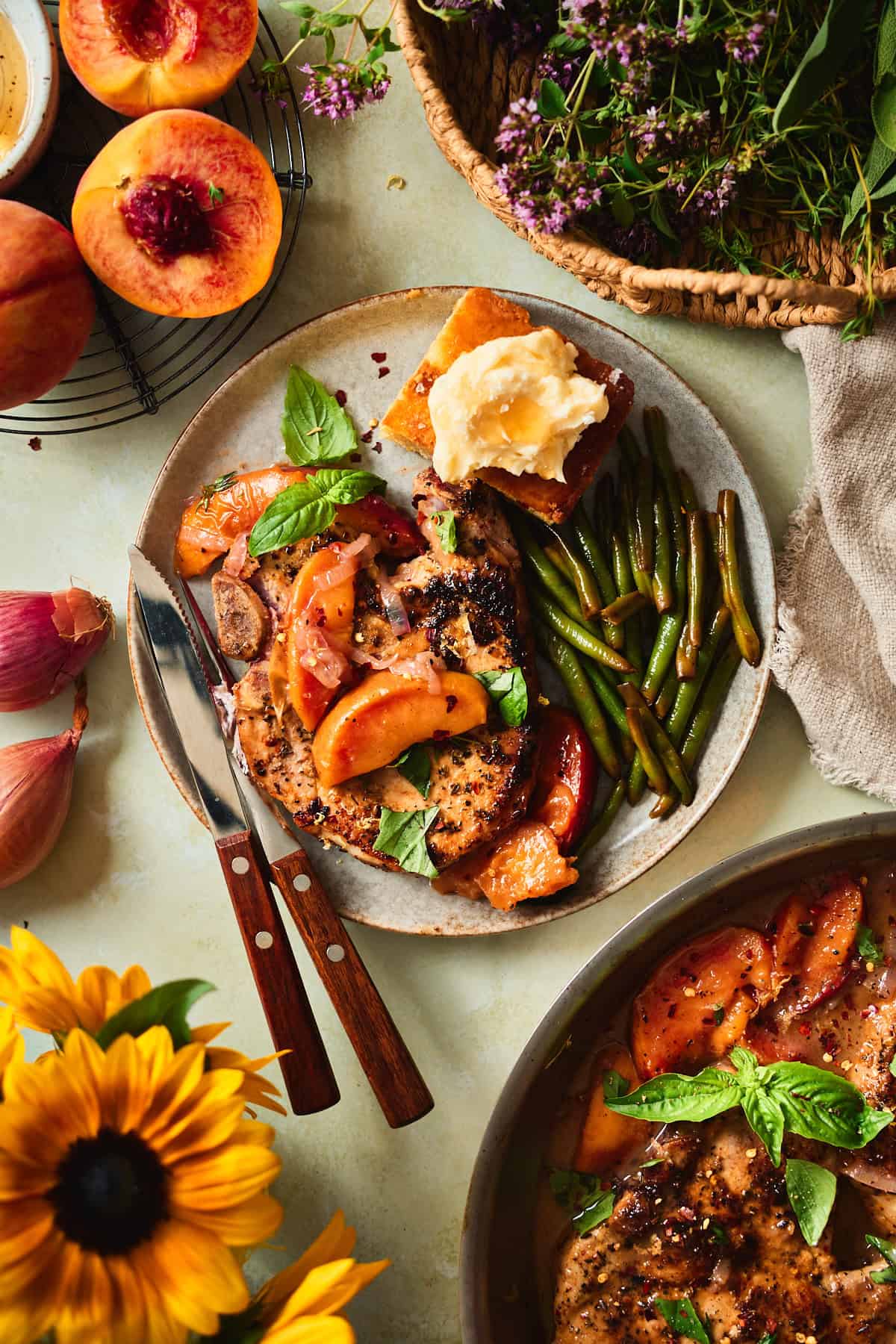
Tear the basil over the top and finish with cracked pepper. Serve with skillet cornbread slathered in whipped honey butter, and a side of veggies.
🌟Leave a Review!
If you make these Skillet Peach Pork Chops, we'd love to hear from you! Leave a comment below with your rating for the recipe. Share with us by tagging us on Instagram! We love seeing your creations! 📸
📖 Recipe
Peach Pork Chops with Brown Butter Pan Sauce
Equipment
- large deep skillet
Ingredients
Pork Chops and Seasoning
- 3 pounds bone-in pork chops about 1 inch thick (about 3 pounds total)
- 1 tablespoon kosher salt use 1½ teaspoons if using Morton's or table salt, see notes
- 2 teaspoons garlic powder
- 1 teaspoon onion powder
- 1 teaspoon dried thyme
- ½ teaspoon black pepper coarse ground or freshly ground, to taste
- ½ teaspoon red pepper flakes
- ½ teaspoon sweet paprika optional, for color
- 2 tablespoons oil any neutral oil, grapeseed, avocado, canola
Brown Butter Peach Pan Sauce
- 2 sticks unsalted butter 1 cup Plugrà butter, divided
- 3 medium shallots thinly sliced
- 1 teaspoon kosher salt to taste, use ½ teaspoon if using Morton's or table salt, see notes
- ¼ to ½ cup honey to taste, depending on how sweet your peaches are
- 4 whole peaches pitted and cut into wedges
- ⅓ cup chicken stock plus more as needed
- 1 tablespoon lemon zest about the zest of 1 lemon
- 2-3 tablespoons lemon juice juice of 1 lemon
- ¼ to ½ teaspoon red pepper flakes to taste
- freshly cracked black pepper to taste
- fresh basil torn, for serving
Herb Bundle
- 4-5 sprigs fresh thyme
- 2-3 sprigs fresh sage leaves
- 2 sprigs fresh oregano
Instructions
- Season the chops. Pat the pork chops very dry. Combine the salt, garlic powder, onion powder, dried thyme, red pepper flakes, black pepper, and paprika, then season both sides generously. Let sit at room temperature while you prep everything else.3 pounds bone-in pork chops, 1 tablespoon kosher salt, 2 teaspoons garlic powder, 1 teaspoon onion powder, 1 teaspoon dried thyme, ½ teaspoon black pepper, ½ teaspoon red pepper flakes, ½ teaspoon sweet paprika
- Sear the chops. Heat the oil in a large stainless skillet over medium-high until it shimmers. Sear the chops with room between them, working in batches if needed, until deeply golden on both sides and 140°F in the center. Transfer to a board and tent loosely with foil.2 tablespoons oil
- Wipe the pan. If the seasoning left dark, crusty bits behind, give the skillet a quick wipe. Burnt spices will muddy the color of the brown butter, and color is how you judge it.
- Cook the shallots. Add 2 tablespoons of the butter to the skillet over medium heat. Add the shallots and a pinch of salt and cook until tender and translucent, 2-3 minutes. Scoop out and set aside.2 sticks unsalted butter, 3 medium shallots
- Brown the butter. Add 10 tablespoons of the butter to the skillet. Cook, swirling, until it foams, then turns golden with lightly toasted milk solids and smells nutty. Pull it a touch early, since it will continue to cook in the hot pan.
- Build the sauce. Stir the shallots back in, then add the honey. Nestle in the peach wedges and tuck the herb bundle alongside.¼ to ½ cup honey, 4 whole peaches, 2-3 sprigs fresh sage leaves, 2 sprigs fresh oregano, 4-5 sprigs fresh thyme
- Soften the peaches. Cook over medium until the peaches are soft, 4-5 minutes. Some wedges will hold their shape and some will break down into the sauce. Add the stock and let it bubble for a minute to give the sauce body. It should be spoonable, not syrupy; splash in a little more stock if it tightens up.1 teaspoon kosher salt, ⅓ cup chicken stock
- Finish off heat. Pull the pan off the burner and swirl in the last 2 tablespoons of cold butter until glossy. Add the lemon zest, lemon juice, and red pepper flakes. Taste and adjust salt and pepper. Keep the pan off the heat from here so the sauce doesn't split.1 tablespoon lemon zest, 2-3 tablespoons lemon juice, ¼ to ½ teaspoon red pepper flakes
- Bring the chops back. Slide the rested chops into the skillet along with any juices from the board, and spoon the sauce over until coated.
- Serve. Pull out the herb bundle and discard it, pressing it against the side of the pan first to squeeze out any butter it's holding. Tear basil over the top and finish with cracked pepper. Serve with skillet cornbread and whipped honey butter and veggies like blistered green beans or a salad.freshly cracked black pepper, fresh basil
Save This Recipe! 💌
Video
Notes
- A note on salt. This recipe was developed with Diamond Crystal kosher salt. If you're using Morton's kosher salt or table salt, use about half the listed amount and add more to taste since those crystals are denser, so the same spoonful is significantly saltier. Also, don't skip adding salt to the sauce: wiping the pan after searing takes some seasoning with it.
- Optional dry brine. Salt the chops ahead and let them sit uncovered in the fridge for 45 minutes, or up to 24 hours. It dries the surface for a better crust and seasons a little deeper. Not required.
- Pull at 140°F. An instant-read thermometer is the difference between juicy and sad. The chops will climb to a safe 145°F while they rest and the sauce comes together. Pork at 145°F is still faintly pink in the center, which is exactly right - and the long rest lets the juices reabsorb.
- Watch the color of the butter, not the clock. Foaming, then golden, then nutty and smelling like toasted nuts, and it can happen quickly. Aim for lightly golden milk solids, since the butter stays in the pan and keeps cooking. Plugrà gets there faster and more evenly than standard butter, and at 82% butterfat there's less water to cook off, which also means a glossier sauce that clings to the chops instead of pooling around it aand getting greasy.
- Start low on the honey. It's doing real work if your peaches are firm and tart, helping them soften and rounding out the sauce. With a very ripe August peach, start at 3 tablespoons. You can always add more if needed.
- Don't go shy on the lemon. It's what keeps a rich, sweet sauce balanced. Taste before serving.
- Use woody herbs, and whatever you have on hand. The herb bundle infuses subtle flavor into the sauce, and herbs with woodier, firmer stems (thyme, sage, oregano, rosemary) will hold up to cooking for a while. Don't add basil; it will just wilt almost instantly.


Comments
No Comments