
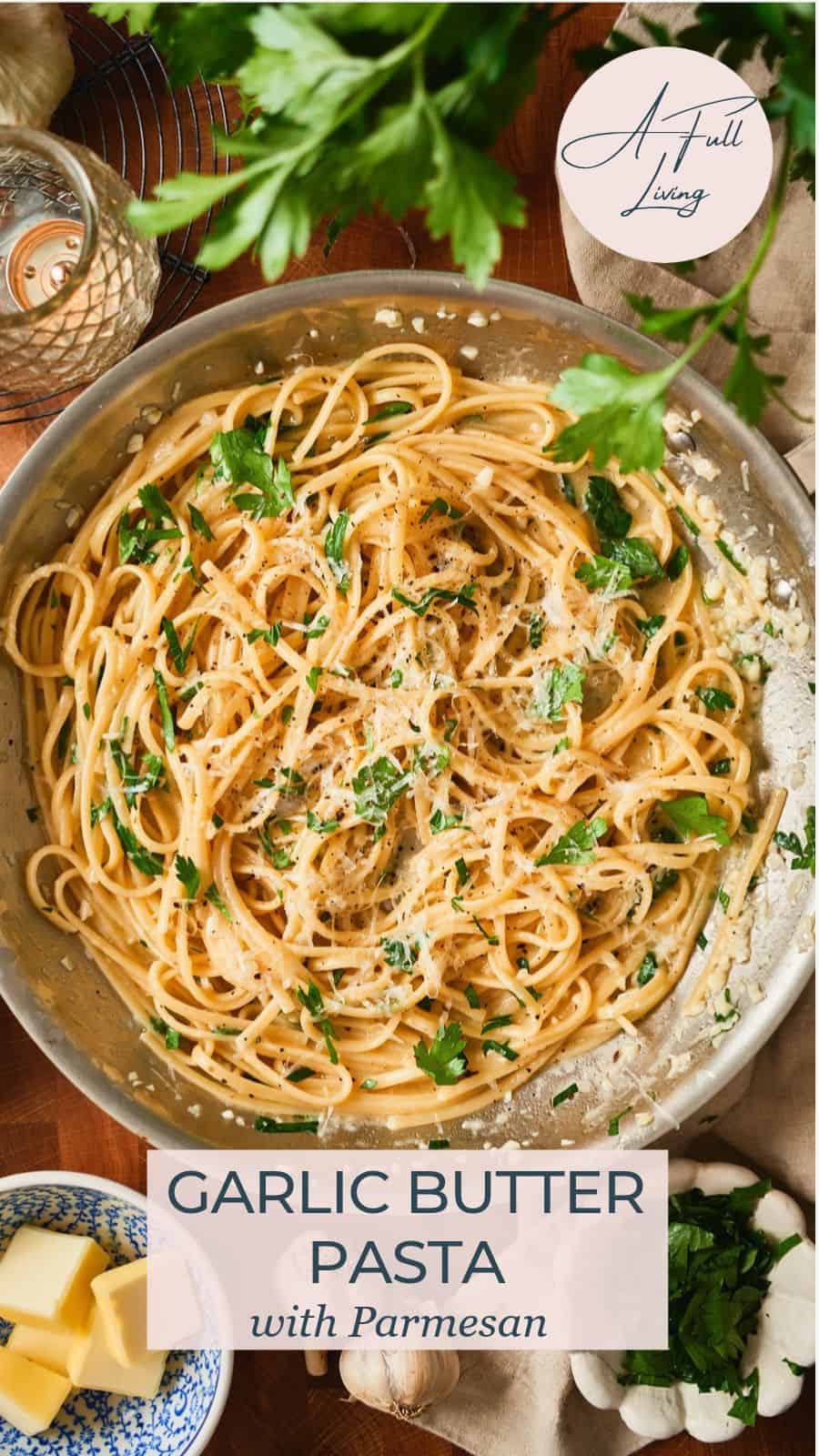
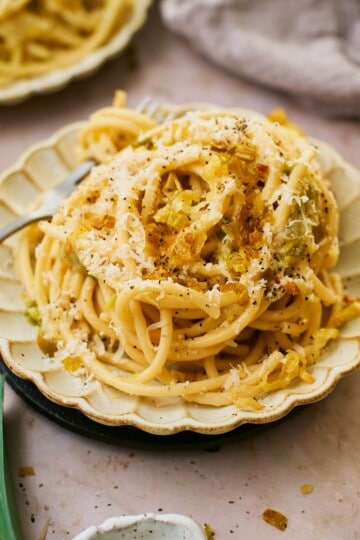
Garlic Butter Pasta is what we make when nobody wants to think about dinner. Butter, garlic, Parmesan, parsley, and a box of pasta. No cream, no simmering, and most importantly, no babysitting. 😂 It's one of the most flexible things in our rotation. Some nights it's dinner on its own with a salad and crusty bread, and some nights it's the base under steak or chicken.
Save This Recipe! 💌
The Secret to Silky Garlic Butter Noodles Is in the Pasta Water 🍝
Here's the part that surprises people: that glossy, clingy sauce is just butter and pasta water. Two ingredients, and one of them you were about to pour down the drain. When starchy water hits melted butter over heat, the starch does the work of holding fat and water together in one creamy emulsion instead of letting them separate into a greasy puddle. It's the same trick behind cacio e pepe, and it takes about thirty seconds of hard tossing to happen.
Which is why we never dump it! That cloudy stuff is the key. We scoop out two full cups before draining, even though the sauce only calls for one, because a pound of pasta will tighten up on you fast and you'll want the extra in case you need it. It's great for reheating leftovers, too. Chamere knows the look he gets if he tips that pot into the sink before I've had a chance at it, and he now announces it before he drains anything. 😂
Sixteen cloves of garlic sounds like a lot until you taste it. Cooked low and slow in that much butter, it goes soft and sweet rather than sharp, and it melts into the sauce instead of sitting on top of it. We go through so much of it making this that I'm putting garlic in the garden this fall.
🧄 Ingredients for Garlic Butter Pasta with Parmesan
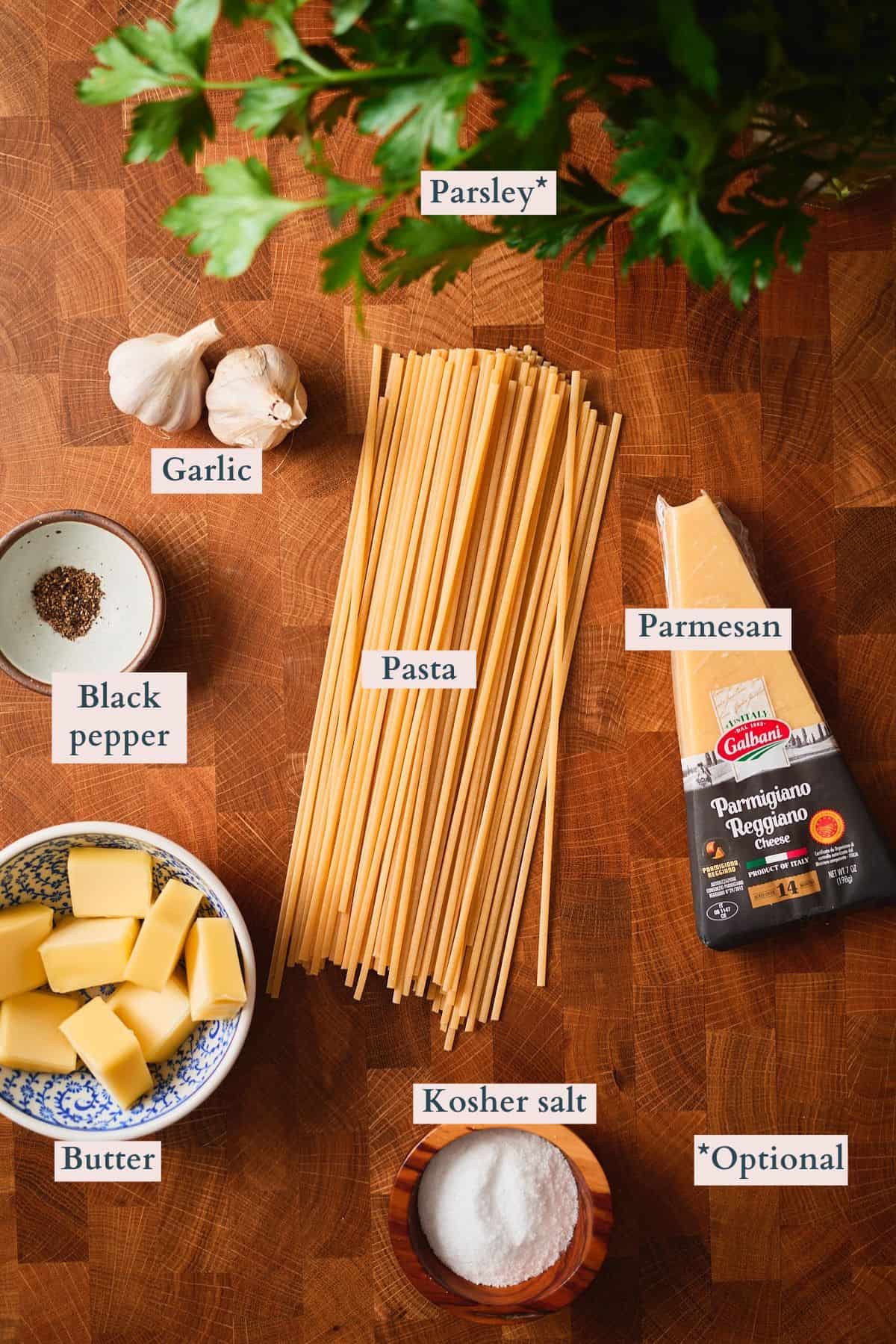
With a list this short, everything on it has to be good. Use a butter you'd happily eat on toast, grate the Parmesan yourself from a wedge, and buy whole heads of garlic rather than the pre-minced jar.
How to Make Buttery Garlic Pasta ✨
Seven steps, and two of them are just waiting on water.
- Step 1: Bring 6 liters of water to a rolling boil in a large pot, then add the kosher salt.
In the meantime: Mince the garlic, chop the parsley, and grate the Parmesan while the water heats. Once the pasta goes in, this recipe moves fast, and you won't have time to catch up.
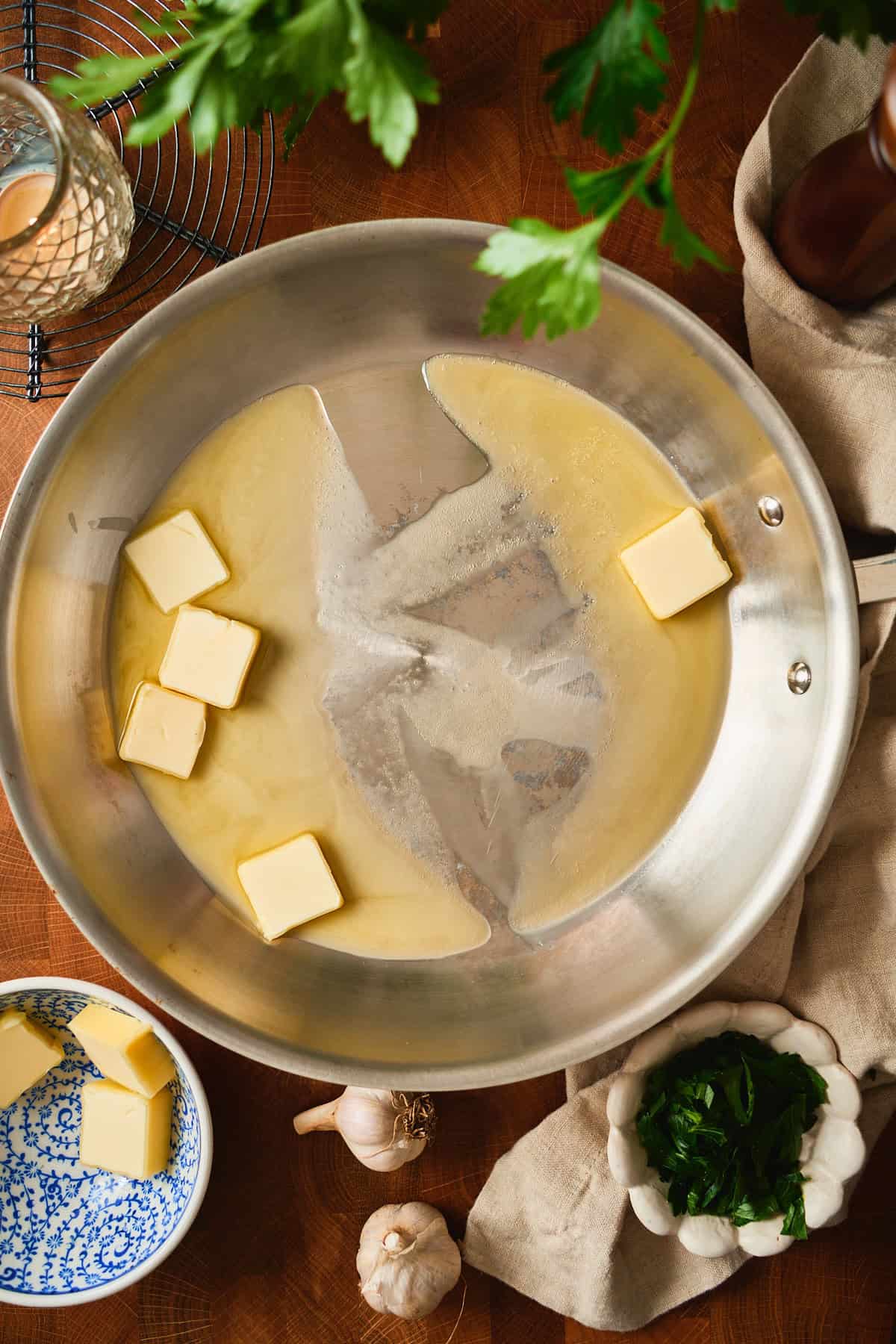
- Step 2: In a 12-inch skillet over medium-low heat, melt the butter.
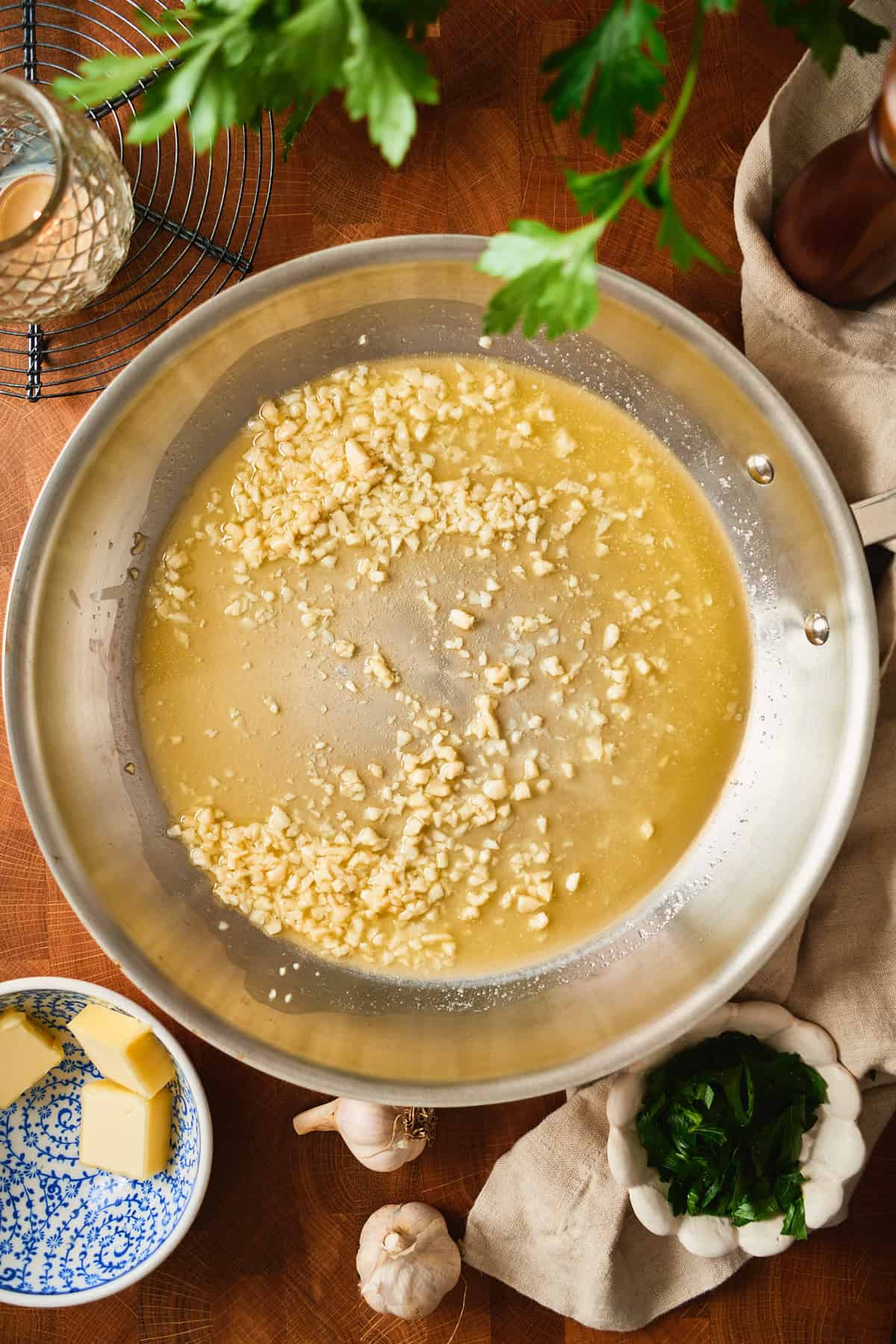
Add the minced garlic and a pinch of salt, and cook gently, swirling often, for 2 to 3 minutes, until it's soft and fragrant.
⚠️ Watch the color: Pull the heat back the second the garlic starts to take on color. Minced garlic in butter goes from fragrant to bitter in well under a minute, and there's no saving it once it does.
- Step 3: Add the pasta to the boiling water and cook until 1 to 2 minutes shy of al dente. It should still have real bite. Before draining, scoop out at least 2 cups of the pasta water.
💡 Undercook on purpose: The pasta finishes in the skillet and keeps absorbing liquid the whole time. Cook it to perfect al dente in the water, and it'll be soft by the time it hits the bowl.
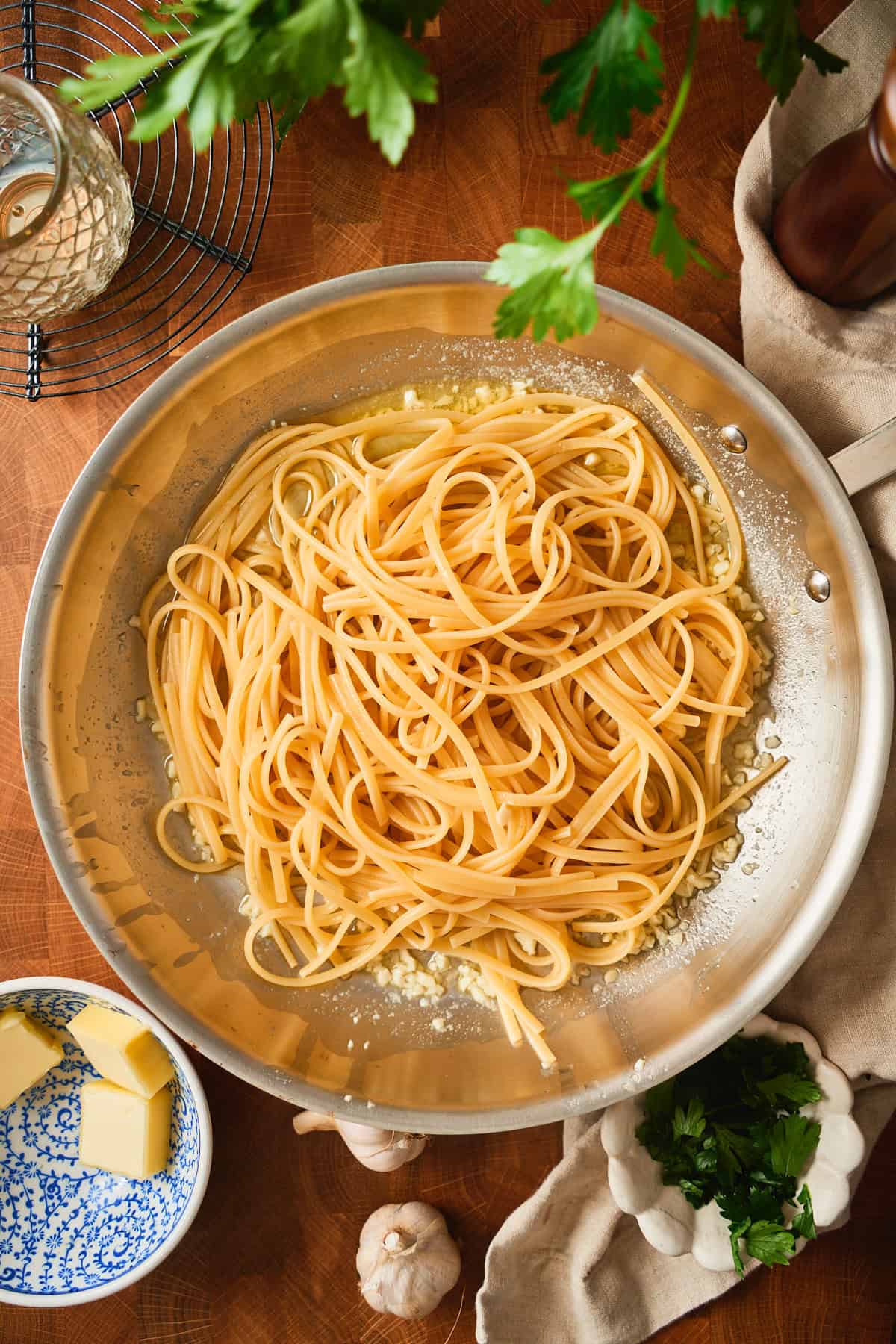
- Step 4: Add the drained pasta straight into the garlic butter.
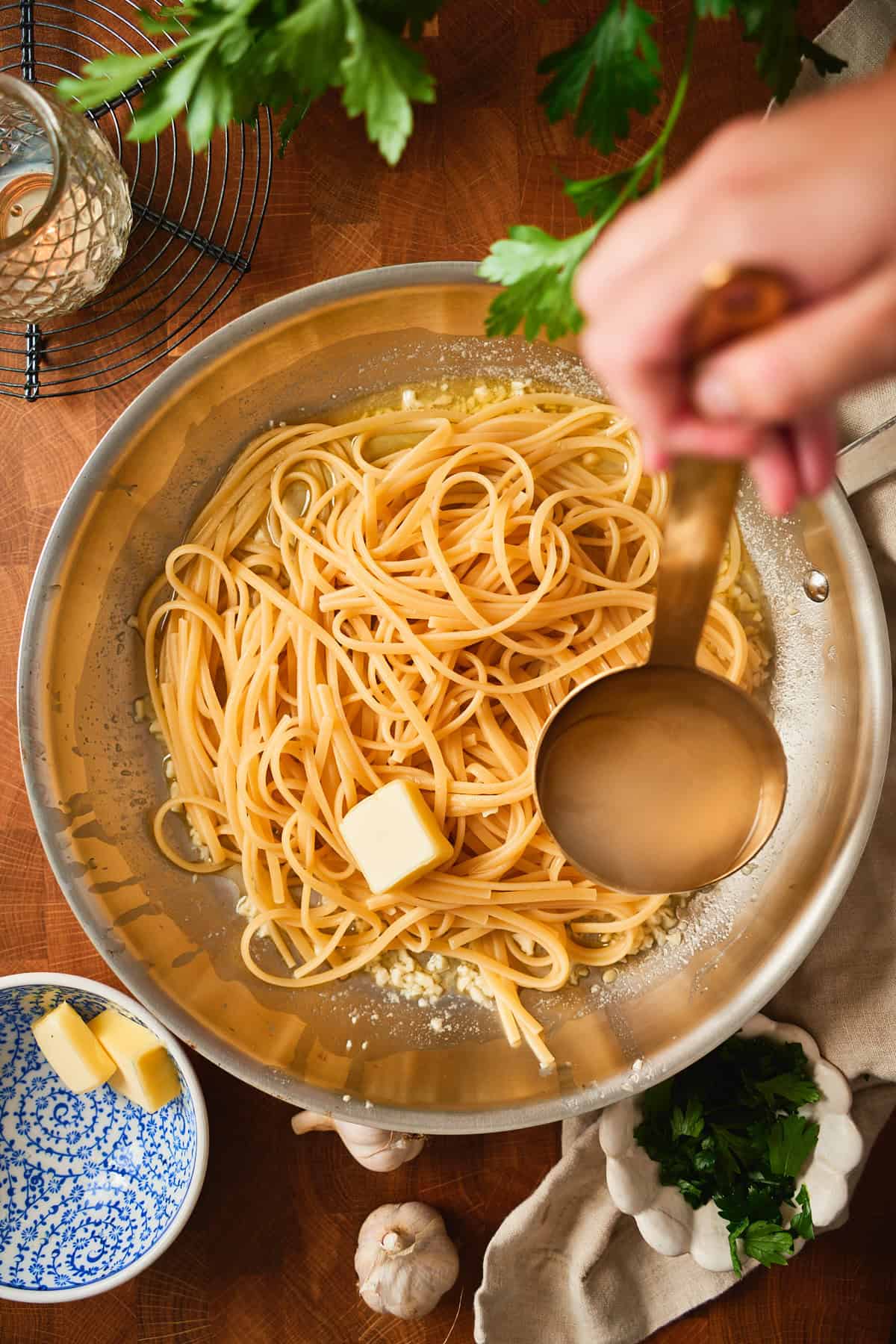
- Step 5: Add the reserved pasta water and the last of the butter, then turn the heat up to medium.
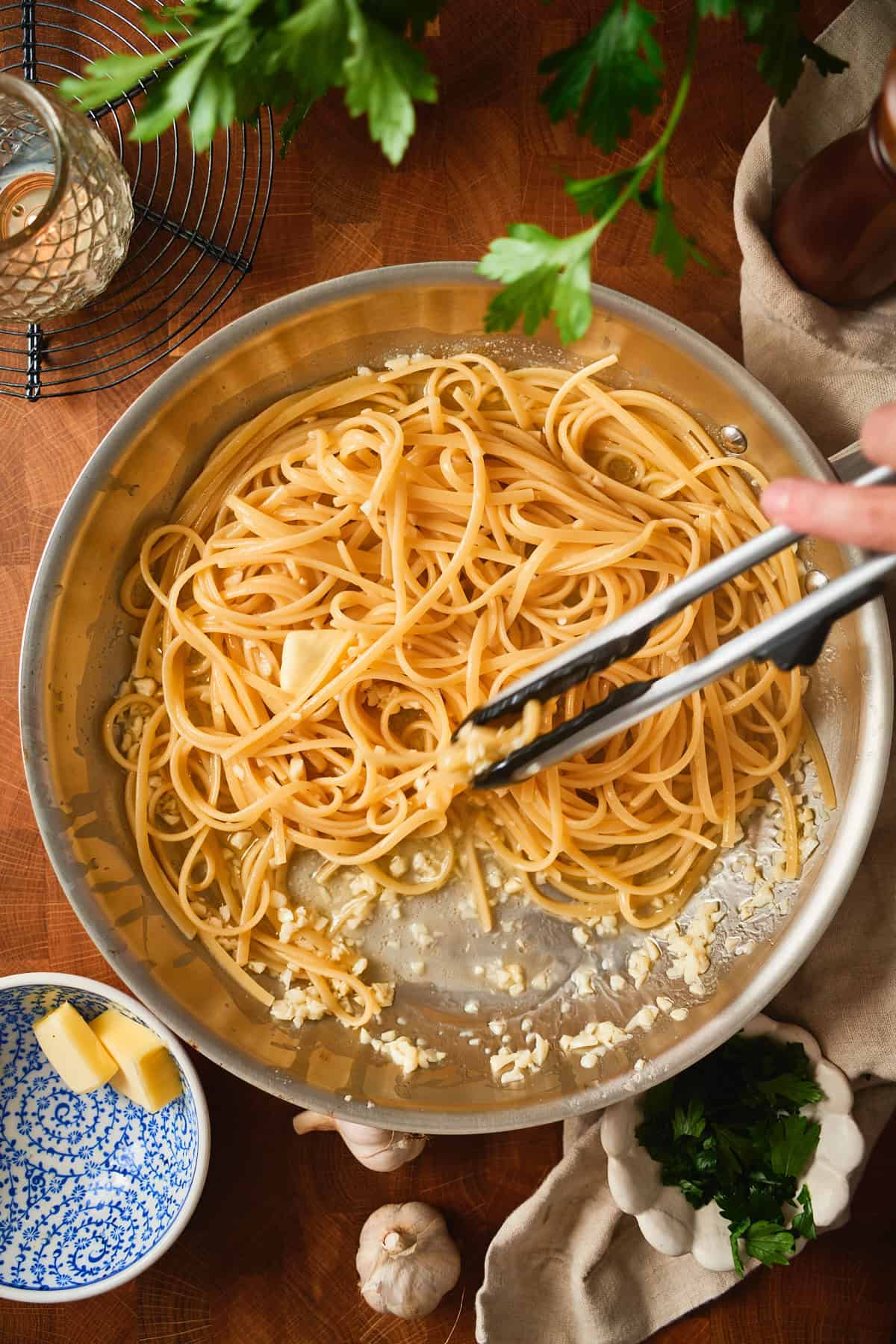
- Step 6: Toss constantly. The butter, water, and starch will pull together into a glossy sauce that clings to every strand instead of sitting in the bottom of the pan. Splash in more pasta water anytime it looks dry or clumpy.
🍝 This is the key: Keep tossing. It looks thin and greasy right up until it doesn't, and then it turns creamy all at once. Thirty seconds of real effort.
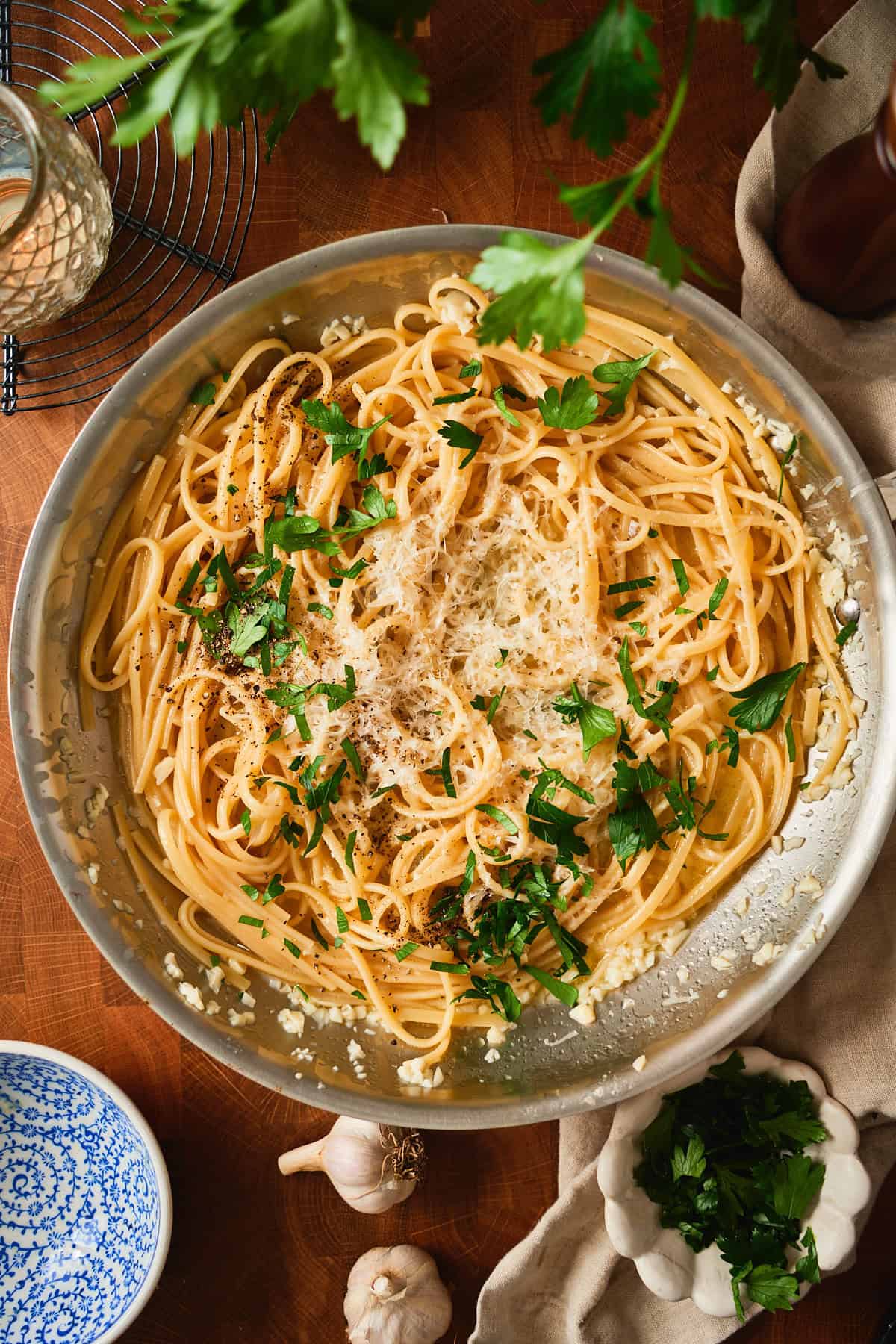
- Step 7: Pull the pan off the burner and add the black pepper, parsley, and Parmesan. Toss until everything is coated, then taste and adjust the salt.
🧀 Grate it yourself: Pre-grated Parmesan is coated in cellulose so it won't clump in the bag, and that coating is exactly what keeps it from melting properly. Off the heat and freshly grated, it disappears into the sauce and becomes silky. Pre-shredded gets gritty.
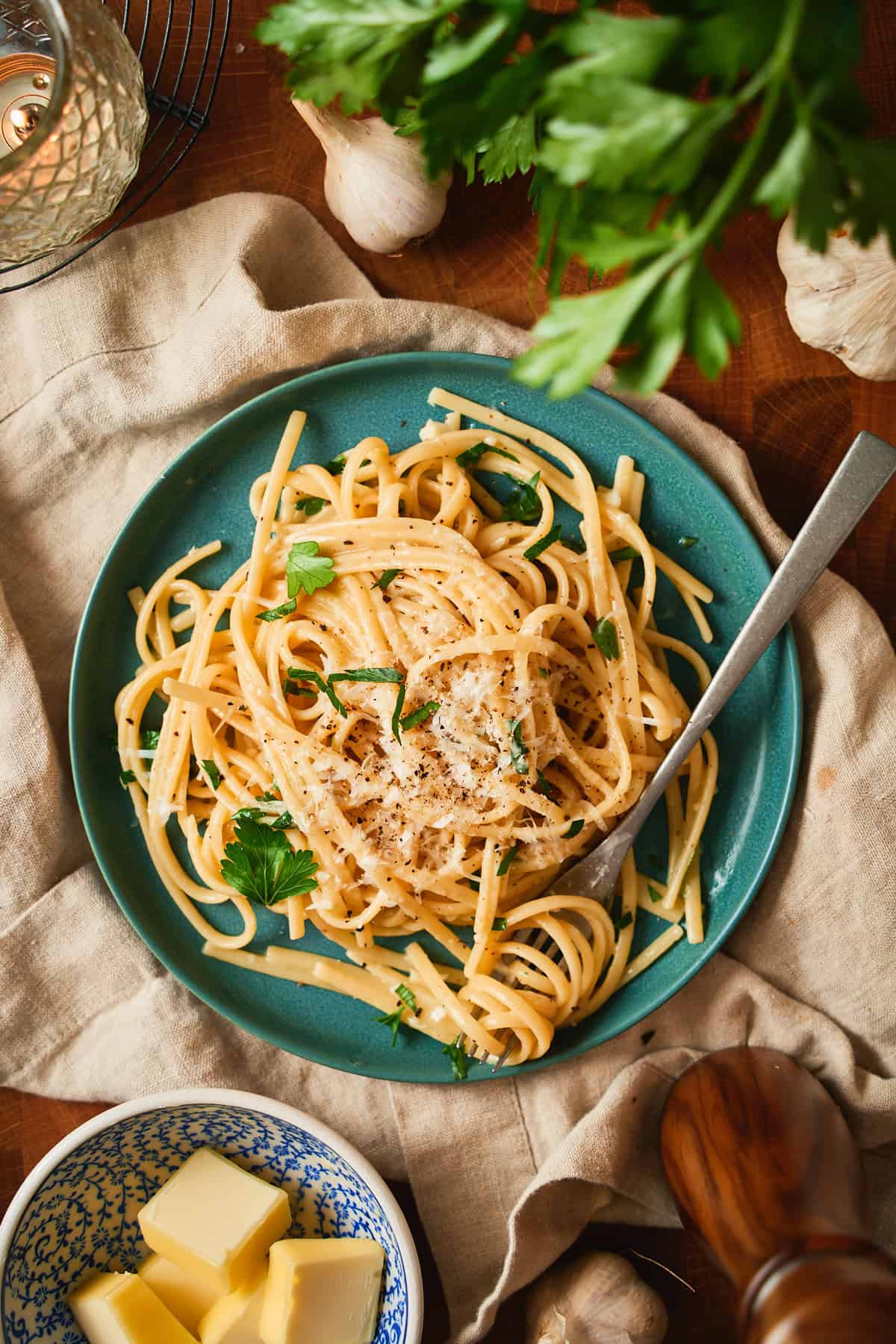
Serve right away. The sauce is at its silkiest in the first few minutes.
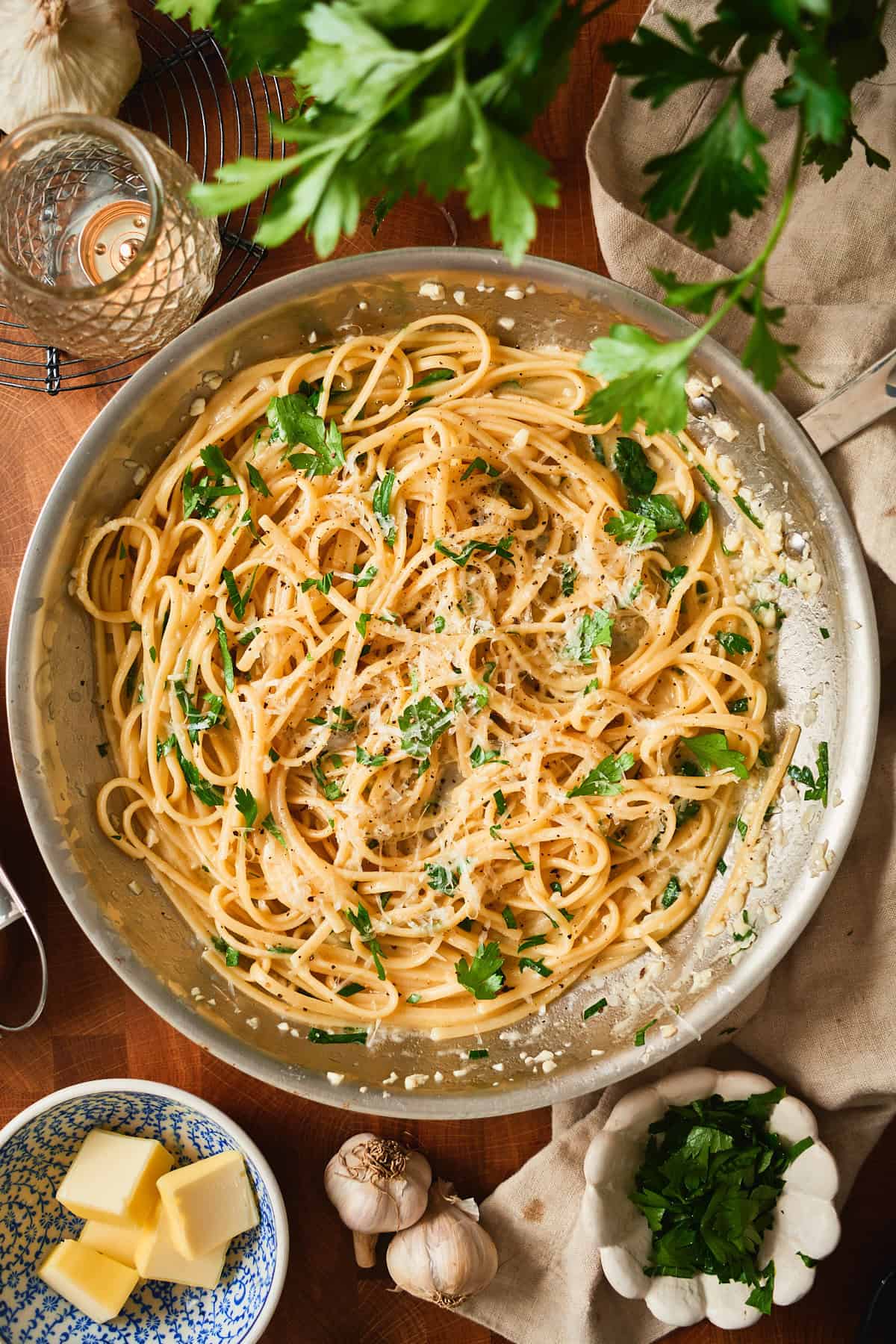
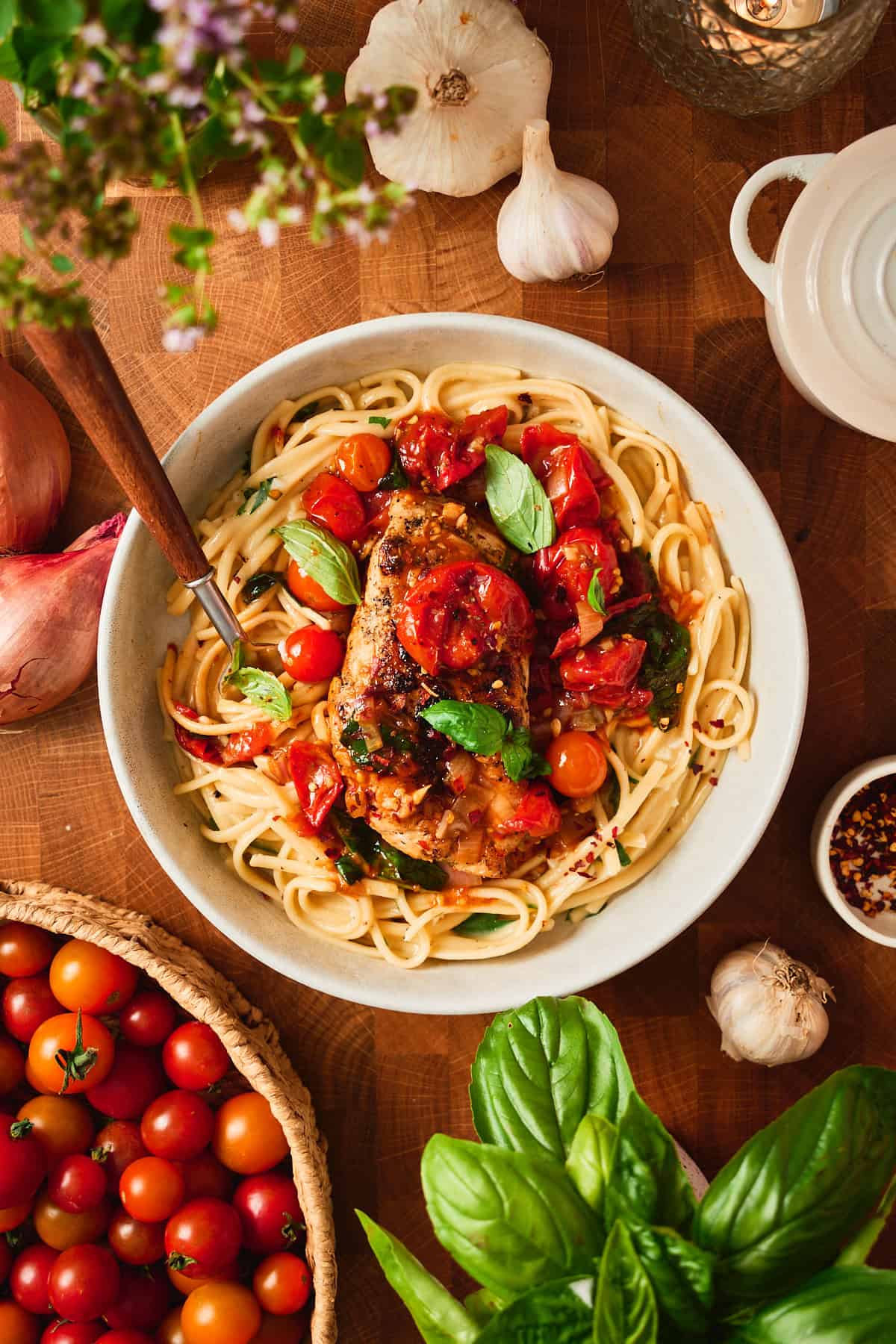
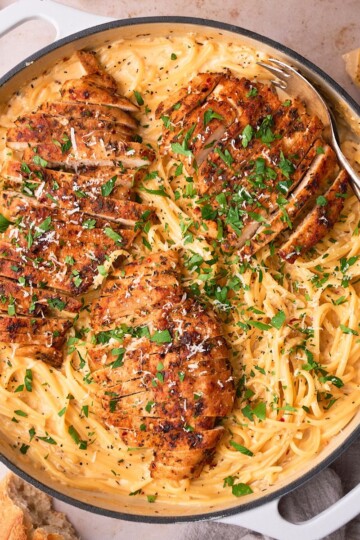
Our favorite way to serve it is under Chicken Pomodoro, where the pasta soaks up the tomato pan sauce. 🤤
🌟Leave a Review!
If you make this Butter Garlic Pasta Recipe, we'd love to hear from you! Leave a comment below with your rating for the recipe. Share with us by tagging us on Instagram! We love seeing your creations! 📸
📖 Recipe
Garlic Butter Pasta with Parmesan
Equipment
- 8-quart pot or larger
- microplane or fine grater
Ingredients
- 6 liters water for boiling
- 4 tablespoons kosher salt for the pasta water, see notes
- 14 tablespoons unsalted butter
- 16 cloves garlic minced
- 1 teaspoon kosher salt or to taste, see notes, for the sauce
- 1 pound pasta 16 ounces, linguine, spaghetti, or long pasta of choice
- 1 cup reserved pasta water
- 2 tablespoons unsalted butter for finishing the sauce
- 1 teaspoon black pepper freshly ground
- 3 ounces Parmesan finely grated
- ¼ cup fresh parsley chopped (optional)
Instructions
Salt the water
- Bring water to a rolling boil in a large pot. Add kosher salt. While it heats, mince the garlic, chop the parsley, and finely grate the Parmesan.6 liters water, 4 tablespoons kosher salt
Make the garlic butter
- In a large skillet over medium-low heat, melt most of the unsalted butter. Add the minced garlic and a pinch of salt. Cook gently, swirling often, for 2 to 3 minutes, until the garlic is soft and fragrant. Pull the heat back the moment it starts to color.14 tablespoons unsalted butter, 16 cloves garlic, 1 teaspoon kosher salt
Cook the pasta
- Add pasta to the boiling water and cook until 1 to 2 minutes shy of al dente. It should still have real bite. Scoop out at least 2 cups of the cloudy water before draining.1 pound pasta
Build the sauce
- Add the drained pasta straight into the garlic butter and toss to coat.
- Add 1 cup of reserved pasta water and the remaining unsalted butter, then raise the heat to medium. Save the remaining pasta water for reheating leftovers or to loosen the noodles.2 tablespoons unsalted butter, 1 cup reserved pasta water
- Toss constantly until the butter, water, and starch pull together into a glossy sauce that clings to every strand. Splash in more pasta water anytime it looks dry or clumpy.
Finish
- Pull the pan off the heat. Add freshly ground black pepper, Parmesan, and optional chopped parsley. Toss until everything is coated. Taste and adjust the salt, then serve immediately.1 teaspoon black pepper, 3 ounces Parmesan, ¼ cup fresh parsley
Save This Recipe! 💌
Notes
- Salt matters here. We use Diamond Crystal kosher salt, which is less dense by volume than Morton's. If you're using Morton's, cut both amounts by a little under half, or the sauce will be too salty once the Parmesan goes in.
- Wait to adjust the salt. Between the pasta water, the Parmesan, and the butter, this dish gets salt from three directions. Taste after everything is tossed together, not before.
- Reserve more water than you think you need. The recipe calls for a cup, but scoop out two. A pound of pasta drinks up sauce as it sits, and a splash of hot starchy water brings it right back.
- Hold back the last two tablespoons of butter. Adding it cold with the pasta water helps the sauce come together and gives it a little extra body at the end.
- Use long strands. Linguine, spaghetti, bucatini, and fettuccine all work. Short shapes like penne or rigatoni will taste good, but the sauce slides off instead of coating, so you lose the best part.
- Salted butter works. Cut the salt in the sauce to about ½ teaspoon and taste before adding more at the end.
- The parsley is optional. It's there for freshness and color rather than flavor, so leave it out if you don't have any.
- Storage. Leftovers keep in an airtight container in the refrigerator for up to 3 days. The sauce will firm up and look broken when it's cold, which is normal.
- Reheating. Warm it in a skillet over medium-low with a splash of the reserved pasta water, or plain water if you didn't save any, tossing until it loosens and turns glossy again. The microwave will separate it.
- Not a make-ahead dish. The emulsion is at its best in the first few minutes. You can mince the garlic and grate the Parmesan a day ahead, but cook it when you're ready to eat.
Comments
No Comments