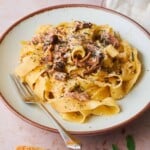
Duck Pasta
Level up your home dining experience with this easy Duck Pasta Recipe. You'll love the delightful combination of duck, meaty mushrooms, and pappardelle tossed in a creamy, brown butter herb sauce! Perfect for date nights, and special occasions.
Servings: 6 servings
Calories: 689kcal
Equipment
- stock pot
Ingredients
- 2 tablespoons duck fat can sub olive oil
- 1 pound confit duck legs (about 2 duck legs, can be found in the freezer section of grocery stores) can sub any roast duck meat
- 5 tablespoons unsalted butter
- 10 ounces mixed mushrooms
- 1 teaspoon kosher salt to taste
- 1 large yellow onion diced
- 12 cloves garlic minced (about 1 head)
- 1 tablespoon fresh rosemary minced
- 1 tablespoon fresh thyme minced
- 2 tablespoons fresh sage chopped
- ½ cup chicken broth (can sub duck stock, vegetable stock, or dry white wine)
- ½ cup heavy cream
- 3 ounces parmesan cheese freshly grated
- ½ whole lemon juiced
- 16 ounces pasta of choice (cooked 1-2 minutes under the package directions)
- 1 cup reserved pasta water as needed
- 1 whole lemon zested
- Black pepper, herbs and parmesan cheese to garnish
Instructions
- Add 2 tablespoons of duck fat (or oil) to a hot skillet over medium heat, followed by the duck legs to crisp up the meat. Remove from the pan and set aside until cool enough to handle, then strip the meat from the bones and shred. Set aside.
- Meanwhile, add 5 tablespoons of unsalted butter to a separate, light colored saucepan over medium heat. Stir constantly until the butter is golden brown and gives off a nutty aroma. Remove it from the saucepan, and transfer it to a separate container, and set aside to cool. Here's our step-by-step guide on how to brown butter.
- In the same pan you cooked the duck in, without draining the duck fat, add the mushrooms in an even layer and let it cook undisturbed for about 5 minutes to help them get nice and golden brown, then turn them off and continue cooking for 3-5 minutes. Season with a bit of salt near the end of cooking, then remove from the pan. Don't drain the fat.
- Meanwhile, prepare the pasta. Start by bringing a large pot of salted water to a boil for the pasta, and cook for 1-2 minutes under the package directions to allow the pasta to continue cooking in the sauce. Set the pasta aside and be sure to reserve some pasta water for bringing the sauce together later.
- To the same pan, add the onions with a pinch of salt. Cook until softened, then add in the garlic and fresh herbs. Cook until the garlic is fragrant, then immediately deglaze the pan with ½ cup of chicken broth. Reduce the heat to low and stream in ½ cup of heavy cream.
- Slowly mix in the parmesan in small handfuls, stirring to melt, then add the next. Add back the mushrooms and cooked duck to the skillet. Add the cooked pasta, the juice of ½ a lemon, the zest of 1 lemon, the reserved brown butter, and reserved pasta water as needed. Toss gently to help the sauce cling to the noodles.
- Garnish with fresh rosemary, thyme, parmesan, and black pepper. Enjoy!
Notes
- Use good quality ingredients. There aren't a ton of ingredients in this recipe, so make sure they count! Use high quality extra virgin olive oil, butter, fresh herbs, garlic, lemons, and authentic parmigiano reggiano for the best flavor!
- Take your time rendering out the duck fat. When reheating the duck, make sure your skillet is on a nice medium-low heat so the skin crisps up nicely. Be patient. It will take some time to render out the duck fat.
- Let the duck rest. After removing the duck from the skillet, let them rest before you start shredding the meat. This allows the juices to redistribute and keeps the duck moist.
- Let the mushrooms brown. Don’t stir the mushrooms too much while they’re browning. Let them sit undisturbed to get a good sear, which adds depth to the flavor profile of your sauce.
- Don't burn the butter! When browning the butter, keep a very close eye on it once it stops foaming, as it will brown very quickly. Here is our guide on how to brown butter.
- Fresh herbs are best in this recipe. If you have to use dried herbs, remember that they’re more potent, so use them sparingly (about one-third of the amount of fresh).
- Use the right pasta shape. Choose thick pasta types that can hold up to hearty sauces, such as fettuccine, pappardelle, rigatoni, or tagliatelle pasta.
- Heavily salt the pasta water. This will inject a lot of flavor into the noodles.
- Don't overcook the pasta. Undercook the pasta by about 2 minutes under the packet directions for al dente, the noodles will continue cooking in the sauce for the perfect al dente pasta.
- Save lots of pasta water! Reserve more pasta water than you think you'll need. It’s better to have too much than too little, as it’s essential for adjusting the sauce’s consistency.
- Remove the pan from the heat when adding the parmesan cheese. This helps prevent the sauce from breaking and becoming grainy. Add the cheese in small handfuls, stirring to melt. The residual heat will melt the cheese, making for a smooth and creamy sauce.
- Always use freshly grated parmesan for the best melt and flavor. Pre-grated cheese often contains anti-caking agents that can affect the texture of your sauce, causing it to become clumpy.
- Add the lemon juice right before serving. The acidity of lemon juice can also cause the parmesan cheese to clump up, so we add it just before serving to make sure it doesn’t impact the texture of the sauce.
Nutrition
Calories: 689kcal | Carbohydrates: 63g | Protein: 32g | Fat: 34g | Saturated Fat: 17g | Polyunsaturated Fat: 3g | Monounsaturated Fat: 11g | Trans Fat: 0.4g | Cholesterol: 185mg | Sodium: 776mg | Potassium: 445mg | Fiber: 5g | Sugar: 4g | Vitamin A: 807IU | Vitamin C: 7mg | Calcium: 254mg | Iron: 3mg