Biscoff Cheesecake Recipe
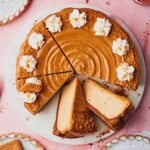
This is the ultimate Biscoff Cheesecake recipe! It's perfect for special occasions, and is bursting with Biscoff in every bite. Featuring a Biscoff cookie crust, creamy cookie butter cheesecake filling, and topped with cookie butter, and cookie crumbs.
Servings: 14 servings
Calories: 629kcal
Equipment
- mixing bowls
- Rubber Spatula
- hand mixer (or stand mixer with the paddle attachment)
Ingredients
Biscoff cookie crust
- 32 whole Lotus Biscoff cookies (1 package or 250g)
- 2 tablespoons brown sugar
- ½ teaspoon cinnamon (optional)
- ¼ teaspoon kosher salt
- 5 tablespoons unsalted butter melted
Cookie butter cheesecake
- 32 ounces cream cheese, softened (4 blocks)
- 1 cup Lotus Biscoff creamy cookie butter (240g)
- ¾ cup light brown sugar (150 g)
- 2 tablespoons all-purpose flour (15g)
- 1.5 tablespoons vanilla extract
- 1.5 teaspoons cinnamon
- 1 teaspoon kosher salt
- 3 large eggs, room temperature
- 3 large egg yolks, room temperature
- ½ cup sour cream, room temperature (123g)
Toppings
- ¾ cup Lotus Biscoff creamy cookie butter, melted (180 g)
- whipped cream (optional)
- Biscoff cookies and cookie crumbs (optional)
Instructions
Biscoff cookie crust
- Preheat the oven to 350°F. Coat a 9″ springform pan in nonstick spray. Place a 9" round of parchment paper on the bottom of the pan. Make sure the sides of the pan are greased very well to prevent any sticking.
- In a large food processor, pulse 32 Biscoff cookies to a fine crumb. Add in 2 tablespoons of brown sugar, ½ teaspoon of ground cinnamon, ¼ teaspoon of kosher salt, and 5 tablespoons of melted and slightly cooled unsalted butter. Combine until evenly moistened and a wet sand-like texture is created. This recipe makes a thick crust that reaches up the sides of the cheesecake. If you prefer less crust, cut the recipe in half.
- Pour the crust into the greased and lined pan and spread into a loose even layer with your fingers. Then use the bottom of a flat measuring cup to press it into the bottom and up the sides. Bake for 8-10 minutes, until the crust is a nice golden brown. Place on a cooling rack and allow the crust to cool while you make the cheesecake batter.
Cookie butter cheesecake
- Drop the oven temperature to 325°F. Place a large roasting pan on the bottom rack of the oven, and make sure the second rack is positioned in the middle above it. Start a pot of boiling water (about 6 cups) on the stove. This will be for the water bath that goes into the roasting pan underneath the cheesecake.
- Add 4 blocks (32 ounces) of softened room-temperature cream cheese, 1 cup of creamy Biscoff cookie butter, ¾ cup of brown sugar, and 2 tablespoons of all-purpose flour to a large mixing bowl with an electric mixer or the bowl of a stand mixer with the paddle attachment. Mix on LOW speed until it comes together and forms a smooth texture. Scrape down the bowl and mix on low for another 20 seconds.
- Next, mix in 3 eggs one at a time on LOW speed. Only add the next when the one prior is just incorporated. After the 2nd egg is mixed in, stop and scrape down the bowl. Mix for 20 seconds then continue with the 3rd egg and the egg yolks.
- Mix in 1.5 tablespoons of vanilla, 1.5 teaspoons of cinnamon, and 1 teaspoon of kosher salt, until the mix is velvety smooth, then stop mixing! Mixing too much can incorporate too much air into the batter, which can cause it to crack later on.
- Add in the ½ cup of sour cream and fold into the batter using a rubber spatula until it's completely incorporated. Pour the batter into the cooled Biscoff crust, and spread it even using an offset spatula. Give the pan a couple of gentle taps against your counter to release any air bubbles.
Assemble and bake
- Open the oven door and slide out the bottom rack with the roast pan on it. Carefully pour the boiling water into the pan in the preheated oven and push the rack back in. Place the cheesecake just above the roasting pan on the middle rack. Quickly close the door (to stop the steam from escaping). We recommend using a baking sheet to get the springform pan in and out of the oven easily.
- Bake for 60-80 minutes. When the cheesecake is done, the edges should be puffed up slightly and completely set. The center will be slightly sunken down. Give the springform pan a gentle nudge. It should jiggle just slightly in the center, sort of like jello. It's almost like a "vibration" type of movement. If it wiggles any more than that, it should continue baking for another 10 minutes or so.
- Turn the oven off and prop open the oven door with a wooden spoon, and with the cheesecake still inside. Leave it there for 1 hour.
- Then, take the cheesecake out of the oven and let it sit at room temperature on a cooling rack. At this point we like to run an offset spatula along the edge of the cheesecake carefully to help release any stuck bits from the edge of the pan. Let the cheesecake cool for at least another 30 minutes, preferably another hour.
- After 1 hour, place the cheesecake uncovered in the fridge for at least 4 hours but preferably overnight.
Serving
- Transfer the cooled cheesecake to a serving plate. Pour ¾ cup (180g) of melted cookie butter on top of the cheesecake. Use a mini offset spatula to smooth it out. Return the cheesecake to the fridge for about 10- 20 minutes, or until the cookie butter is set.
- Once the cookie butter is set, remove the cheesecake from the fridge and sprinkle with Biscoff cookie crumbs and decorate with Biscoff cookies and whipped cream if desired, then serve!
- Store leftovers in the fridge in an airtight container for up to 5 days. To freeze, wrap pieces tightly in plastic wrap, and store in a freezer safe bag for up to 4 months.
Notes
- Use room temperature ingredients. This is absolutely crucial! Ensure the cream cheese, sour cream, and eggs are at room temperature before mixing. This helps in achieving a smoother batter without lumps. The cream cheese especially needs to be incredibly soft. If you use too cold of ingredients, you will end up with clumps of cream cheese in the batter and they will never fully incorporate.
- Don't skip the parchment paper and grease the pan. This really helps prevent anything from sticking, which can cause a cheesecake to crack as it cools.
- To ensure a creamy cheesecake - don't skip the water bath! This helps the cheesecake stay nice and creamy and helps prevent cracking. We use a simple water bath method, where the cheesecake pan doesn't actually have to sit in the water or be wrapped in aluminum foil. Instead, we add a large roasting pan to the oven rack below with a little bit of boiling hot water. This creates steam in the oven while the cheesecake bakes without having to worry if the cheesecake will end up with water in it. We find baking it above works really well, but you can also wrap the bottom of the pan with aluminum foil and place it inside the roasting pan if you prefer. We just find this method gets water in our cheesecake sometimes.
- Mix gently! Overmixing the batter can incorporate too much air, which can cause cracks during baking. Mix until just combined and smooth, then stop. Keep the speed of the mixer on LOW.
- Cool gradually. Once baked, turn off the oven and slightly open the oven door. Let the cheesecake cool inside for an hour, then transfer it to the counter to cool for another hour before refrigerating. This helps prevent sudden temperature changes that can cause cracking.
- Chill overnight. The cheesecake needs a lot of time to set, so we recommend 4 hours in the fridge at minimum. If possible, you should let the cheesecake chill overnight.
Nutrition
Calories: 629kcal | Carbohydrates: 48g | Protein: 9g | Fat: 45g | Saturated Fat: 22g | Polyunsaturated Fat: 2g | Monounsaturated Fat: 8g | Trans Fat: 0.2g | Cholesterol: 160mg | Sodium: 501mg | Potassium: 138mg | Fiber: 0.2g | Sugar: 33g | Vitamin A: 1158IU | Vitamin C: 0.1mg | Calcium: 98mg | Iron: 1mg