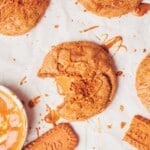
Biscoff Butter Cookies Recipe
Indulge in some Biscoff Butter Cookies with a unique cinnamon and caramel-like flavor. This recipe features a gooey frozen cookie butter center, a crunchy Biscoff cookie crumb texture, and is perfect for a comforting treat for special occasions!
Servings: 16 servings
Calories: 395kcal
Equipment
- hand mixer (or stand mixer with a paddle attachment)
- mixing bowls
- Rubber Spatula
- large baking sheets (18x13-inch)
- large cookie scoop (#20 size)
Ingredients
- ½ cup + 2 tablespoons Lotus Biscoff creamy cookie butter (150g) This is for the cookie butter filling
- 16 whole Lotus Biscoff cookies crushed into a medium-coarse crumb & divided (about half a package or 125g)
- 2.5 cups all purpose flour (300g)
- 1 teaspoon baking soda
- 1.5 teaspoons kosher salt
- 1.5 teaspoons cinnamon (optional)
- 12 tablespoons unsalted butter, softened (170g)
- 1 cup light brown sugar (200g)
- ½ cup granulated white sugar (100g)
- ¾ cup Lotus Biscoff creamy cookie butter (180g) This goes into the cookie base
- 1 tablespoon vanilla extract
- 1 large egg, room temperature
- 1 large egg yolk, room temperature
- More melted cookie butter for drizzling, and Biscoff crumbs for topping
Instructions
Cookie butter filling
- Divide the ½ cup + 2 tablespoons (150g) of Biscoff cookie butter spread into roughly ½ tablespoon (9-10g) balls. Place them on a parchment paper lined baking sheet, and transfer to to the freezer to freeze solid while you make the cookies.
Cookie dough base
- Meanwhile, line a baking sheet with a piece of parchment paper. Crush 16 Biscoff cookies into medium-coarse crumbs using a food processor or by placing them into a bag and crushing them with a rolling pin.
- In a large bowl combine 2.5 cups of all purpose flour, 1 teaspoon of baking soda, 1.5 teaspoons of kosher salt, and 1.5 teaspoons of cinnamon. Add about half of the crushed Biscoff cookies (about 63g), reserve the rest for later. Mix well and set aside.
- In a separate large bowl with a hand mixer or in a stand mixer with the paddle attachment, beat together the 12 tablespoons of softened butter, 1 cup of brown sugar, and ½ cup of granulated sugar. Beat until light and fluffy (about 4-5minutes), scraping down the bowl halfway.
- Add in ¾ cup (180g) of cookie butter spread. Mix on medium speed until smooth and well incorporated.
- Add in 1 tablespoon of vanilla extract and 1 egg. Mix until just combined, then add in 1 egg yolk. Mix until combined, and be sure to scrape down the bowl to ensure everything is incorporated.
- Gently add the dry ingredients to the wet ingredients, mixing gently until a dough starts to come together. Switch to a rubber spatula about halfway through to avoid overmixing, and stop mixing as soon as no more dry streaks of flour remain.
- Using a food scale, weigh out 16 portions of cookie dough that weigh 66-67g each and roll them into a round shape. This is about the size of a large cookie scoop.
Fill with cookie butter
- Using your thumb, press a hole into the center of each cookie dough ball, and stuff it with a piece of frozen cookie butter. Gently roll the dough around the cookie butter to enclose it. It's okay if a little bit of cookie butter still shows. Continue until each cookie has been stuffed. If the cookie butter becomes too warm and sticky to work with, return it to the freezer for 5-10 minutes so it can firm up again.
- Place the rest of the crushed Biscoff cookie crumbs into a small bowl. Roll each cookie dough ball in the crushed cookie crumbs, pressing lightly to adhere.
- Place the cookie dough on a parchment-lined baking sheet, and place them in the fridge, or freezer, covered, for at least 30 minutes, but preferably 2 hours or even overnight. This helps prevent the Biscoff spread from oozing out of the cookies when they bake.
Bake
- When it's time to bake, preheat the oven to 350°F and line a large baking sheet with parchment paper. Place 5-6 cookie dough balls on the baking sheet leaving plenty of room in between them.
- Bake for 12-15 minutes, until the edges are set but the centers look slightly gooey and underdone. Remove from the oven, scoot the edges of the cookie to make them perfectly round. Let them cool on the baking sheet for 5 minutes or so, until they are firm enough to transfer to a cooling rack.
- While on the cooling rack, melt a bit more Biscoff spread and drizzle it over top of the cookies with a spoon. Sprinkle on the remaining crushed Biscoff cookie crumbs so they can stick to the warm cookie butter.
- Serve while still slightly warm so the Biscoff center is still gooey. Enjoy!
- Store leftovers in an airtight container at room temperature for 3-4 days.
Notes
- To freeze, place baked cookies on a parchment-lined baking sheet and freeze until solid. Transfer to a freezer bag and store for up to 3 months. Defrost at room temperature. These cookies freeze much better as cookie dough, however, and will keep in the freezer for up to 6 months. No need to defrost them when it's time to bake, but you may need to bake them for an extra couple of minutes if baking from frozen.
- Always measure with a kitchen scale instead of a measuring cup! This will give you the most accurate results. It's especially important for the dry ingredients. (We're looking at you, flour!) Adding even a little bit too much flour can result in a dry cookie. Using a digital scale ensures accuracy, and it also creates less dishes and mess!
- Don’t skip the cinnamon! It adds such a subtle, complementary flavor that we highly recommend!
- Use room-temperature ingredients. Make sure the butter, egg, and egg yolk are at room temperature for easier mixing and a smoother batter.
- Don’t skip creaming the butter and sugar. This will yield the best results, and we highly recommend it. The butter and sugar mixture should become very pale and fluffy. It helps dissolve and disperse the sugars in the dough, as well as helps the cookies bake properly and prevents spreading. It will yield a thick and chewy cookie!
- Don’t overmix. Once you add the dry ingredients to the wet, mix just until combined to avoid tough, dense cookies.
- Use an oven thermometer. Make sure your oven is fully preheated before baking. An oven thermometer can help confirm that the oven has reached the right temperature. Often, the beep you hear from the oven goes off prematurely before the temperature is reached. Also, different ovens run at different temperatures.
- Parchment paper. Always line your baking pan with parchment paper for easier cookie removal and cleanup. It helps prevent the cookies from sticking.
- Chill the cookie dough. We know it’s hard to wait! However, chilling the cookie dough for at least 30 minutes allows the flour to absorb the other ingredients (which makes for a very flavorful cookie) and it's a very crucial step to ensure that the Biscoff center doesn't leak out while baking.
- If making smaller cookies, bake for 10–12 minutes.
- If freezing the cookie dough, you may need to bake them for an extra minute or two after pulling them out of the freezer.
Nutrition
Calories: 395kcal | Carbohydrates: 52g | Protein: 5g | Fat: 19g | Saturated Fat: 8g | Polyunsaturated Fat: 1g | Monounsaturated Fat: 2g | Trans Fat: 0.3g | Cholesterol: 46mg | Sodium: 326mg | Potassium: 49mg | Fiber: 1g | Sugar: 30g | Vitamin A: 295IU | Vitamin C: 0.01mg | Calcium: 22mg | Iron: 1mg